GST Compliance for Small Businesses in 2026: Complete Guide for Indian Entrepreneurs

GST Compliance for Small Businesses in 2026
Everything you need to know about staying compliant with GST rules this year
What is GST and Why Does Your Business Need It?
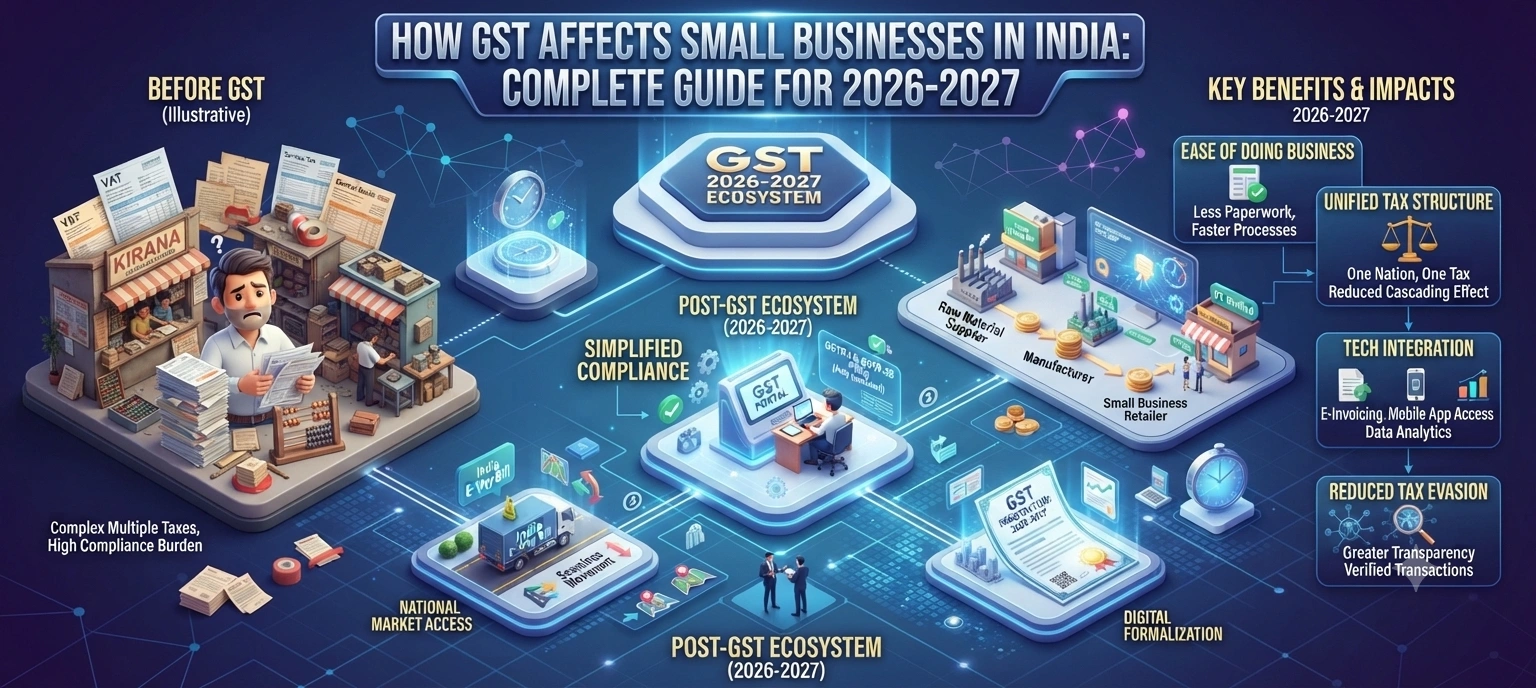
GST—Goods and Services Tax—is India's unified indirect tax system. It replaced multiple taxes like VAT, service tax, and excise duty. But here's the thing: it's not just about paying tax. It's about staying on the right side of the law, protecting your business, and avoiding penalties that can hurt your cash flow.
Look, if you're running a business in 2026, you can't ignore GST. The compliance framework is stricter now, and tax authorities have better tracking systems. So what does this mean for you? You need to understand the basics, meet your filing deadlines, and keep your records clean.
And that's really it—get the fundamentals right, and you'll sleep better at night.
Who Needs to Register for GST?
Not every business needs GST registration. The threshold matters. If your annual turnover is below a certain limit, you might not be compulsory to register. But many businesses choose to register anyway because of input tax credit benefits.
In 2026, here's who must get registered:
- Businesses with turnover above ₹40 lakh (₹20 lakh for services in specific states)
- E-commerce operators, regardless of turnover
- Importers and exporters
- Non-resident taxable persons
- Casual taxable persons
- Businesses dealing in goods where GST is applicable
The thing is, even if you're below the threshold, you can voluntarily register. Why? Because you get to claim input tax credit. If you're buying goods and services for your business, GST paid on those purchases can be claimed back. That's real money in your pocket.
Voluntary registration lets you claim input tax credit even if you're below the compulsory threshold. This can save you thousands of rupees annually.
GST Registration Process: Step by Step
Registering for GST online is straightforward. You'll do it through the portal. Let me walk you through the process so you don't get stuck.
First, you'll go to the GST Common Portal. Create an account using your email and phone number. Then you'll fill in the GST registration form—Form REG-01. This form asks for basic business details, ownership structure, and bank information.
Next comes document submission. You'll need to upload your PAN certificate, business address proof, bank details, and in some cases, your MSME registration. The portal will ask for these. Don't skip anything.
After submission, the system generates a temporary reference number. Then comes the verification step. Depending on your state and business type, the GST officer might visit your premises or simply verify documents online. In 2026, most verifications are happening digitally, which speeds things up.
Once approved, you get your GST registration certificate with a unique 15-digit GSTIN. This is your business identity in the GST system. Keep it safe. You'll need it for everything—invoicing, filing returns, and claiming refunds.
| Registration Step | Timeline | Key Action |
|---|---|---|
| Account Creation | Immediate | Email + Phone verification |
| Form Filling | 1-2 days | Accurate business details |
| Document Upload | 1-2 days | Clear, legible scans |
| Officer Verification | 3-7 days | Be available for contact |
| Certificate Issue | 1-2 days | Download and save GSTIN |
Don't provide false information during registration. The GST authorities cross-check with income tax records, bank details, and field verifications. Getting caught means penalties, prosecution, and cancellation of your GSTIN.
GST Invoice Requirements: Getting It Right
An invoice isn't just a receipt. It's a legal document. The GST system depends on invoices to track taxes. So you need to get this right.
Here's what every GST invoice must contain:
- Your GSTIN and business name
- Invoice number and date
- Buyer's name, address, and GSTIN (if registered)
- Description of goods or services
- HSN code (for goods) or SAC code (for services)
- Quantity and unit price
- Tax rate and tax amount
- Total amount in words and figures
But here's where most small businesses trip up: they don't use proper invoicing software. They create invoices in Excel or Word, and these don't match GST requirements. In 2026, the authorities are cracking down on this. You need to use GST-compliant invoicing software.
Good news? Most accounting software—Tally, Busy, Zoho, even free tools—now have GST-compliant invoicing built in. You don't need anything fancy. Just something that generates proper invoices with all required fields.
Using proper invoicing software reduces errors, saves time, and makes GST filing much faster. You can also generate reports instantly.
GST Filing: Returns You Must Submit
GST filing means submitting returns. There are different returns depending on your business type and turnover. Let me break this down simply.
Most businesses file GSTR-1 (outward supplies) and GSTR-3B (summary return) monthly. GSTR-1 shows all your sales. GSTR-3B shows your tax liability. These are due by the 11th of the following month.
Then there's GSTR-2A, which auto-populates from your suppliers' GSTR-1 filings. This shows what you've bought. You need to reconcile this with your actual purchases.
Annually, you file GSTR-9, which is your annual return. This ties everything together—all monthly filings, all amendments, all refunds. It's due by December 31st of the following financial year.
And that's really it for most businesses. But if you're into imports or exports, or if you're a composition taxpayer, there are different returns. The shows you exactly which returns you need to file based on your registration type.
| Return Type | Frequency | Due Date | What It Shows |
|---|---|---|---|
| GSTR-1 | Monthly | 11th next month | Your sales |
| GSTR-3B | Monthly | 20th next month | Tax liability |
| GSTR-2A | Monthly | Auto-populated | Your purchases |
| GSTR-9 | Annual | 31st Dec | Yearly summary |
Missing filing deadlines leads to automatic penalties. Late filing of GSTR-3B means 5% interest on unpaid tax. Repeated defaults can get your registration cancelled.
Input Tax Credit: How to Claim and Not Lose Money
Input tax credit is the biggest advantage of GST registration. Basically, when you buy goods or services for your business, you pay GST. That GST can be claimed back. This reduces your final tax liability.
Let me give you a practical example. Say you buy raw materials for ₹1,00,000 with 18% GST. That's ₹18,000 in GST. You make a product and sell it for ₹1,50,000 with 18% GST. That's ₹27,000 in GST collected. Your actual tax to pay? ₹27,000 minus ₹18,000 = ₹9,000. You keep the difference.
But here's the catch: you can only claim credit if you have proper invoices from your suppliers. They must show their GSTIN. The goods or services must be for business use. And you must have filed your returns on time.
So what does this mean for you? Keep every invoice. Match them with your GSTR-2A. File your returns on time. Don't miss deadlines. The system now blocks credit claims for invoices that don't match your supplier's filings.
Proper input tax credit management can reduce your effective tax burden by 40-50%. For a business with ₹50 lakh turnover, this could mean saving ₹50,000-₹100,000 annually.
Common GST Mistakes Small Businesses Make
I've seen hundreds of small business owners make the same mistakes. Let me help you avoid them.
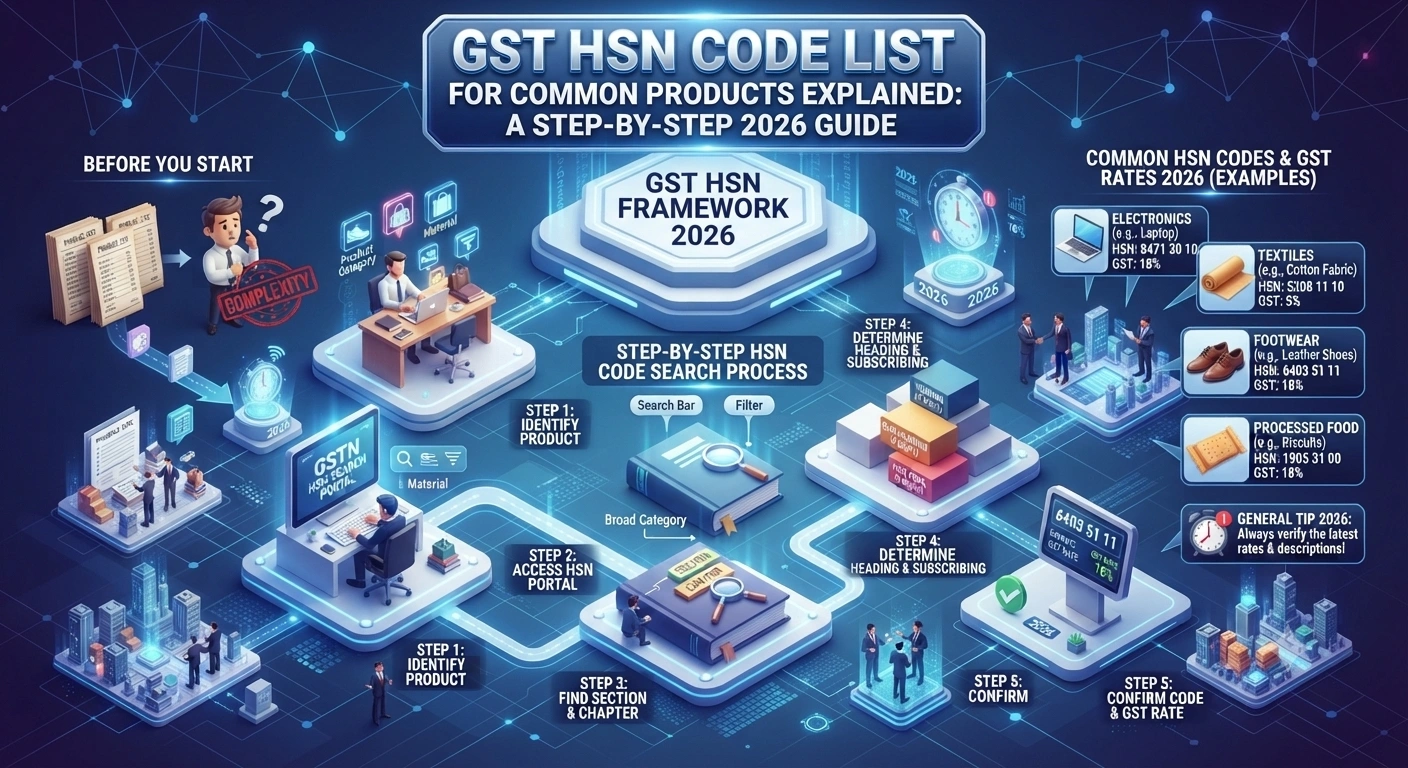
First mistake: wrong HSN or SAC codes. These codes classify your products or services. If you use the wrong code, your tax rate might be wrong. Your invoice becomes invalid. Auditors flag it.
Second: not keeping invoices. You claim input credit, but you can't produce the invoice when asked. The credit gets rejected. You end up paying tax twice.
Third: filing returns late. The first 20 days of the month are critical. File by the 11th for GSTR-1 and by the 20th for GSTR-3B. Late filing means penalties and interest.
Fourth: mixing personal and business expenses. You can't claim input credit for personal purchases. But many businesses do. This creates audit risk.
Fifth: not reconciling GSTR-2A. Your suppliers file GSTR-1. This data shows up in your GSTR-2A. If there's a mismatch, you don't get credit. Reconcile monthly.
And finally: not maintaining proper books. GST requires you to keep purchase and sales registers. Many businesses don't. When audited, they can't produce records. That's a compliance failure.
GST Penalties and How to Avoid Them
Penalties in GST are real. They're not small amounts. And they add up fast. So let me show you what you're risking and how to stay safe.
Late filing of GSTR-3B? That's 5% interest on unpaid tax, minimum ₹100. File GSTR-1 late? ₹100 per day, maximum ₹5,000. Fail to file annual return? ₹100 per day, maximum ₹25,000.
But there's more. If you claim false input credit—credit for invoices that don't exist or aren't genuine—you face 10% penalty on the credit amount plus interest. If you issue fake invoices? That's 10% penalty plus prosecution.
The thing is, most penalties are avoidable. Just file on time. Keep proper records. Don't claim credit you're not entitled to. It's that simple.
| Violation | Penalty | How to Avoid |
|---|---|---|
| Late GSTR-3B | 5% interest + ₹100 min | File by 20th |
| Late GSTR-1 | ₹100/day max ₹5,000 | File by 11th |
| Late Annual Return | ₹100/day max ₹25,000 | File by 31st Dec |
| False Input Credit | 10% + interest + prosecution | Claim only valid credit |
GST Audits: What to Expect in 2026
GST audits are becoming more common. The system now has better data analytics. Mismatches between your filings and your supplier's filings get flagged automatically. So you need to be ready.
What triggers an audit? Unusually high input credit claims. Invoices that don't match your business profile. Repeated late filings. Sudden spikes in turnover. Discrepancies between GST returns and income tax returns.
When audited, you'll be asked to produce invoices, delivery documents, bank statements, and purchase registers. The officer will check if your input credit claims are genuine. If invoices are fake or from unregistered suppliers, you'll lose that credit.
Honestly, the best way to handle an audit is to avoid it. Keep clean records. File on time. Don't claim credit you're not sure about. Match your GSTR-2A with your actual purchases. If there's a mismatch, file Form ITC-04 to reverse the credit.
If you can't produce invoices during an audit, you lose input credit claims. This can mean paying tax on amounts you thought were already covered. The financial impact can be severe.
Composition Scheme: Is It Right for Your Business?
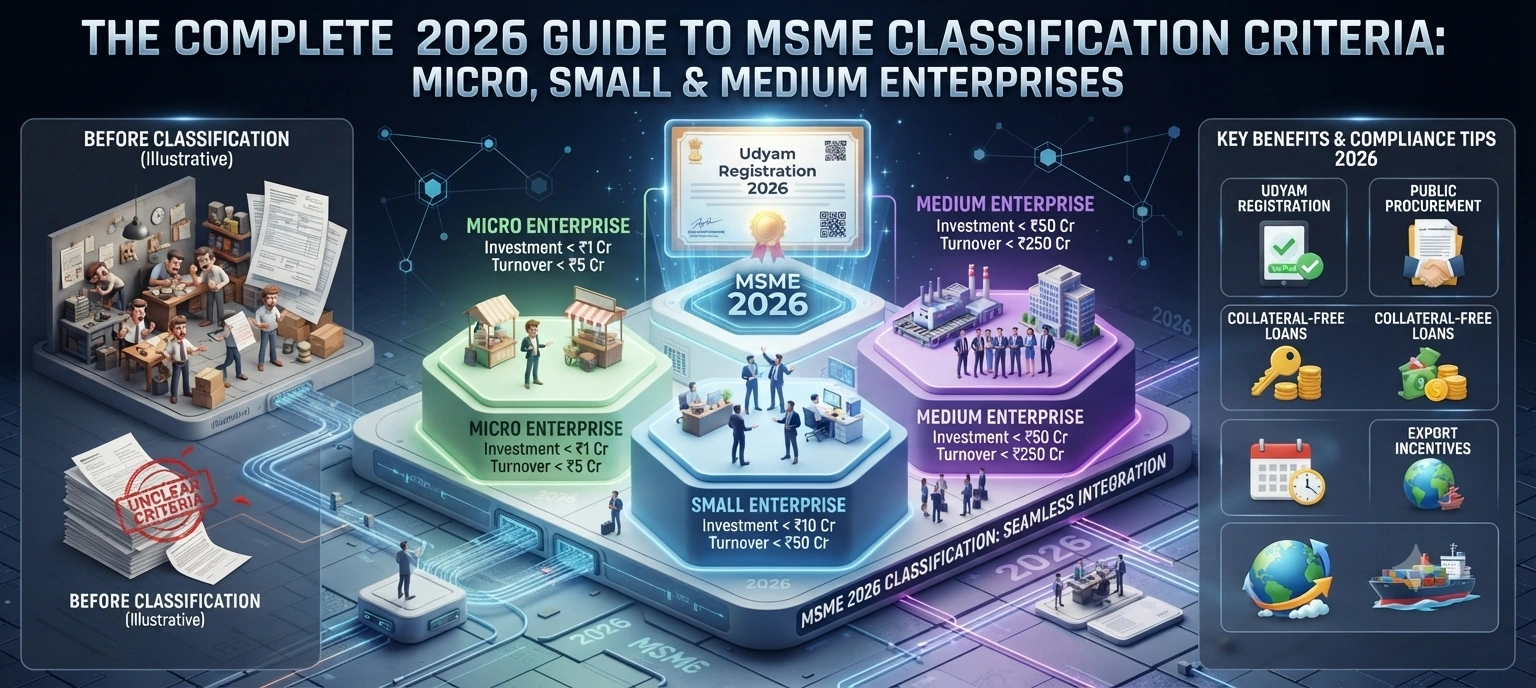
If your turnover is below ₹1.5 crore, you can choose the composition scheme. This is a simpler tax regime. You pay a fixed percentage of turnover as tax instead of calculating tax on each transaction.
The rates are: 1% for traders, 5% for manufacturers, 6% for service providers. You don't file monthly returns. You file quarterly returns. You can't claim input credit. You can't issue B2B invoices.
So when is this good? If you're a small retailer or service provider with mostly B2C sales, composition scheme simplifies your life. You pay less, file less, maintain fewer records.
When is it bad? If you buy lots of materials and need to claim input credit, the composition scheme costs you more. If your customers are businesses that need GST invoices, you can't serve them. If you want to scale up later, switching out of composition scheme is complicated.
Put simply, composition scheme works for small, simple businesses. For growing businesses, regular registration is better.
GST Technology Tools You Should Use
Technology makes GST compliance easier. You don't need expensive software. Many affordable options exist.
For invoicing: Tally, Busy, or even Zoho Books. These generate GST-compliant invoices automatically. For filing: the portal itself is user-friendly. For reconciliation: Excel with formulas works, but accounting software is better.
And honestly, cloud-based tools are worth it. They let you file from anywhere. They auto-calculate tax. They send payment reminders. They generate reports instantly.
Using proper accounting software reduces filing time from hours to minutes. Errors drop to nearly zero. You get real-time visibility into your tax liability.
FAQs on GST Compliance
Q1: Can I register for GST online completely, or do I need to visit an office?
In 2026, most registrations are fully online. You upload documents, the officer verifies them digitally or visits your premises. You don't need to go to an office unless specifically asked. The whole process happens on the GST .
Q2: What happens if I miss a filing deadline?
You'll face penalties. For GSTR-3B, it's 5% interest on unpaid tax. For other returns, it's ₹100 per day up to a maximum. But here's the thing—you can still file late. The penalty is automatic. You don't need permission to file late. Just file as soon as you realize the deadline passed.
Q3: How do I know if an invoice is GST-compliant?
Check for these: seller's GSTIN, buyer's GSTIN (if registered), HSN or SAC code, tax rate and amount, invoice number and date, and totals in words and figures. If any of these are missing, the invoice isn't compliant. Don't accept it from suppliers.
Q4: Can I claim input credit for invoices from unregistered suppliers?
No. The supplier must be GST-registered. Their GSTIN must be on the invoice. If they're not registered, you can't claim credit. This is strict. Many small businesses make this mistake.
Q5: What should I do if I discover an error in my filed return?
You can file an amended return. For GSTR-1, you can amend within one year. For GSTR-3B, amendments are trickier. You might need to file through GSTR-9 (annual return). The key is to correct it. Don't leave errors. They compound.
Practical Checklist for GST Compliance in 2026
Here's what you need to do right now:
- Check if you're above the GST registration threshold
- If yes, register immediately. If no, consider voluntary registration
- Get accounting software that's GST-compliant
- Train your team on proper invoicing
- Set calendar reminders for filing deadlines
- Start maintaining purchase and sales registers
- Reconcile GSTR-2A with your actual purchases monthly
- Keep all invoices organized and backed up
- Review your GST liability quarterly
- Consider hiring a GST consultant if you're unsure
Conclusion
GST compliance isn't complicated if you understand the basics and stay organized. In 2026, the rules are clearer, the systems are better, and the consequences of non-compliance are real.
But here's the good news: most compliance issues are preventable. Register properly. Use good software. File on time. Keep records. Claim only legitimate credit. That's really it.
Your business deserves to run smoothly without tax headaches. Get your GST house in order now, and you'll thank yourself later.
" } ```
© 2026 Tax Esquire | Expert CA Services in Greater Noida, Uttar Pradesh
8810380146 | info.taxesquire@gmail.com | taxesquire.in
This document is for informational purposes only. For personalised tax advice, consult our chartered accountants.