GST Compliance for Startups in 2026: A Complete Guide for Indian Entrepreneurs
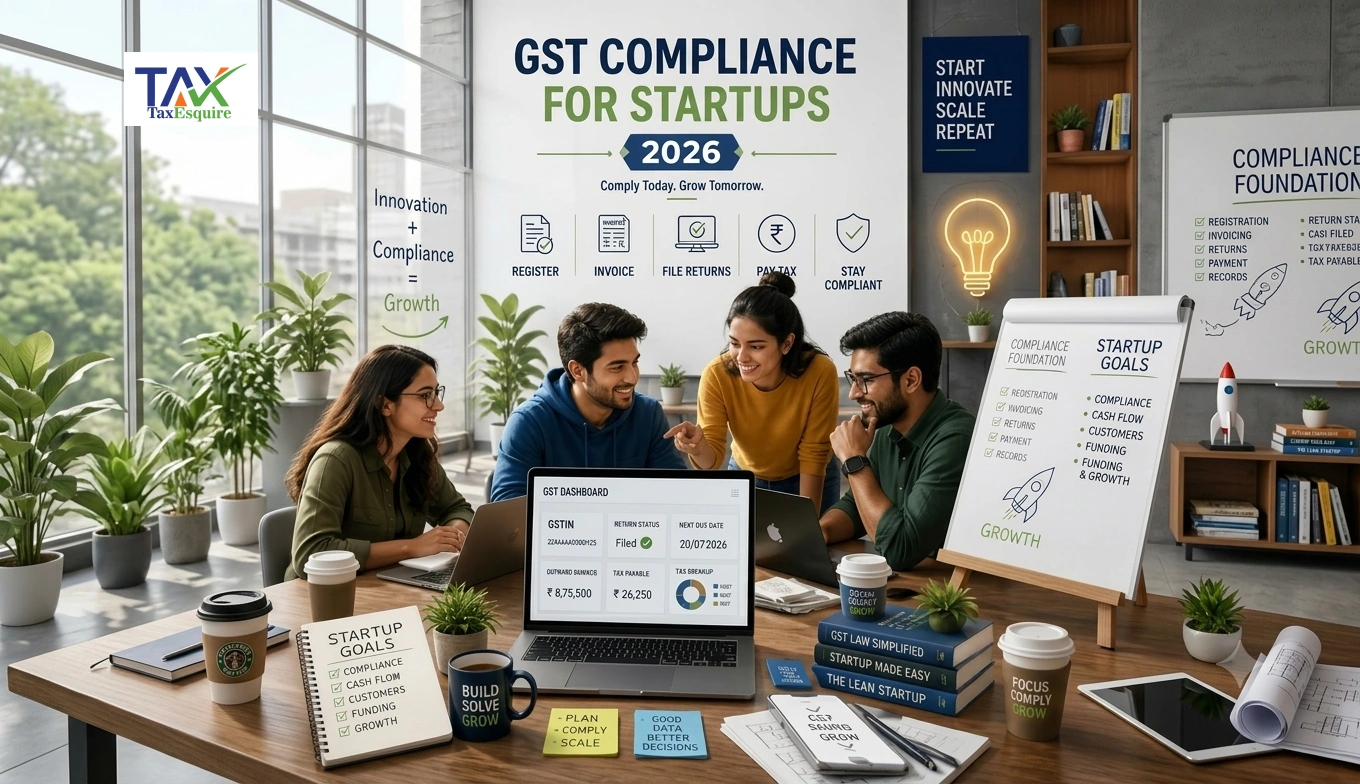
GST Compliance for Startups in 2026
Everything you need to know about GST registration, filing, and staying compliant as a startup
Why GST Matters for Your Startup Right Now
Look, I'm going to be straight with you. GST is one of the first compliance headaches most startup founders face. And honestly, getting it wrong early on can cost you thousands in penalties, blocked refunds, and audit notices you really don't want to deal with.
So what does this mean for you? Whether you're selling products online, offering services, or running a software company, GST is probably something you need to think about right now in 2026. The good news is that once you understand the basics, it's not actually that complicated.
The thing is, most startups get GST compliance wrong because they treat it as a one-time task instead of an ongoing responsibility. You register, file a few returns, and then forget about it. But GST is like maintaining your startup's financial health—you need to stay on top of it every month.
Getting GST right from day one helps you build credibility with banks, investors, and government agencies. Plus, you can claim Input Tax Credit on business expenses, which directly reduces your tax burden.
When Do You Actually Need to Register for GST?
Here's where most founders get confused. GST registration isn't one-size-fits-all. Your startup's turnover, business type, and location all matter.
Let me break this down for you. In 2026, if your annual turnover crosses 40 lakhs (20 lakhs for special category states like Himachal Pradesh, Uttarakhand, and Jammu & Kashmir), you're compulsory to register. And that's not negotiable. But here's the thing—even if you're below this threshold, you can still register voluntarily. Many startups do this because the input credit benefit outweighs the compliance burden.
| Business Type | Registration Threshold 2026 | Special Category States |
|---|---|---|
| Regular Supply of Goods | 40 lakhs | 20 lakhs |
| Services | 40 lakhs | 20 lakhs |
| E-commerce Transactions | 40 lakhs | 20 lakhs |
| Casual Taxable Person | No threshold | No threshold |
But wait, there's more. If you're a casual taxable person (someone making intermittent supplies), you don't get to wait for the threshold. You need to register immediately. Same goes if you're doing interstate transactions or importing goods.
Missing the GST registration deadline can result in penalties up to 10% of tax due or 25,000 rupees, whichever is higher. And your business can face operational issues because clients won't be able to claim input credit on your invoices.
Step-by-Step GST Registration Process
Alright, let's get practical. Here's exactly what you need to do to register for GST in 2026.
Step 1: Get Your Documents Ready
Before you even log into the GST portal, gather these documents. You'll save yourself hours of back-and-forth.
- PAN card (yours and your business partner's if applicable)
- Aadhar card for identity verification
- Business registration documents (shop act, partnership deed, certificate of incorporation)
- Proof of business location (rent agreement, property deed, or utility bill)
- Bank account details (IFSC code, account number, account holder name)
- Mobile number and email that you'll use for GST communication
Step 2: Register on the GST Portal
Go to www.gst.gov.in and click on the registration link. Create a login account using your email and phone number. This is your first interaction with the GST system, so keep these credentials safe.
Step 3: Fill Form GST REG-01
This is the main registration form. And honestly, this is where most startups make mistakes. You'll need to provide details about your business, partners, authorized signatories, and bank accounts. Take your time here. One wrong entry can delay your registration by weeks.
What I mean is, double-check every field. Your business name must match your registration documents exactly. Your address must be current and verifiable. Your authorized signatory details must be accurate.
Step 4: Upload Documents and Get OTP Verification
Upload scanned copies of your documents in PDF format. The system will send OTPs to your phone and email for verification. Respond to these within the given timeframe, or you'll need to restart the process.
Step 5: Wait for Approval
In most cases, registration is approved within 3-5 business days. You'll get an email with your GST number. But if the tax officer has questions, they'll ask for clarifications. This can take longer, so don't panic if you don't hear back immediately.
Once you have your GST number, you can immediately start issuing GST invoices, claim input credit on your purchases, and file returns. Your business becomes fully compliant and credible in the eyes of your suppliers and customers.
Understanding GST Return Filing Requirements
So you've got your GST number. Now comes the part that actually keeps most founders up at night—filing returns.
Here's the reality. GST returns aren't optional. They're compulsory, and the deadlines are strict. Miss one, and you'll face late fees that compound quickly.
Basically, there are three main returns you need to know about in 2026:
- GSTR-1: Sales register (monthly or quarterly, depending on your turnover)
- GSTR-2A: Auto-populated purchase register (for your reference)
- GSTR-3B: Summary return with tax liability calculation (monthly)
- GSTR-9: Annual return (filed once a year)
And that's really it for most startups. You don't need to file every single GST form. Your business size and nature determine which ones apply to you.
| Return Type | Who Needs to File | Due Date |
|---|---|---|
| GSTR-1 | All registered persons | 11th of next month |
| GSTR-3B | All registered persons | 20th of next month |
| GSTR-9 | Annual reconciliation | 31st December of next year |
Common GST Compliance Mistakes Startups Make
In my experience as a CA, I see the same GST mistakes over and over. Let me tell you what not to do.
Mistake 1: Not Maintaining Proper Invoice Records
Your invoices are your proof of transactions. If you don't maintain them properly, you can't claim input credit. And during audits, missing invoices become a nightmare. Store every invoice digitally. Use accounting software that auto-generates GST-compliant invoices.
Mistake 2: Mixing Personal and Business Expenses
This is huge. If you're buying office supplies but mixing them with personal purchases, you'll lose input credit eligibility. Keep your business bank account separate. Use a business credit card. Invoice yourself properly if you're mixing purchases.
Mistake 3: Filing Returns Late
Late filing penalties start at 100 rupees per day, up to 5,000 rupees per return. But the real damage is worse. Late returns can trigger tax officer scrutiny. They might think you're hiding something. File on time, always.
Mistake 4: Not Tracking Input Tax Credit Properly
Input credit is the biggest benefit of GST registration. But you can't claim it on just any expense. Fuel, personal vehicle use, and entertainment expenses don't qualify. Keep a separate list of eligible expenses.
Claiming false input credit is treated as fraud. The tax department can impose penalties up to 100% of the tax amount, plus interest. In serious cases, criminal prosecution is possible. Don't do it.
Essential Documents You Need to Keep
The tax department can ask for documentation at any time. Having these ready saves you from panic.
- All purchase invoices with GST details
- All sales invoices issued to customers
- Bank statements showing business transactions
- Credit card statements for business expenses
- Proof of GST payments made
- Email communications with tax authorities
And here's my advice: keep these documents for at least 6 years. That's the standard audit period in India. Digital backups are great, but also maintain physical copies of important documents.
GST Compliance Checklist for Startups in 2026
Use this checklist to stay on top of your GST responsibilities:
- Check if your turnover exceeds the registration threshold
- Gather all required documents for registration
- Register on the GST portal and get your GSTIN
- Set up accounting software that generates GST-compliant invoices
- Create a system to track all purchases and sales
- File GSTR-1 by the 11th of every month
- File GSTR-3B by the 20th of every month
- Reconcile GSTR-2A with your actual purchases
- Keep all invoices organized and backed up
- Plan for GST payments on time
- File annual GSTR-9 return before the deadline
GST Penalties and How to Avoid Them
Penalties are real, and they add up quickly. Here's what you need to know in 2026.
| Violation | Penalty | How to Avoid |
|---|---|---|
| Late registration | 10% of tax or 25,000 | Register immediately when threshold is crossed |
| Late return filing | 100 per day (max 5,000) | File returns before the 20th of next month |
| Non-filing of return | 10% of tax due | File immediately even if you have no sales |
| Incorrect invoice details | 5% of tax or 10,000 | Use accounting software to auto-generate invoices |
Frequently Asked Questions About GST for Startups
Q1: Can I claim input credit on office rent?
Yes, but only if your landlord is GST-registered and issues a GST invoice. If your landlord isn't registered, you can't claim credit. This is a common issue for startups, so check with your landlord before signing the lease.
Q2: What happens if I don't have a GSTIN but my customer asks for one?
Your customer can't claim input credit on your invoices without a valid GSTIN. This means they'll be reluctant to buy from you. If you're below the threshold, consider registering voluntarily. It's worth the compliance effort.
Q3: Can I file GST returns myself or do I need a CA?
You can file them yourself using the GST portal. But honestly, if you're doing multiple transactions daily, hiring a CA or accountant is smart. The cost is small compared to the risk of getting it wrong.
Q4: What's the difference between GSTR-1 and GSTR-3B?
GSTR-1 is your sales register. You list every invoice you've issued. GSTR-3B is your tax liability calculation. It shows your total output tax, input credit claimed, and the net tax you owe. Both are compulsory.
Q5: What if I make a mistake in my GST return?
You can file an amended return. Use GSTR-1 or GSTR-3B (amended) forms to correct errors. But do it quickly. The longer you wait, the more suspicious it looks to the tax department. And if they catch the error first, you'll face penalties.
Tools and Software to Simplify GST Compliance
You don't have to do this manually. There are tools that make GST compliance way easier.
- Tally ERP: Generates GST-compliant invoices automatically
- Zoho Books: Cloud-based accounting with built-in GST features
- Vyapar: Designed specifically for small businesses and startups
- Wave: Free invoicing software with GST support
- GST Suvidha Kendra: Government-authorized centers that help with filing
Pick one that fits your budget and business type. The investment in software saves you way more than it costs in penalties and accounting fees.
Using accounting software reduces errors by 80-90%. You'll spend less time on compliance and more time growing your business. Plus, you'll have real-time visibility into your GST liability and input credit balance.
What Happens During a GST Audit?
Getting audited isn't the end of the world. But being prepared makes all the difference.
The tax department can ask for an audit if they suspect discrepancies in your returns. They'll want to see your invoices, bank statements, and business records. So what does this mean for you? Keep everything organized and accessible.
And that's really it. If your records are clean, the audit will be smooth. The tax officer will verify your transactions, cross-check with buyers and sellers, and close the case. If they find issues, they'll raise a demand notice. You'll get a chance to respond and pay the difference.
The best defense against audit issues is maintaining proper records from day one. Not scrambling to find invoices six months later.
Final Thoughts: Your GST Compliance Strategy for 2026
Look, GST compliance doesn't have to be stressful. You just need a system and consistency.
Start by understanding if you need to register. If you do, get it done immediately. Don't wait. Then set up accounting software that automates invoice generation and GST calculations. File your returns on time, every time. Keep your documents organized. And if you're unsure about anything, talk to a CA.
The cost of getting GST right is small. The cost of getting it wrong is huge. So invest in compliance now, and you'll avoid headaches later.
" } ```
© 2026 Tax Esquire | Expert CA Services in Greater Noida, Uttar Pradesh
8810380146 | info.taxesquire@gmail.com | taxesquire.in
This document is for informational purposes only. For personalised tax advice, consult our chartered accountants.