GST Compliance for Startups in 2026: Complete Guide to Registration, Filing & Penalties
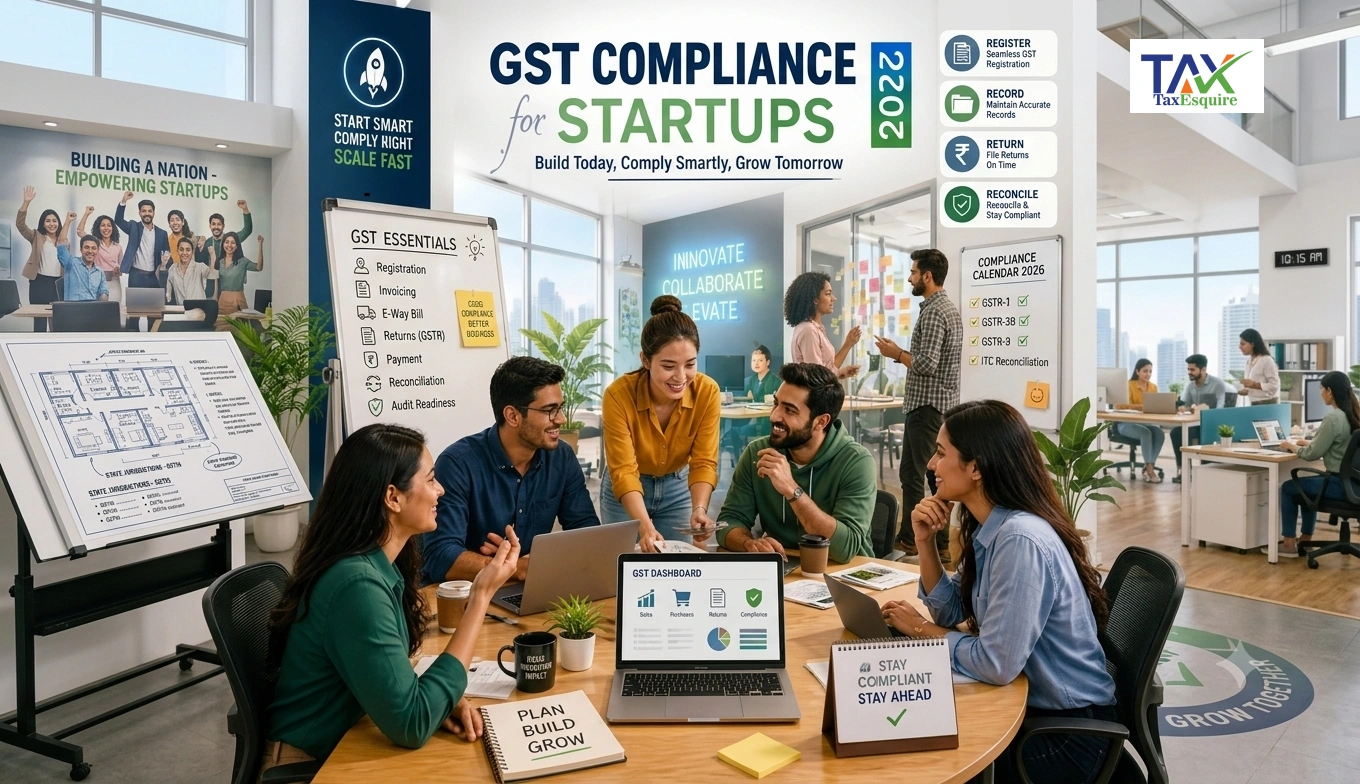
GST Compliance for Startups in 2026
Everything a startup founder needs to know about GST compliance, from day one to your first audit
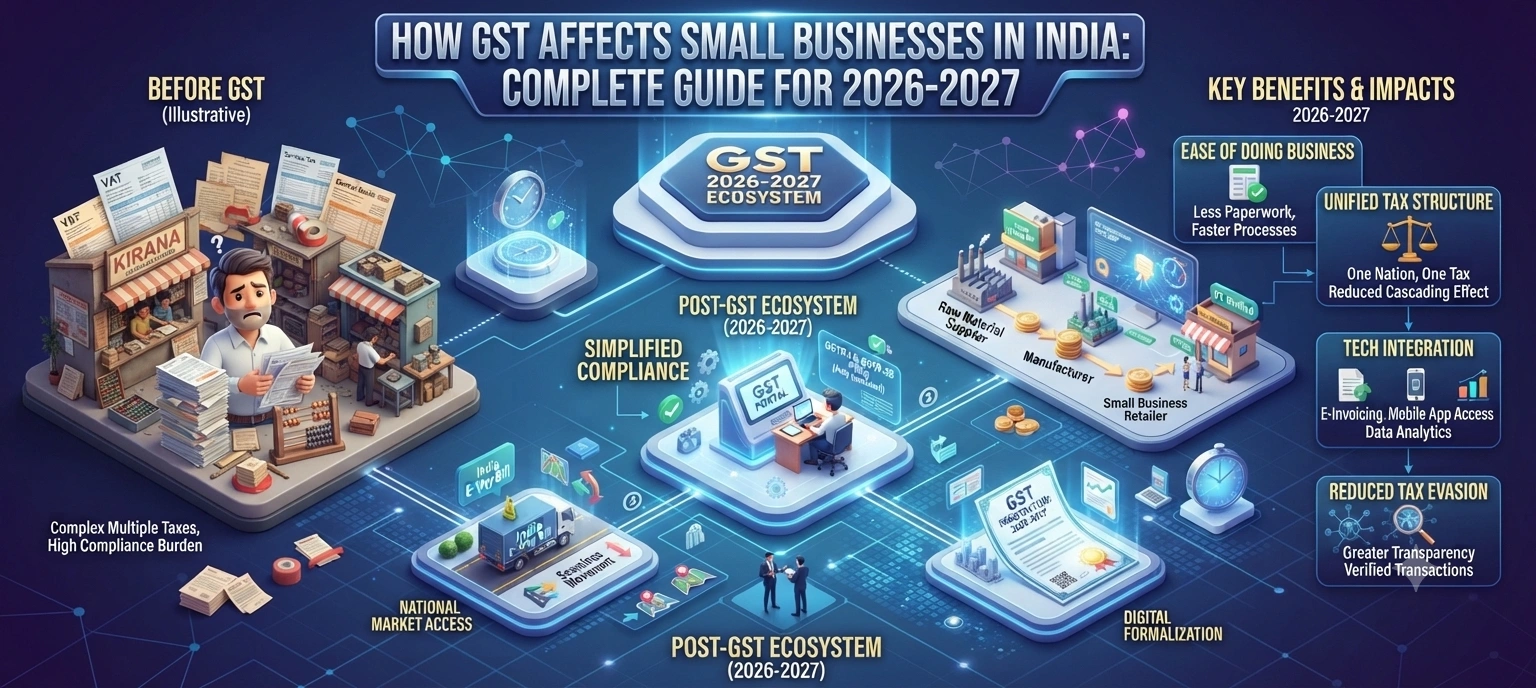
Why GST Compliance Matters for Your Startup Right Now
Look, I'll be honest with you. Most startup founders don't think about GST compliance until they get a notice from the tax department. And that's when things get messy. By then, you've already missed filing deadlines, accumulated penalties, and turned what should've been a simple process into a compliance nightmare.
The thing is, GST compliance isn't just about following rules. It's about protecting your startup's reputation, keeping your finances clean, and making sure you don't lose money to avoidable penalties. In 2026, the GST department is more active than ever, and they're using data analytics to catch non-compliant businesses faster.
So what does this mean for you? It means getting your GST house in order from day one. And that's really it—start right, stay compliant, sleep better at night.
Early GST compliance builds investor confidence. VCs and angel investors check your tax filings before writing checks. A clean GST record makes fundraising faster and easier.
Understanding GST Registration Thresholds in 2026
Let me start with the basics. Not every startup needs to register for GST immediately. The government has set turnover thresholds, and understanding these is your first step to smart compliance.
In 2026, the GST registration threshold for most businesses is ₹40 lakhs in a financial year. But here's where it gets interesting—if you're in specific states or doing specific business types, the threshold might be different.
| Business Type | Registration Threshold (2026) | Key Point |
|---|---|---|
| General Goods/Services | ₹40 lakhs | Annual turnover limit |
| E-commerce Aggregators | No threshold | Must register immediately |
| Interstate Trade Only | ₹20 lakhs | Lower threshold applies |
| Non-resident Taxable Persons | No threshold | Must register immediately |
And here's something many founders miss: you don't have to wait until you hit the threshold. You can voluntarily register for GST even if you're below the limit. Why would you do that? Because you can claim input tax credits on your purchases, which saves money if you're buying a lot of supplies or equipment.
If you cross the ₹40 lakh threshold mid-year, you must register within 30 days. Delayed registration can result in penalties up to ₹10,000 and interest on unpaid GST. Don't ignore this timeline.
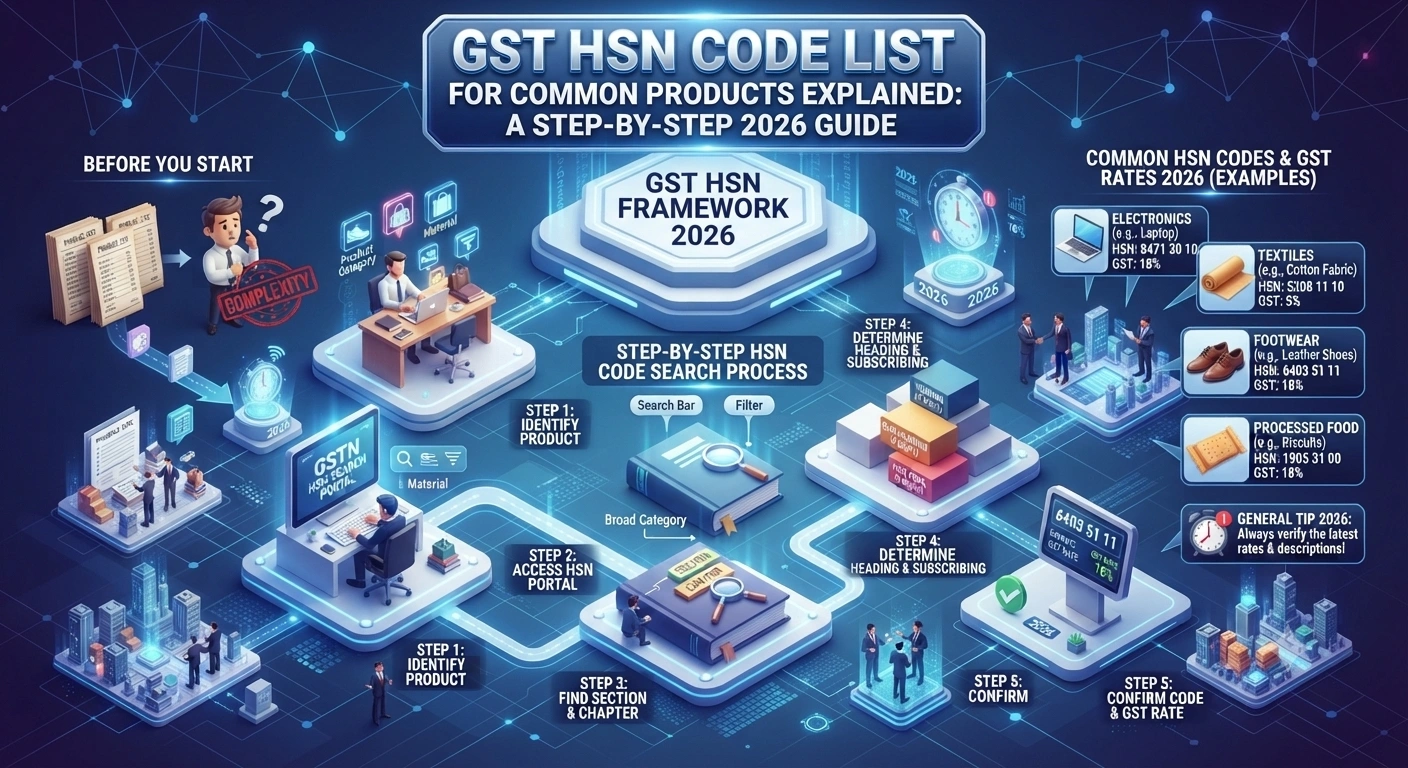
The GST Registration Process: Step-by-Step for Startups
Basically, GST registration happens online through the GST portal. It's not complicated, but it does need accurate paperwork. Let me walk you through it.
- Step 1: Create an account on the GST portal (www.gst.gov.in) using your PAN and email address
- Step 2: Fill out Form GST REG-01 with your business details, bank account information, and GSTIN of your authorized signatory
- Step 3: Upload supporting documents like PAN certificate, business registration, bank statement, and utility bills for address proof
- Step 4: Submit the application and get an Application Reference Number (ARN)
- Step 5: Wait for the tax officer to verify your details (usually 3-7 days)
- Step 6: Receive your GSTIN (13-digit Goods and Services Tax Identification Number) via email
So what happens after you get your GSTIN? You need to keep it safe. You'll use it on every invoice, every return, and every communication with the GST department. Lose it, and you're in trouble.
Here's a practical tip from my experience: keep a digital copy of your GST certificate in a secure cloud folder. Share it with your accountant. Make it part of your startup's essential documents list alongside your PAN and bank details.
Once registered, you can issue GST invoices to other businesses. This makes you a credible supplier and helps you win B2B contracts. Your invoices carry legal weight because they're GST-compliant.
GST Filing Requirements: Returns You Can't Miss
This is where things get real. Once you're GST-registered, you have to file returns. Missing deadlines is the biggest compliance mistake I see startups make.
In 2026, there are three main GST returns you need to know about. And honestly, the deadlines are tight, so mark them in your calendar right now.
| Return Type | Filing Deadline | Who Must File |
|---|---|---|
| GSTR-1 (Sales) | 11th of next month | All registered businesses |
| GSTR-2A (Purchases) | Auto-generated (no filing) | All registered businesses |
| GSTR-3B (Summary) | 20th of next month | All registered businesses |
| GSTR-9 (Annual) | 31st December (next year) | All registered businesses |
Let me explain what each return means in plain language. GSTR-1 is your sales report—you list every invoice you've issued to other businesses. GSTR-2A is automatically prepared by the government based on what your suppliers reported. GSTR-3B is your monthly reconciliation where you calculate the actual GST you owe.
And that's the tricky part. Many startups file GSTR-1 but miss GSTR-3B. Don't do that. GSTR-3B is where you actually pay your GST liability. Skip it, and you're not paying taxes—which triggers notices and penalties.
Late filing of GSTR-3B attracts penalties of ₹100 per day (up to ₹5,000). Late payment of GST itself attracts interest at 18% per annum. A single month's delay on a ₹1 lakh GST liability costs you ₹1,500 in interest alone.
Understanding GST Rates: What You'll Actually Pay
GST isn't a flat tax. Different products and services have different rates. This matters because you need to charge the right rate on your invoices, or you'll face scrutiny during audits.
- 0% GST: Basic food items, books, newspapers, certain medicines
- 5% GST: Packaged food, clothing, footwear, hotel stays, transport
- 12% GST: Processed food, cosmetics, mobile phones, computers
- 18% GST: Consulting services, software, financial services, general goods
- 28% GST: Luxury items, vehicles, cigarettes, alcohol
So what does this mean for your startup? If you're providing consulting services, you charge 18% GST. If you're selling packaged snacks, it's 5%. Get this wrong, and you're either overcharging customers or underpaying taxes.
Here's a real example: A software startup I worked with was charging 5% GST on their SaaS platform, thinking it qualified as "information technology services." The tax officer disagreed and charged them back taxes plus penalties. They should've charged 18%. Always verify your GST rate with your accountant before you start invoicing.
Correct GST rate classification helps you claim accurate input credits. If you're buying supplies for a 5% GST service, you can claim 5% input credit. This directly reduces your tax liability and improves cash flow.
Input Tax Credit: How to Save Money on GST
Here's something that keeps money in your startup's pocket. When you buy goods or services for your business, you pay GST on them. The government lets you claim that GST as an input credit against your output GST liability. Put simply, it's like getting a refund on business expenses.
But—and this is important—you can only claim input credit if you have proper GST invoices from your suppliers. A regular receipt won't work. Your supplier must be GST-registered and must issue a proper GST invoice with their GSTIN.
Let me give you a practical example. Your startup buys office furniture for ₹1 lakh. The supplier charges 18% GST, so you pay ₹18,000 in GST. You can claim this ₹18,000 as input credit. If your monthly GST liability is ₹20,000, you only pay ₹2,000 (₹20,000 minus ₹18,000). That's real money saved.
But here's where startups mess up. They don't keep invoices organized. They claim input credit for expenses that don't qualify. They don't match their GSTR-2A (auto-generated purchase list) with their actual invoices. When the tax officer audits them, they can't substantiate their claims, and the credit gets rejected.
- Keep all GST invoices in a dedicated folder (digital or physical)
- Match each invoice with your GSTR-2A before filing GSTR-3B
- Only claim input credit for business-related purchases
- Never claim credit for personal expenses or non-GST invoices
- Maintain a monthly input credit register
Claiming input credit without proper GST invoices is considered tax evasion. If caught, you'll lose the credit, pay back taxes with interest, and face penalties of 10-50% of the tax amount. It's not worth the risk.
GST Penalties and How to Avoid Them
Penalties are where startups lose money unnecessarily. And honestly, most penalties are avoidable if you just follow the basic rules.
| Violation | Penalty Amount |
|---|---|
| Late filing of return | ₹100 per day (max ₹5,000) |
| Non-filing of return | ₹10,000 or 10% of GST due |
| Delayed GST payment | 18% interest per annum |
| Wrong GST rate on invoice | ₹10,000 or 10% of tax short-paid |
| Issuing invoice without GSTIN | ₹10,000 per invoice |
| Not maintaining records | ₹25,000 or 10% of tax due |
And here's the thing—these penalties add up fast. A startup that files returns 15 days late every month is paying ₹1,500 just in late-filing penalties. Over a year, that's ₹18,000 for something that takes 30 minutes to fix.
The best way to avoid penalties? Automate your GST filing. Use accounting software that syncs with the GST portal. Set calendar reminders for filing deadlines. Assign one person in your team to own GST compliance. Make it someone's responsibility, not everyone's.
If you file returns on time and pay GST by the deadline, you're already ahead of 60% of startups. Compliance builds goodwill with tax authorities. You're less likely to face audits and more likely to get quick approvals for amendments.
Practical Compliance Strategies for Growing Startups
Alright, let's talk strategy. You don't need to hire a full-time GST manager, but you do need systems. Here's what I recommend for startups in 2026.
First, invest in accounting software. Tools like Tally, Zoho Books, or QuickBooks have built-in GST modules. They auto-calculate GST, generate compliant invoices, and help you file returns. The cost is usually ₹500-2,000 per month, which is way less than hiring an accountant full-time.
Second, maintain a proper invoice system. Every invoice must have your GSTIN, your customer's GSTIN (if they're registered), the correct GST rate, and the tax amount separately shown. This isn't optional—it's a legal requirement.
Third, keep a monthly GST reconciliation schedule. Before you file GSTR-3B, check your GSTR-2A against your actual invoices. Make sure the numbers match. This takes 2-3 hours but saves you from audit surprises.
Fourth, hire a CA or GST consultant for your first year. They'll set up your systems right, train your team, and file your first few returns. After that, you can handle it internally. The investment pays for itself in avoiding penalties.
And honestly, the biggest thing is mindset. View GST compliance not as a burden but as an investment in your startup's credibility. A clean GST record is an asset when you're raising money, taking loans, or scaling to new markets.
Common GST Mistakes Startups Make (And How to Avoid Them)
I've seen these mistakes a hundred times. Let me save you the trouble.
- Mistake 1: Delaying GST registration until the tax officer sends a notice. Register early, even voluntarily, to avoid penalties.
- Mistake 2: Filing GSTR-1 but not GSTR-3B. Both are needed. GSTR-1 shows sales, GSTR-3B shows actual tax liability.
- Mistake 3: Not maintaining GST invoices. You're legally required to keep invoices for 6 years. Auditors will ask for them.
- Mistake 4: Claiming input credit for personal expenses. This gets rejected during audits and invites scrutiny.
- Mistake 5: Changing your business address without updating GST records. This causes compliance issues and notice delays.
- Mistake 6: Not reconciling your books with GST returns. Mismatches are audit red flags.
Frequently Asked Questions About GST for Startups
Q1: Do I need to register for GST if my startup is below ₹40 lakhs turnover?
No, you don't have to. But you can voluntarily register if you want to claim input credits on your purchases. If you're buying a lot of equipment or supplies, voluntary registration might save you money.
Q2: What happens if I miss a GST filing deadline?
You'll get a late-filing penalty of ₹100 per day up to ₹5,000. But that's just the start. You'll also face interest on any unpaid GST at 18% per annum. The best approach is to file as soon as possible, even if it's late, rather than not filing at all.
Q3: Can I claim GST input credit on office rent?
Only if your landlord is GST-registered and issues a proper GST invoice. Most residential landlords aren't registered, so you won't get input credit. But if you're renting a commercial space from a GST-registered landlord, you can claim the credit.
Q4: What's the difference between GSTR-1 and GSTR-3B?
GSTR-1 is your sales report—it lists all the invoices you've issued. GSTR-3B is your tax reconciliation—it calculates your actual GST liability after adjusting for input credits. You need both. GSTR-1 without GSTR-3B means you're reporting sales but not paying taxes.
Q5: What documents do I need to keep for a GST audit?
Keep all invoices (both issued and received), bank statements, payment receipts, delivery notes, and purchase orders. Also keep your GST returns and correspondence with the tax department. Maintain these for at least 6 years. Digital copies are acceptable if they're properly archived.
Q6: Can I get a refund if I've paid extra GST?
Yes, you can file for a GST refund if you've overpaid. This usually happens if your input credits are more than your output tax. The process takes 60 days, and you need to file a refund application with proper documentation. Make sure your records are clean before applying.
GST Compliance Checklist for Startups in 2026
Here's a checklist you can use right now. Print it, bookmark it, or share it with your team.
- ☐ Check if your startup's turnover exceeds the GST registration threshold
- ☐ Register for GST on the official portal (www.gst.gov.in)
- ☐ Get your GSTIN and keep it safe
- ☐ Set up accounting software with GST modules
- ☐ Configure correct GST rates for your products/services
- ☐ Train your team on GST-compliant invoicing
- ☐ Create a calendar with GST filing deadlines
- ☐ Establish a monthly GST reconciliation process
- ☐ Hire a CA for the first year to set up systems
- ☐ Maintain organized invoice records (6 years minimum)
- ☐ File GSTR-1 by the 11th of next month
- ☐ File GSTR-3B by the 20th of next month
- ☐ Pay GST dues by the deadline to avoid interest
- ☐ File annual GSTR-9 by December 31st
Wrapping It Up: Your GST Compliance Roadmap
GST compliance doesn't have to be complicated. You don't need to be a tax expert to get it right. You just need to be organized, consistent, and proactive.
The startups that succeed with GST are the ones that treat it like any other business process. They assign responsibility, use the right tools, and review their compliance regularly. They don't wait for tax notices or audit letters. They stay ahead of the curve.
In 2026, tax authorities have better data, smarter analytics, and more resources to catch non-compliant businesses. But that's actually good news for you. It means if you're compliant, you're invisible to them. No notices, no audits, no stress.
So start today. Register for GST if you haven't already. Set up your systems. Mark your filing deadlines. And if you're unsure about anything, talk to a CA. A few hours of professional advice now saves you from months of compliance headaches later.
Your startup's success depends on clean finances and good compliance. GST is just one piece of that puzzle, but it's an important one. Get it right from day one, and you'll have more time to focus on what really matters—growing your business.
" } ```
© 2026 Tax Esquire | Expert CA Services in Greater Noida, Uttar Pradesh
8810380146 | info.taxesquire@gmail.com | taxesquire.in
This document is for informational purposes only. For personalised tax advice, consult our chartered accountants.