Tax Planning Strategies for Indian Businesses in 2026: A Complete CA Guide
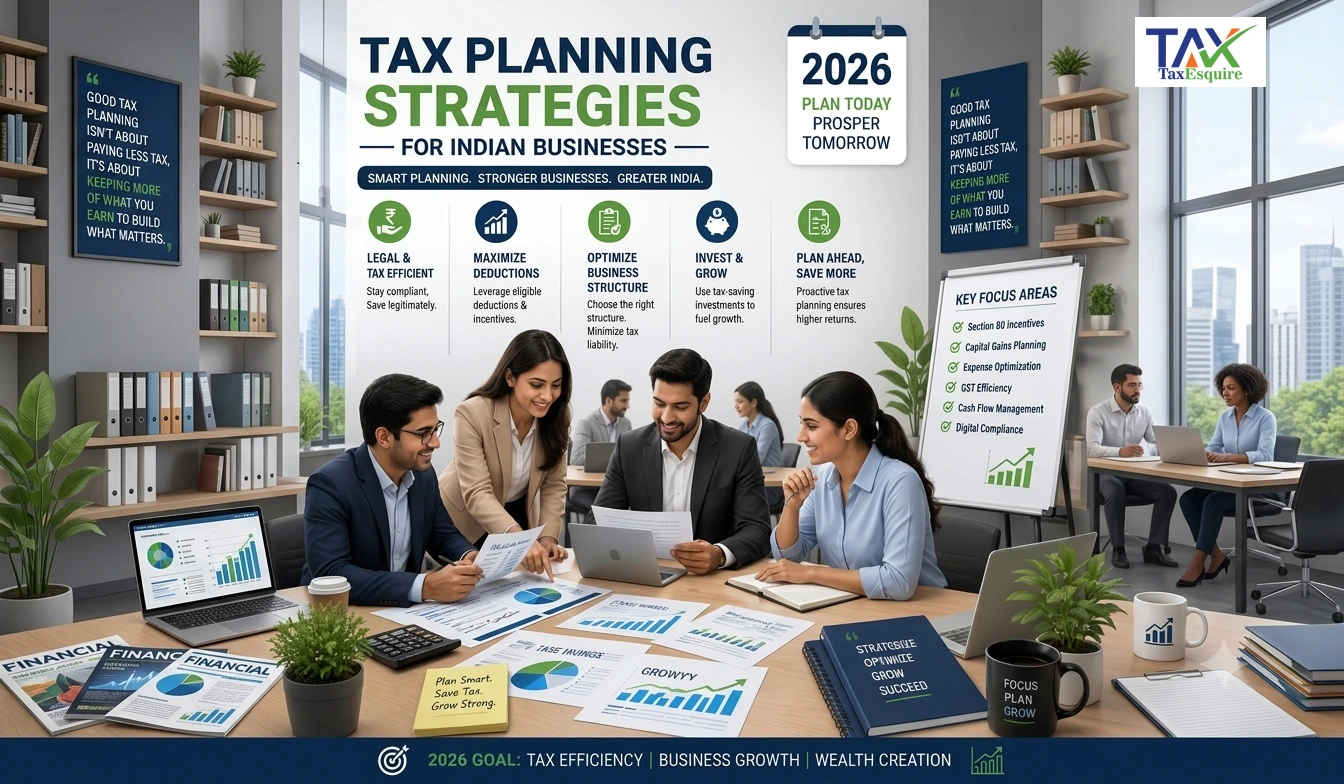
```json { "title": "Tax Planning Strategies for Indian Businesses in 2026: A Complete CA Guide", "meta_title": "Tax Planning for Indian Businesses 2026 | CA Expert Guide", "meta_description": "Master tax planning strategies for 2026. Learn deductions, GST compliance, investment options, and save taxes legally. Expert CA insights for businesses and startups.", "primary_keyword": "tax planning strategies India 2026", "secondary_keywords": ["income tax deductions 2026", "GST tax planning", "business tax saving", "tax compliance India", "investment tax benefits"], "slug": "tax-planning-strategies-indian-businesses-2026", "excerpt": "Smart tax planning isn't about hiding money—it's about making smart choices with what you earn. This guide walks you through real strategies that actually work for Indian businesses in 2026.", "category": "Tax Planning", "content": "
Tax Planning Strategies for Indian Businesses in 2026
Smart strategies to reduce your tax burden legally and keep more money in your pocket
Why Tax Planning Matters Right Now
Look, most business owners think tax planning is something you do in March when the financial year ends. But here's the thing—that's way too late. The real money gets saved when you plan from day one. And that's what separates smart business owners from the rest.
In 2026, the tax landscape in India has gotten more complex but also more flexible. The government's pushing businesses toward transparency, which actually means there are more legitimate ways to reduce your tax burden if you know where to look. So what does this mean for you? It means you need a strategy, not just a calculator.
Without proper planning, you're leaving money on the table. We're talking about 15-25% of your profits in many cases. That's not a small number.
Understanding Your Business Structure
The first big decision is your business structure. This isn't something you can change easily later, so get it right from the start. In 2026, you've got four main choices: sole proprietorship, partnership, private limited company, or LLP. Each one has different tax implications.
A sole proprietorship is simple but your personal and business income get taxed together. That means you're paying tax at your personal rate, which could be 30% or more. A private limited company separates your personal and business income, and the company tax rate is flat at 20-22% (depending on turnover and other factors). Put simply, a company structure often saves you money if your profit is decent.
LLPs sit somewhere in between. They give you the liability protection of a company but the tax flexibility of a partnership. For startups and professional services, LLPs are often the sweet spot.
Choosing the right structure in 2026 can save you 8-12% in taxes annually. That compounds over years and becomes serious money.
Income Tax Deductions You're Probably Missing
Here's where most business owners mess up. They claim basic deductions and call it a day. But there are so many more deductions you can legally claim if you keep proper records.
- Business expenses: Office rent, utilities, internet, phone bills. Keep every receipt.
- Employee salaries and benefits: Salary, bonus, gratuity, medical insurance.
- Professional fees: Accounting, legal, audit, consulting. These add up fast.
- Travel and conveyance: Client meetings, site visits, conferences. Document everything.
- Depreciation on assets: Machinery, vehicles, computers, furniture. This is huge and often ignored.
- Interest on business loans: Any borrowing for business gets deducted.
The key is documentation. Without proper bills and invoices, the tax department won't allow the deduction. In 2026, the income tax department is using AI to cross-check claims, so honesty is your best policy anyway.
And honestly, depreciation is the deduction that saves the most money. If you bought a laptop for 80,000 rupees, you can't deduct the whole amount in year one. But you can deduct depreciation over 4-5 years, which reduces your taxable income significantly.
Don't claim fake expenses. The income tax department has advanced data analytics now. They cross-check with vendors, banks, and GST records. Getting caught costs you the tax, penalties, and interest—often doubling your original liability.
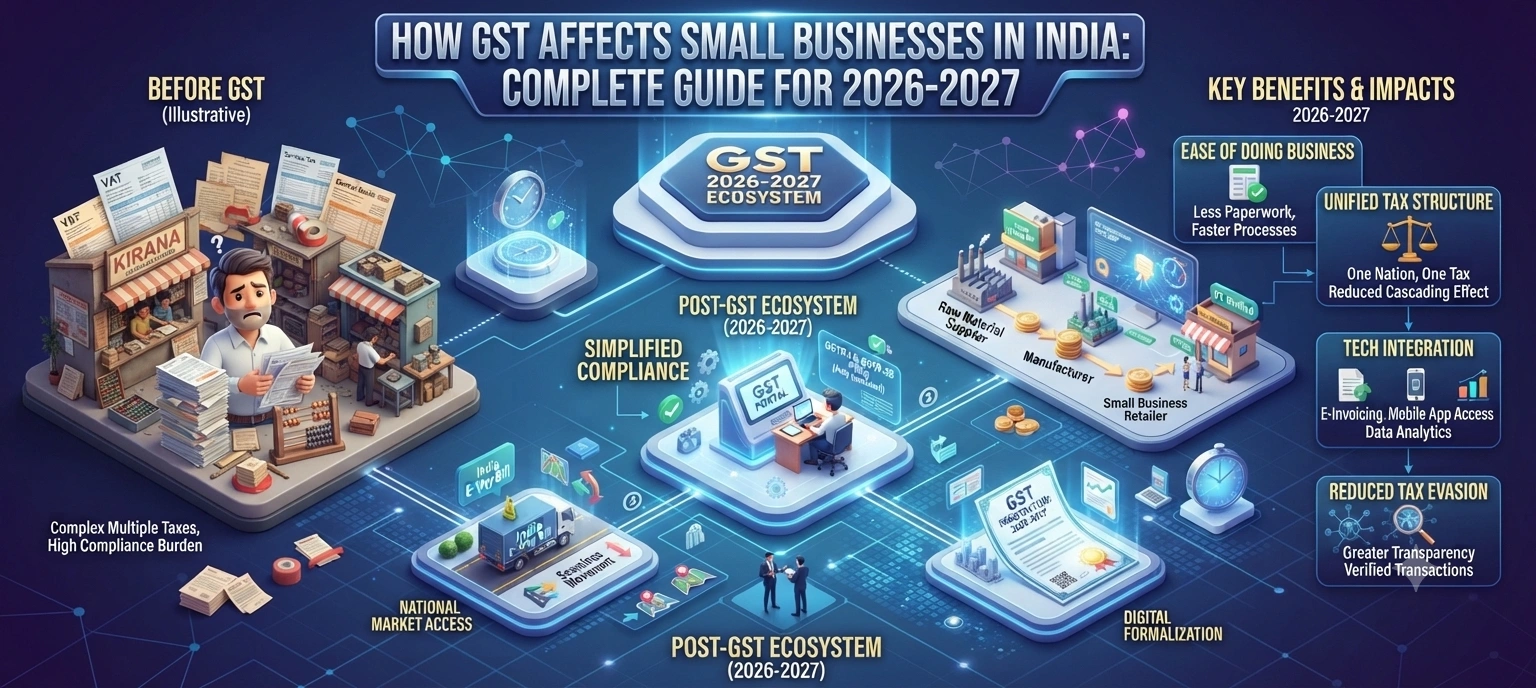
GST Planning for 2026
GST is a game-changer for tax planning, and most businesses aren't using it right. When you're GST registered, you can claim input tax credit on everything you buy. That means if you buy goods worth 1,00,000 rupees at 18% GST, you get 18,000 rupees back as credit.
But here's the thing—you only get that credit if you charge GST to your customers. So if you're selling to non-GST customers, you're losing money. This is why understanding your customer base matters in 2026.
| Scenario | GST Benefit | Best For |
|---|---|---|
| B2B sales (selling to other businesses) | Full input credit available | Manufacturers, wholesalers |
| B2C sales (selling to consumers) | Limited credit benefit | Retailers, service providers |
| Composition scheme (turnover under 50 lakh) | Simple filing, no credit | Small shops, startups |
In 2026, composition scheme is still available for businesses with turnover below 50 lakh rupees. If you're in this bracket and don't want the hassle of monthly GST returns, composition is your friend. You pay a fixed 1-6% tax based on your business type and don't need to track input credit at all.
But if your turnover is above 50 lakh, you're on regular GST. Make sure you're invoicing correctly and claiming every input credit you're allowed. Missing even one credit means you're paying GST twice on the same expense.
Investment-Based Tax Savings
Now, let me talk about something most business owners ignore—using investments to save taxes. In India, you get tax deductions for specific investments, and in 2026, these are more flexible than ever.
Section 80C lets you deduct up to 1.5 lakh rupees for things like life insurance, provident fund, and fixed deposits. Section 80D covers health insurance premiums—up to 25,000 rupees for yourself and 25,000 for your parents if they're above 60. That's 50,000 rupees in deductions just from health insurance.
For business owners, Section 80CCE allows additional deductions for infrastructure investments. And Section 80EE is still available for first-time home buyers in 2026, giving you up to 1.5 lakh rupees in deductions on home loan interest.
- Life insurance: Both term and endowment policies qualify.
- ELSS (Equity Linked Savings Scheme): Invest in mutual funds and get tax benefits plus growth.
- National Savings Certificate (NSC): Safe, guaranteed returns, tax-deductible.
- Sukanya Samriddhi Scheme: For girl children, great tax benefit.
- Senior Citizen Savings Scheme: If you're above 60, this is gold.
The thing is, these aren't tax dodges—they're legitimate ways the government encourages saving and investing. You're saving taxes while building wealth. That's a win-win.
A smart investment strategy in 2026 can save you 30,000-50,000 rupees in taxes annually while building assets for your future.
Salary Optimization for Company Owners
If you own a company, how you take money out matters hugely for taxes. Most owners take everything as profit, which gets taxed at 20-22%. But there's a smarter way.
You can take a salary from your company. Salary is deductible from company income, so it reduces the company's taxable profit. At the same time, you pay personal income tax on the salary. Sounds like you're paying tax twice? Not really—because the company tax rate is often lower than your personal rate.
Here's an example: Say your company makes 10 lakh rupees profit. If you take it all as profit, the company pays 2.2 lakh in tax (22%), and you pay personal tax on the dividend. But if you take 6 lakh as salary and 4 lakh as profit, the company's taxable income drops to 4 lakh, the company tax is 88,000 rupees, and you pay personal tax only on the salary portion. The math works out better in most cases.
In 2026, you also have options like giving yourself performance bonus, which is deductible, or taking dividends, which are tax-free in your hands (the company pays dividend distribution tax instead). Work with a CA to find the right mix for your situation.
Compliance That Saves You Money
Here's something most people don't realize: good compliance isn't just about avoiding penalties. It's about saving taxes. When you file your returns on time and keep proper records, you get access to more deductions and benefits.
In 2026, the income tax department uses data matching extensively. They cross-check your GST returns with your income tax return. They match your bank deposits with your reported income. They check your expenses against vendor records. If everything matches, you're fine. If there are gaps, they'll come asking questions.
Filing on time also matters. If you file within the due date, you get certain benefits. If you file late, even by a day, you lose those benefits. In 2026, due dates are strict, and there's no grace period.
- File GST returns by the 20th of each month (for regular scheme).
- File income tax return by July 31st (extended from June 30th in recent years).
- File TDS returns by the 7th of each month.
- File annual information returns (AIR) if required.
- Maintain proper books of accounts and invoices for 6 years.
Basically, good record-keeping and timely filing aren't just legal requirements—they're tax-saving tools. They give you credibility with the tax department and help you claim every deduction you're entitled to.
If you don't file your return on time, you can't claim certain deductions and benefits. You also become liable for penalties and interest. In some cases, the tax department can initiate prosecution. Don't take compliance lightly.
Common Tax Planning Mistakes to Avoid
So what are the biggest mistakes I see business owners make? Let me break them down.
First mistake: mixing personal and business expenses. Your personal car expenses aren't deductible. Your home internet isn't fully deductible unless you have a dedicated office. Keep them separate from day one.
Second mistake: not documenting expenses. You can't claim what you can't prove. A receipt isn't optional—it's mandatory. In 2026, the tax department has digital records of most transactions, so they can verify claims easily.
Third mistake: delaying tax planning until March. By then, you can't change your business structure or make strategic investments. Plan from April itself.
Fourth mistake: not claiming all deductions you're allowed. Most business owners claim 40-50% of what they're actually entitled to. It's like leaving money on the table.
Fifth mistake: hiring unqualified people for tax work. A bad CA or accountant costs you more than what you pay them. They miss deductions, file wrong returns, and expose you to penalties.
Tax Planning for Different Business Types
Tax planning isn't one-size-fits-all. What works for a manufacturing business doesn't work for a service business. Let me break down strategies for different types.
For Manufacturing Businesses: Focus on depreciation. Machinery and equipment depreciate fast, and you can claim the full depreciation benefit. In 2026, you can also claim investment allowance on certain capital investments, which gives you an extra deduction. Track your inventory carefully—inventory valuation affects your profit.
For Service Businesses: Your biggest deductions are professional fees and employee costs. Since you don't have inventory, focus on optimizing salary structure and claiming all professional development costs. In 2026, training and upskilling expenses are increasingly deductible.
For Trading Businesses: Inventory management is key. The way you value closing inventory affects your profit. First-in-first-out (FIFO) and weighted average methods give different results. Choose wisely based on your situation. Also, claim deductions for bad debts and discounts given.
For Startups: You might be running at a loss initially, and that's fine. You can carry forward losses for 8 years and set them off against future profits. This is huge for startups—it means your first profitable year's profit might be tax-free because of carried-forward losses. Also, startups get special tax incentives in 2026 if you're in certain sectors.
Using Technology for Better Tax Planning
In 2026, technology is changing how you can plan taxes. Most businesses now use accounting software like Tally, Zoho, or QuickBooks. These aren't just for bookkeeping—they help with tax planning.
A good accounting software tracks expenses by category automatically. At the end of the year, you can see exactly where your money went. This helps you identify deductions you might have missed. It also makes your books clean and audit-ready.
And honestly, when you have clean digital records, the tax department is more likely to accept your claims without questions. They see you're serious about compliance.
In 2026, many tax departments are also moving to AI-based assessment. This means they're not manually checking every return—they're using algorithms. Ironically, this makes honest tax planning easier. If you're honest and your records are clean, the algorithm approves your return faster.
Using accounting software in 2026 saves you time, reduces errors, and helps identify tax-saving opportunities automatically. Most software has built-in tax planning features.
FAQs on Tax Planning for 2026
Q1: What's the best business structure for tax planning in 2026?
It depends on your profit level and business type. If you're making above 25 lakh rupees annually, a private limited company usually saves more taxes than a sole proprietorship. For professional services, an LLP is often better. Talk to a CA who knows your numbers before deciding.
Q2: Can I claim my home office rent as a deduction?
Yes, but only the portion used for business. If you have a 100 square meter home and use 20 square meters for office, you can claim 20% of rent. You also need to show that you genuinely work from home—not just claim it without evidence. In 2026, the tax department checks this carefully.
Q3: Is GST registration mandatory for all businesses?
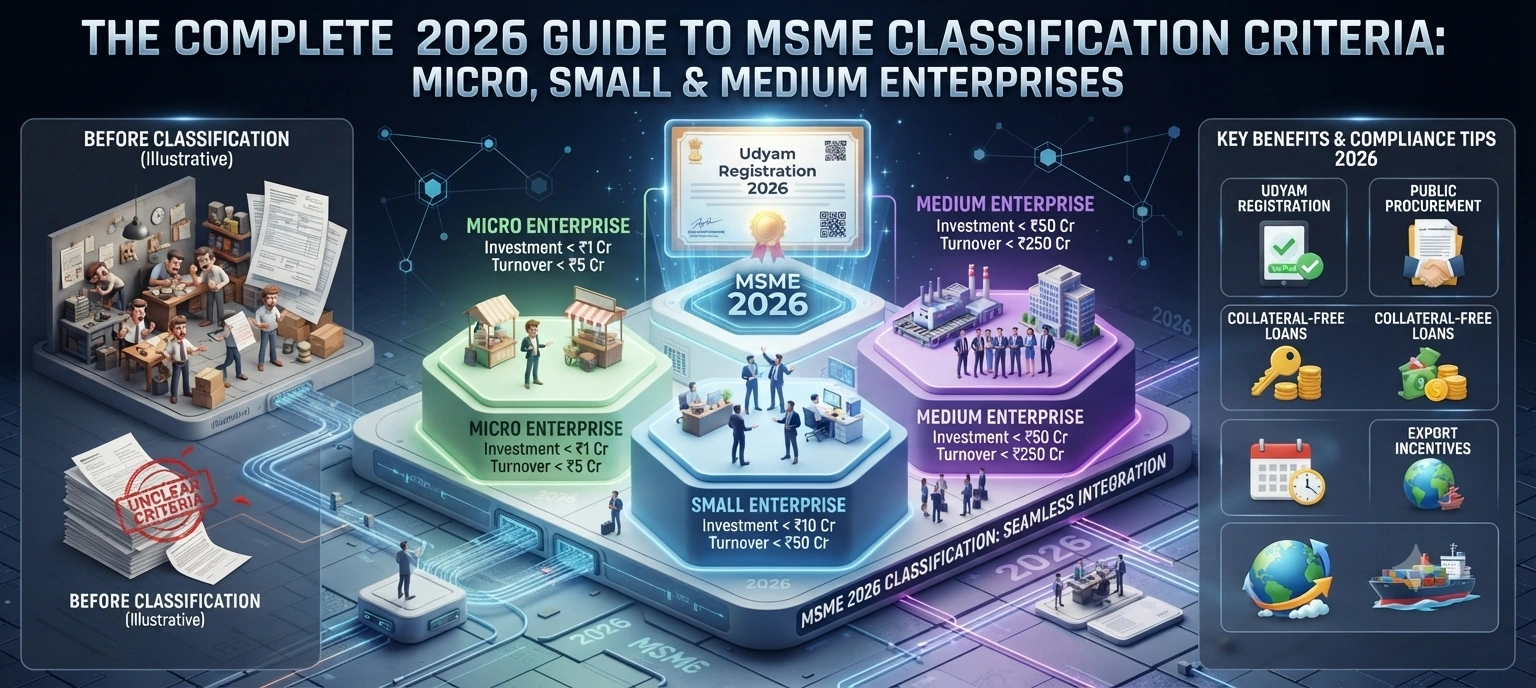
Not for all. If your annual turnover is below 40 lakh rupees (20 lakh for services), GST registration is optional. But even if you're below the threshold, getting registered can be beneficial if you're buying goods at GST and want to claim input credit. In 2026, most businesses benefit from being registered, even if it's not compulsory.
Q4: When should I start tax planning for the year?
Start in April, the first month of the financial year. By the time you reach March, it's too late to make structural changes. Early planning lets you make investments, adjust salary, and optimize your business structure before the year ends.
Q5: What happens if I get audited in 2026?
If your turnover is above 1 crore rupees or if you're randomly selected, you might face an audit. Don't panic. If your books are clean and your deductions are genuine, you'll be fine. The key is having proper documentation for every claim. In 2026, audits are mostly document-based, not harassment-based.
Q6: Can I carry forward losses to the next year?
Yes. If you make a loss in the current year, you can carry it forward for 8 years and set it off against future profits. This is really important for startups. Just make sure you file your return on time—if you file late, you lose this benefit.
Q7: What's the difference between tax avoidance and tax evasion?
Tax avoidance is legal—it's using the tax law to pay less tax. Tax evasion is illegal—it's hiding income or claiming fake deductions. In 2026, the line is clear, and the tax department is good at spotting evasion. Stick to avoidance, which means using legitimate deductions and strategies.
Moving Forward: Your Tax Planning Action Plan
So here's what you should do right now if you want to save taxes in 2026. First, get your business structure right. If you're still a sole proprietor and making decent money, talk to a CA about incorporating. Second, audit your current expenses and see what you're missing. Most businesses miss 20-30% of deductible expenses.
Third, if you're not using accounting software, get one. It's not expensive, and it saves you time and money. Fourth, make a list of all the investments you're eligible for and start contributing. Don't wait until the last month.
Fifth, hire a good CA. Not someone who just files returns, but someone who actually plans your taxes. A good CA pays for themselves many times over through the deductions and benefits they identify.
And finally, understand that tax planning is ongoing. It's not something you do once a year. It's something you do throughout the year as your business evolves.
The businesses that pay the least tax aren't the ones that cheat. They're the ones that plan smartly and stay compliant. In 2026, that's easier than ever because the rules are clearer and the tools are better. Make tax planning a priority, and you'll see the difference in your bottom line.
" } ```
© 2026 Tax Esquire | Expert CA Services in Greater Noida, Uttar Pradesh
8810380146 | info.taxesquire@gmail.com | taxesquire.in
This document is for informational purposes only. For personalised tax advice, consult our chartered accountants.