ITR-4 New Changes AY 2026-27: Complete Compliance Guide for Professionals and Businesses
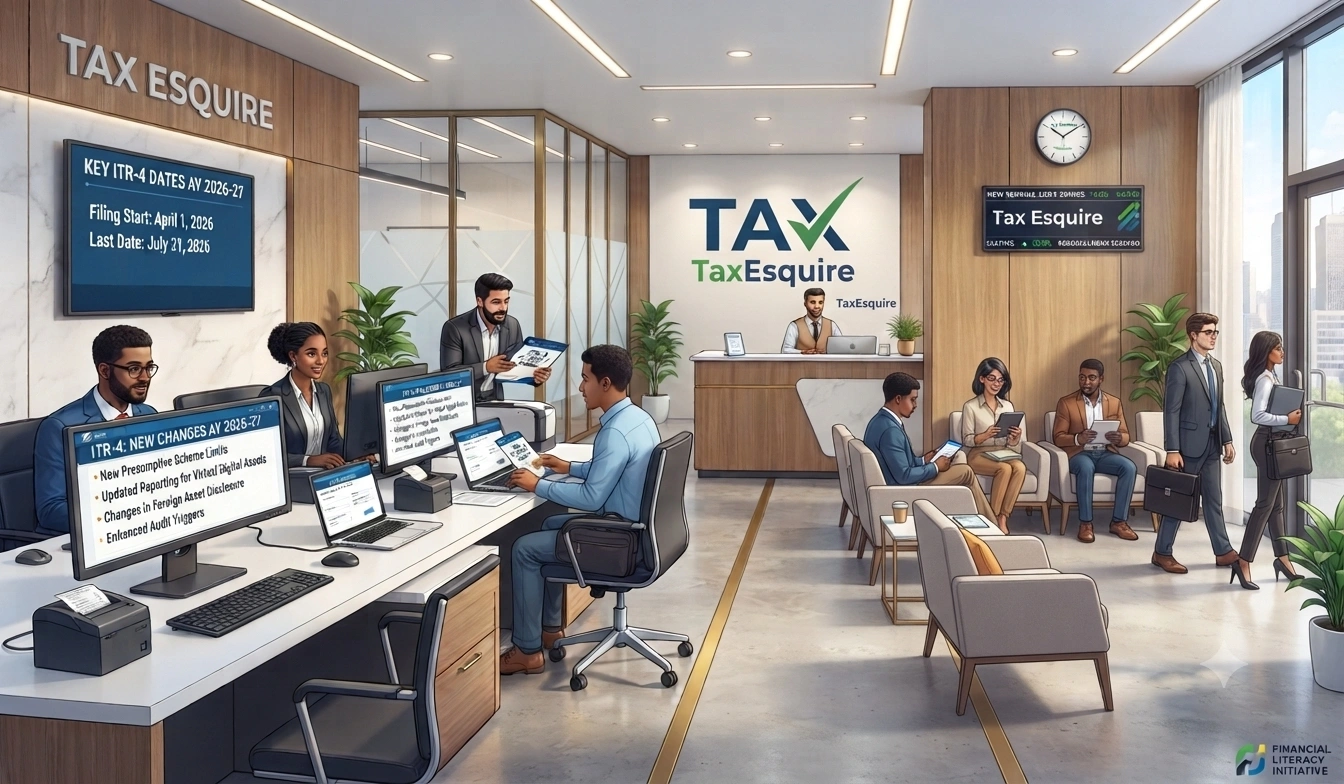
ITR-4 New Changes AY 2026-27
Everything you need to know about the latest ITR-4 filing requirements and deduction updates for assessment year 2026-27
What's New in ITR-4 for AY 2026-27?
Look, the Income Tax Department has rolled out some really important changes to ITR-4 for the 2026-27 assessment year. If you're a professional, consultant, or small business owner, you need to pay attention. These changes affect how you file your returns, claim deductions, and report your income.
The thing is, ITR-4 isn't just a simple form anymore. It's become more detailed, more stringent, and honestly, more aligned with the government's push for digital transparency. So what does this mean for you? Let's break it down.
The changes introduced in AY 2026-27 focus on three main areas: stricter documentation requirements, revised deduction limits, and enhanced reporting of digital transactions. But here's what really matters—understanding these changes now will save you from penalties and notices later.
Filing ITR-4 correctly in AY 2026-27 gives you access to presumptive income schemes that can significantly reduce your tax burden, especially if your turnover is below ₹5 crore.
Who Needs to File ITR-4 in 2026-27?
And let me be clear about this—ITR-4 isn't for everyone. It's designed specifically for people with business and professional income. If you're earning salary, dividends, or rental income only, you'll need a different ITR form.
In AY 2026-27, you must file ITR-4 if you fall into any of these categories:
- You're a professional (doctor, lawyer, CA, architect, engineer, consultant) with gross professional income
- You run a small business with annual turnover up to ₹5 crore
- You have income from both business and other sources
- You're opting for the presumptive income scheme under Section 44ADA or 44AA
- You have rental income along with business or professional income
- Your total income exceeds the basic exemption limit and includes business income
But here's the thing—even if your income is below the exemption limit, you might still need to file if you want to claim refunds or carry forward losses.
Key Changes in Deduction Rules for AY 2026-27
The deduction landscape has shifted quite a bit for 2026-27. The Income Tax Department wants more transparency, better documentation, and clearer nexus between expenses and income. Put simply, you can't just claim any expense—you need to prove it's directly related to your business or profession.
Section 44ADA Changes (Presumptive Income for Professionals)
Section 44ADA has always been a game-changer for professionals. In AY 2026-27, the rules have been tightened but also clarified. If your gross professional income doesn't exceed ₹50 lakhs, you can claim income as 50% of gross receipts without maintaining detailed books.
But—and this is important—you still need to maintain basic records. Invoices, bank statements, and a simple cash book are non-negotiable. The new rules require digital documentation for all transactions above ₹50,000.
| Gross Professional Income | Presumptive Income Rate | Key Requirement |
|---|---|---|
| Up to ₹50 lakhs | 50% of gross receipts | Digital records for transactions above ₹50,000 |
| ₹50 lakhs to ₹1 crore | 60% of gross receipts | Maintain complete books of accounts |
| Above ₹1 crore | Actual income method | Full audit required |
Don't try to hide income to stay under ₹50 lakhs just to use Section 44ADA. The tax department is actively cross-checking with GST returns, bank deposits, and client records. Getting caught means penalties up to 200% of tax plus prosecution.
Section 44AA Changes (Presumptive Income for Small Businesses)
If you run a small business—retail, trading, manufacturing, or services—Section 44AA is your friend. For AY 2026-27, the presumptive income rate remains 8% of turnover if turnover doesn't exceed ₹2 crore.
Here's what changed though. The new rules now require you to maintain GST records and reconcile them with your income tax filing. If there's a mismatch, the tax officer can reject your presumptive income claim and demand actual books of accounts.
- Turnover up to ₹2 crore: 8% presumptive income allowed
- Turnover ₹2 crore to ₹5 crore: You can still use 8% but must maintain detailed records
- GST reconciliation is now mandatory for all businesses
- Digital payment records must match your GST and income tax returns
- Cash transactions above ₹10,000 per day need documentation
Allowable Deductions Under ITR-4 for AY 2026-27
Basically, any expense that's directly related to earning your income can be deducted. But the key word here is "directly." The tax department won't allow personal expenses, even if you've mixed them with business expenses.
Here's what you can definitely deduct in AY 2026-27:
- Rent for office or commercial space (with lease agreement)
- Salaries and wages paid to employees (with PF and ESI records)
- Professional fees and consultancy charges
- Cost of materials and raw materials
- Electricity, water, and utility bills for business premises
- Insurance premiums (business-related only)
- Depreciation on fixed assets as per the new rates
- Travel expenses for business (with proof of business purpose)
- Office supplies and stationery
- Subscriptions to professional journals and software
But here's where many people go wrong. You can't deduct personal expenses like your home mortgage interest (unless you have a home office with proper allocation), personal vehicle costs, or family meals, even if they happen to involve business discussions.
New Restrictions on Deductions in 2026-27
The 2026-27 rules have introduced some new restrictions that you need to know about. First, meal and entertainment expenses are now capped at 2% of gross receipts. Second, foreign travel expenses require specific documentation proving business purpose.
And that's really important because the tax department has been aggressive about disallowing travel expenses. You'll need invoices, boarding passes, hotel bills, and a clear business purpose memo to justify any foreign travel deduction.
Home office deduction is now easier to claim. If you work from home, you can deduct 30% of rent, electricity, and internet costs. Just maintain a separate room record and take photographs for documentation.
Digital Transaction Reporting Requirements
In AY 2026-27, the focus on digital transparency has increased significantly. The Income Tax Department now tracks all your digital transactions—bank deposits, online transfers, credit card payments, e-wallet transactions.
So what does this mean for your ITR-4 filing? You need to reconcile your bank statements with your income tax return. Every deposit above ₹50,000 should have a corresponding entry in your books. Every withdrawal should be explained.
The new ITR-4 form now has a dedicated section for reporting digital payments. You'll need to provide:
- Total digital receipts and their sources
- Total digital payments and their purposes
- Cash transactions (if any) and their justification
- Credit card and online payment details
- International transactions if applicable
Basically, the government wants to see that your lifestyle matches your income. If you're depositing ₹1 crore annually but claiming only ₹50 lakhs income, that's a red flag.
Cash transactions are under intense scrutiny in AY 2026-27. If your cash deposits exceed 20% of your total receipts, the tax officer can initiate a detailed scrutiny. Maintain proper documentation for every cash transaction above ₹10,000.
Depreciation Changes for 2026-27
Depreciation rates have been revised for AY 2026-27. This is significant because depreciation can substantially reduce your taxable income. The new rates are higher for most asset categories, which is good news for you.
| Asset Category | Old Rate | New Rate (AY 2026-27) |
|---|---|---|
| Buildings | 5% | 6% |
| Plant and Machinery | 15% | 17% |
| Furniture and Fixtures | 10% | 12% |
| Vehicles | 15% | 18% |
| Computer and IT Equipment | 40% | 43% |
Here's the practical impact. If you buy a laptop for ₹1 lakh in April 2026, you can claim ₹43,000 depreciation in AY 2026-27. That's a direct reduction in your taxable income.
But remember, you need to maintain proper records. Asset register, purchase invoices, and proof of payment are essential. The tax department will cross-check depreciation claims against your fixed asset schedule.
Filing Process and Documentation for AY 2026-27
Filing ITR-4 in 2026-27 is more streamlined than before, but it also requires better documentation. Here's the step-by-step process you need to follow:
- Gather all invoices, bills, and bank statements for the financial year
- Reconcile your books with your GST returns and bank statements
- Calculate your income using either actual method or presumptive scheme
- Claim all eligible deductions with proper documentation
- Fill out the ITR-4 form online on the Income Tax portal
- Get your return digitally signed or file it with your signature
- Keep all supporting documents for at least 6 years
The thing is, many people file ITR-4 without maintaining proper documentation. Then when the tax officer asks for proof, they can't provide it. That's when the real trouble starts.
Essential Documents to Maintain
In AY 2026-27, the tax department expects you to maintain these documents:
- Books of accounts (if not using presumptive income)
- Purchase and sales invoices
- Bank statements and reconciliation statements
- GST returns and reconciliation with income tax
- Fixed asset register and depreciation schedule
- Proof of deductions (bills, receipts, invoices)
- Employee records and salary registers (if applicable)
- Rent and lease agreements
- Professional indemnity insurance policies
- Travel and entertainment records with business purpose
Digital documentation is now preferred and can be maintained through accounting software. This makes it easier to reconcile records and respond to tax notices quickly. Cloud-based accounting saves you time and reduces errors.
Common Mistakes to Avoid in AY 2026-27
Look, I've seen professionals and business owners make the same mistakes year after year. Let me help you avoid them:
- Claiming deductions without supporting documents—this is the #1 reason for notices
- Not reconciling GST returns with income tax returns—creates red flags
- Mixing personal and business expenses—the tax officer won't allow it
- Using presumptive income when actual income is much higher—this gets caught immediately
- Not reporting cash transactions—even small ones add up and attract scrutiny
- Filing late and missing deadlines—penalties are steep
- Not maintaining proper fixed asset register—depreciation claims get disallowed
The biggest mistake is thinking the tax department won't check. In AY 2026-27, they're more connected than ever. Your GST data, bank data, and income tax data are all cross-referenced automatically.
Practical Example: How to Calculate ITR-4 Income
Let me give you a real example. Say you're a consultant with gross professional income of ₹40 lakhs in AY 2026-27.
Using Section 44ADA (presumptive income):
- Gross professional income: ₹40 lakhs
- Presumptive income (50%): ₹20 lakhs
- Less: Standard deduction (30% of gross): ₹12 lakhs
- Net income: ₹8 lakhs
- Tax on ₹8 lakhs: Approximately ₹1.2 lakhs (after basic exemption)
But if you maintain actual books and claim deductions:
- Gross professional income: ₹40 lakhs
- Less: Office rent (₹3 lakhs), equipment depreciation (₹1 lakh), professional fees (₹50,000): ₹4.5 lakhs
- Net income: ₹35.5 lakhs
- Tax on ₹35.5 lakhs: Approximately ₹6.2 lakhs
As you can see, presumptive income saves you significant tax if your actual expenses are low. But if you have high business expenses, actual method might be better. The choice depends on your specific situation.
Frequently Asked Questions About ITR-4 AY 2026-27
Q1: Can I file ITR-4 if my turnover is above ₹5 crore?
No, you can't. If your turnover exceeds ₹5 crore, you're required to file ITR-5 or ITR-6 depending on your business structure. ITR-4 is strictly for businesses with turnover up to ₹5 crore and professionals with gross income up to ₹50 lakhs (if using presumptive income).
Q2: What's the deadline for filing ITR-4 in AY 2026-27?
The deadline is July 31, 2027 for most taxpayers. But if you're getting your accounts audited, the deadline is September 30, 2027. Missing the deadline attracts penalties of ₹10,000 or 5% of tax, whichever is higher. So don't delay.
Q3: Do I need an audit for ITR-4 filing in 2026-27?
Not always. If you're using presumptive income under Section 44ADA or 44AA, you don't need an audit. But if your turnover exceeds ₹2 crore (for businesses) or you're not using presumptive income, you need a statutory audit. The audit is a good thing though—it gives you credibility and makes your return stronger.
Q4: Can I claim home office expenses in ITR-4 AY 2026-27?
Yes, absolutely. If you work from home, you can claim 30% of rent, electricity, and internet costs. You can also claim depreciation on furniture and fixtures used in the home office. Just maintain a separate room record and take photographs for documentation. The tax officer might ask for proof, so be ready.
Q5: What happens if my ITR-4 filing is rejected?
If your filing is rejected, you'll get an error message on the portal. Usually it's because of missing information or incorrect data entry. You can correct it and resubmit. But if it's rejected after acceptance, you'll get a notice asking for explanation. Respond promptly with all supporting documents. Don't ignore tax notices—they escalate quickly.
Key Takeaways for ITR-4 AY 2026-27
Here's what you really need to remember about ITR-4 for AY 2026-27:
- ITR-4 is for professionals and small businesses with turnover up to ₹5 crore
- Presumptive income schemes (44ADA and 44AA) offer significant tax savings if you qualify
- Digital transaction reporting is now mandatory and strictly enforced
- Deductions require proper documentation—the tax officer will verify everything
- Depreciation rates have increased, giving you more deductions
- GST and income tax returns must reconcile perfectly
- Cash transactions above ₹10,000 need documentation
- File before the deadline to avoid penalties
The bottom line? ITR-4 filing in AY 2026-27 requires more attention to detail, better documentation, and stricter compliance. But if you follow the rules, you'll save significant tax while staying completely compliant.
Professional tax planning can help you optimize your deductions and choose between actual income method and presumptive schemes. Getting proper guidance now can save you lakhs in tax over the years.
" } ```
© 2026 Tax Esquire | Expert CA Services in Greater Noida, Uttar Pradesh
8810380146 | info.taxesquire@gmail.com | taxesquire.in
This document is for informational purposes only. For personalised tax advice, consult our chartered accountants.