GST Compliance for Small Businesses in India: Complete Guide 2026-2027

GST Compliance for Small Businesses in India
Master GST registration, filing, and compliance requirements to protect your business from penalties and audits
What Is GST and Why It Matters for Your Business
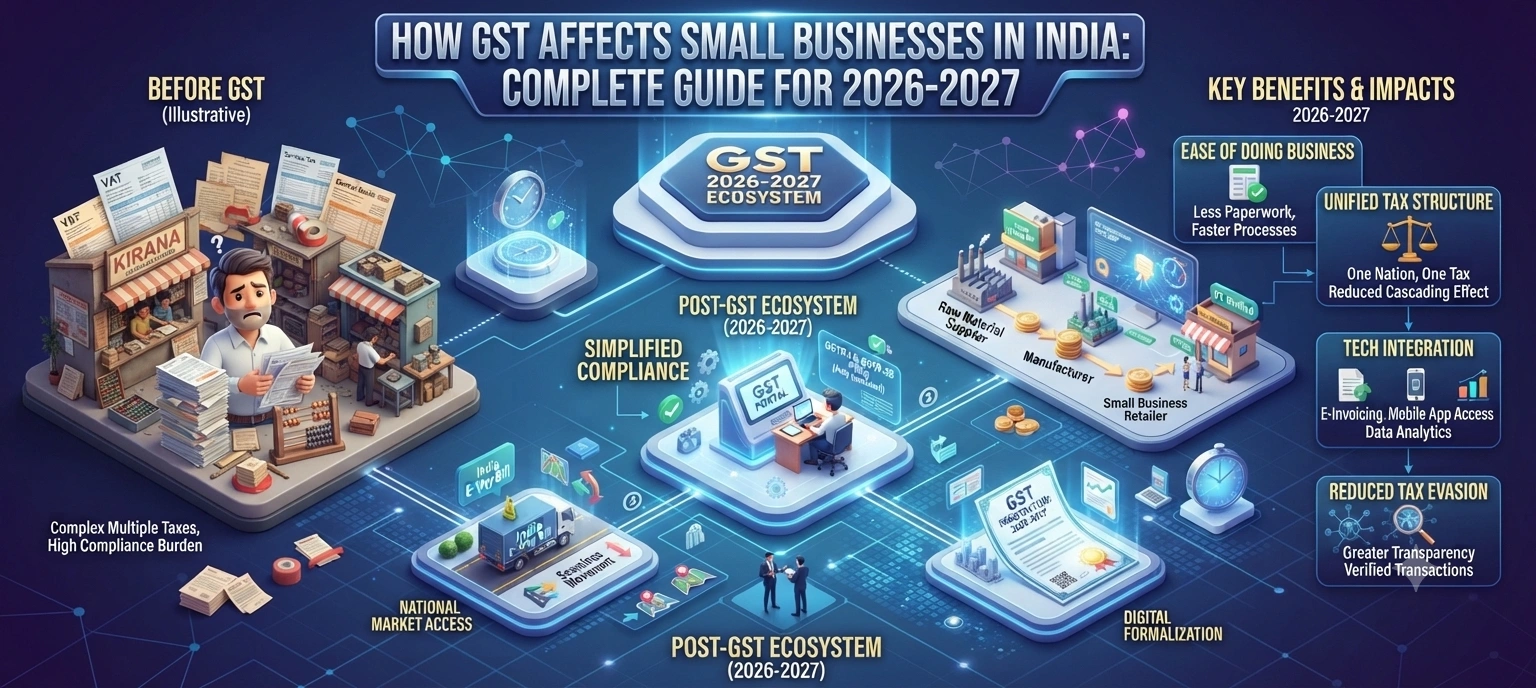
GST—Goods and Services Tax—is India's unified indirect tax system that replaced multiple taxes like VAT, excise, and service tax. If you're running a business, you need to understand this. The thing is, GST isn't just about paying tax. It's about filing returns on time, maintaining records, and following a bunch of rules that change every year.
And here's what matters most: getting GST wrong can cost you real money. We're talking penalties, interest, and potential business disruption. But the good news? GST compliance isn't complicated if you know what to do.
So what does this mean for you? Whether you're selling products, offering services, or both, you need to know your GST obligations. In 2026-2027, the rules are clearer than ever, and the tax department is watching more carefully.
Do You Really Need GST Registration?
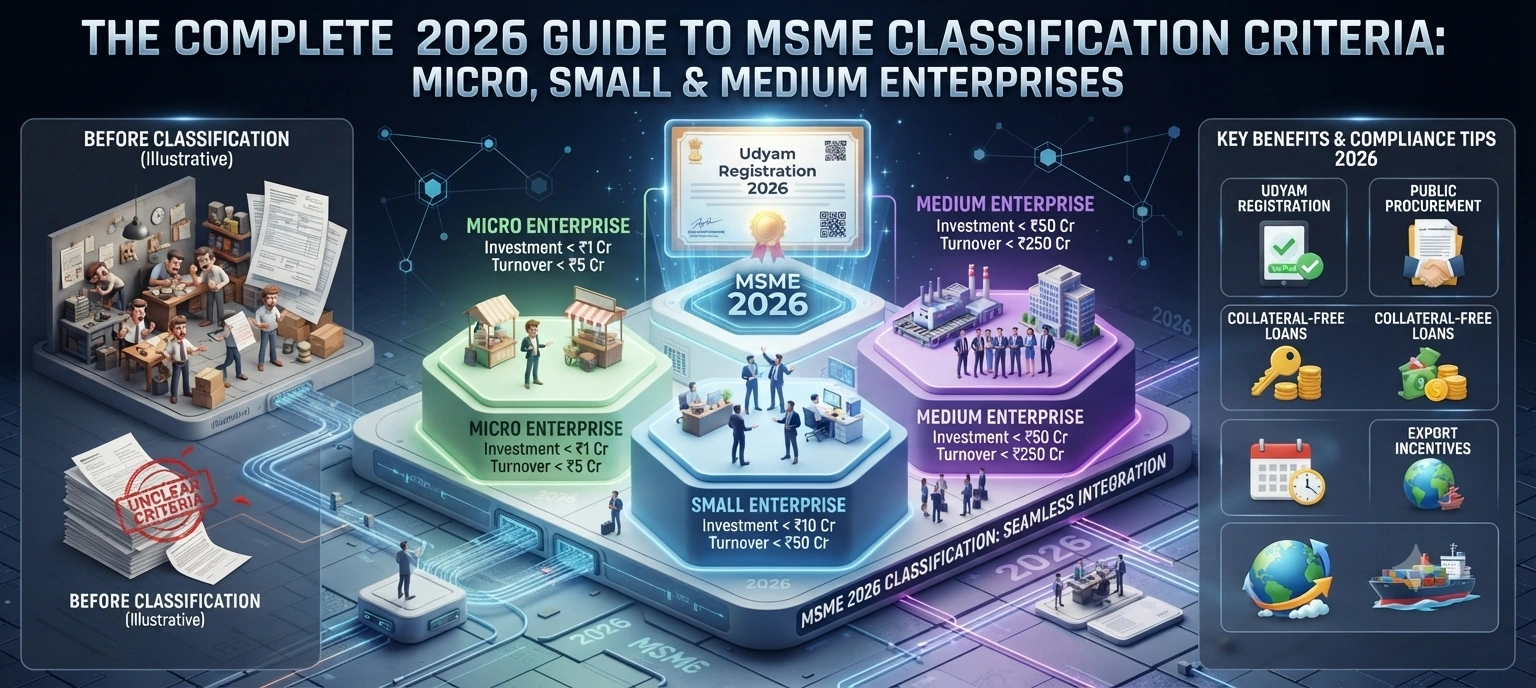
Not every business needs to register for GST. The threshold matters. If your turnover is below certain limits, you might be exempt. But here's the catch: even if you're below the threshold, registering voluntarily can actually benefit you.
Let me break down the current rules for 2026:
- Turnover above 40 lakhs (20 lakhs for services): Mandatory registration
- Turnover below threshold: Optional registration allowed
- E-commerce sellers: Need registration regardless of turnover
- Inter-state supplies: Always need registration
- Casual taxable persons: Must register if making supplies in other states
Voluntary registration lets you claim input tax credits even below the threshold. That means you can recover GST paid on your purchases, which directly improves your cash flow.
But honestly, before registering, calculate whether the benefit of claiming credits outweighs the compliance burden. If most of your customers are final consumers who don't care about GST invoices, voluntary registration might not help much.
Step-by-Step GST Registration Process
Getting registered is straightforward now. The government made it online-only, which actually speeds things up. Here's how to do it:
- Visit the GST portal (www.gst.gov.in)
- Fill out Form GST REG-01 with your business details
- Upload required documents (PAN, Aadhaar, business address proof, bank details)
- Submit and get an Application Reference Number (ARN)
- Wait for verification—usually takes 3-7 days
- Get your GSTIN via email once approved
What I mean is, the entire process happens digitally. You don't need to visit an office or meet anyone face-to-face. But here's what trips up most small business owners: they submit incomplete paperwork. Make sure every document is clear, matches your PAN records, and is properly uploaded.
If your application gets rejected, you'll get an email explaining why. Don't ignore it. Resubmit with corrected documents immediately. Delays in registration can attract penalties if you're already supposed to be registered.
Understanding GST Tax Rates and Slabs
GST in India works on a slab system. Different products and services fall into different tax brackets. This is crucial because charging the wrong rate means your invoices are wrong, which creates compliance issues.
| GST Rate | Type of Goods/Services | Examples |
|---|---|---|
| 0% | Exempt items | Milk, bread, books, newspapers |
| 5% | Essential goods | Packaged food, spices, cooking oil |
| 12% | Common items | Textiles, cosmetics, processed foods |
| 18% | Standard rate | Electronics, furniture, most services |
| 28% | Luxury items | High-end cars, jewelry, cigarettes |
The trick is knowing which slab your products fall into. And honestly, this changes sometimes. The GST Council reviews rates regularly, so stay updated. Check the official GST portal for the latest classification before issuing invoices.
GST Return Filing: What You Need to Know
Filing GST returns is mandatory if you're registered. But here's the thing: there are different types of returns, and the deadline changes based on your turnover. Let me explain what applies to small businesses in 2026-2027.
For most small businesses, you'll file monthly returns. The deadline is the 20th of the following month. So your January return is due by February 20th. Missing this deadline isn't just late—it triggers penalties and interest.
- GSTR-1: Outward supplies (sales) – due on 11th of next month
- GSTR-2A: Auto-populated inward supplies (purchases) – for your reference
- GSTR-3B: Summary return with tax liability – due on 20th of next month
- GSTR-9: Annual return – due by December 31st of next year
And that's really it for most small businesses. You file GSTR-1 and GSTR-3B each month. The government auto-fills GSTR-2A based on what your suppliers report, so reconcile it with your actual purchases.
Filing on time builds a clean compliance record. This matters when you apply for loans, partnerships, or investor funding. Banks and investors check your GST compliance history.
Input Tax Credit: Maximize Your Benefits
This is where GST gets interesting. Input tax credit (ITC) means you can claim the GST you paid on business purchases and reduce your tax liability. But here's what most people get wrong: not all purchases qualify.
You can claim ITC on GST paid for goods and services used in your business. But there are exceptions. Personal expenses, entertainment, food, and alcohol don't qualify. Neither does GST on vehicles for personal use.
So what's the practical impact? If you buy materials for 10,000 at 18% GST (1,800), and your sales are 15,000 at 18% GST (2,700), you don't pay 2,700. You pay 2,700 minus 1,800 = 900. That's input tax credit in action.
But to claim ITC, you need proper documentation. Your supplier must give you a valid GST invoice. Without it, you can't claim anything. So always ask for GST invoices, even for small purchases.
If you claim ITC on invoices that later turn out to be fake or fraudulent, you're liable. The tax department can disallow your credit and levy penalties. Always verify that your supplier is actually registered and legitimate.
Common GST Compliance Mistakes and How to Avoid Them
I've seen small business owners make the same mistakes repeatedly. Let me share the ones that hurt most:
- Missing return deadlines: Even one day late triggers penalties. Set calendar reminders on the 15th of every month
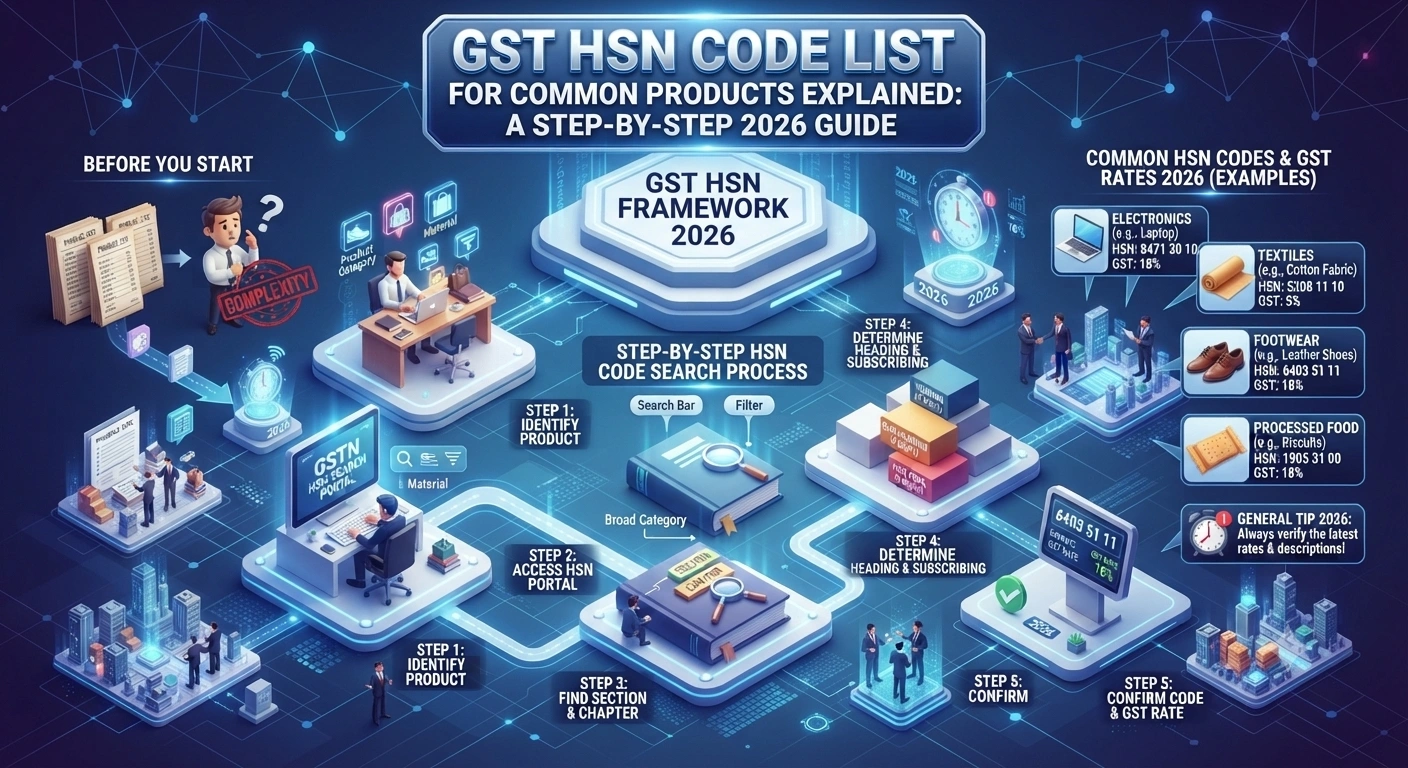
- Wrong tax rates: Classify your products incorrectly and your entire return is problematic. Double-check the HSN code
- Incomplete invoices: Invoices must have specific details—buyer name, GSTIN, HSN code, amount. Missing any of these makes them invalid for ITC
- Not reconciling GSTR-2A: Your supplier's GSTR-1 doesn't always match your records. Reconcile monthly to catch discrepancies early
- Mixing personal and business expenses: Keep them separate. Personal items bought with business money create audit red flags
Honestly, most mistakes happen because people don't track properly. Get accounting software. Use tools like Tally, GST Suvidha Provider software, or even simple spreadsheets. The investment is tiny compared to penalties.
GST Penalties: What Happens When You Don't Comply
Penalties exist for a reason. The government wants you to follow rules. But here's what worries small business owners: they don't know the penalty structure. Let me explain the main ones.
| Violation | Penalty | Additional Impact |
|---|---|---|
| Late return filing | 5% of tax or 500, whichever is higher | Plus interest at 18% per annum |
| Non-filing of return | 10% of tax or 1,000, whichever is higher | Can lead to prosecution |
| Wrong tax rate charged | 10% of tax short-paid | Plus interest and possible audit |
| Not maintaining records | 10,000 to 25,000 | Audit likely |
| Fraudulent invoicing | 100% of tax or 10,000, whichever is higher | Criminal prosecution possible |
Now here's the thing: these aren't just numbers. A 5% penalty on a 50,000 tax liability is 2,500. Add 18% interest per year, and that's another 9,000 annually if you don't pay. Over time, it compounds.
But the real cost is reputational. GST authorities share non-compliance data with banks and other government agencies. If you're trying to get a business loan in 2026, a poor GST compliance record will hurt you.
GST Audit and Scrutiny: Be Prepared
The tax department conducts audits. They're random sometimes, but they also target businesses with red flags. What triggers scrutiny? Sudden jumps in turnover, high refunds, or mismatched GSTR-1 and GSTR-2A data.
If you get audited, don't panic. Keep your records organized. You'll need invoices, bank statements, delivery documents, and proof of payments. The audit officer will ask questions about specific transactions. Be honest. If you made mistakes, it's better to correct them voluntarily than get caught.
And here's what I recommend: maintain records for at least 6 years. The GST law allows the department to go back that far. Digital copies are fine, but keep them secure and accessible.
Maintaining perfect records isn't just about avoiding penalties. It also speeds up audits. When you're organized, audits finish faster, and you can get back to business.
GST for E-Commerce and Online Sellers
If you're selling on Amazon, Flipkart, or your own website, GST rules are stricter. E-commerce operators have specific obligations that differ from regular businesses.
First: you must register for GST regardless of turnover. Even if you're below 40 lakhs, you need registration. The platforms themselves act as collection agents, which means they report your sales to the tax department.
Second: you need to file Form GSTR-8 if you're a marketplace seller. This is in addition to GSTR-1 and GSTR-3B. The form shows details of supplies made through the e-commerce platform.
- Register even below threshold
- File GSTR-8 monthly for marketplace sales
- Coordinate with platform for TCS (Tax Collected at Source) compliance
- Track inventory and shipments carefully
- Maintain separate records for each platform
The thing is, e-commerce adds complexity. You're selling across states, and inter-state supplies have different rules. If you're doing this, honestly, get a CA's help for the first few months. It's worth the investment.
GST Compliance Checklist for Small Businesses
Here's a practical checklist you can use right now:
- Check if you need GST registration based on your turnover
- Collect GSTIN from all suppliers and verify it on the GST portal
- Classify your products/services with correct HSN/SAC codes
- Create GST-compliant invoices with all required fields
- Maintain separate GST and business accounting records
- File GSTR-1 by the 11th of next month
- Reconcile GSTR-2A with your actual purchases by the 15th
- File GSTR-3B by the 20th of next month
- Keep all invoices and supporting documents for 6 years
Frequently Asked Questions About GST Compliance
Q1: What happens if I miss the GST return filing deadline?
You'll face penalties and interest. The penalty is 5% of tax due or 500, whichever is higher. Interest accrues at 18% per annum on the unpaid tax. But here's the thing: you can still file late. The system allows it. Just file as soon as you realize the deadline passed. The sooner you file, the less interest accumulates.
Q2: Can I claim input tax credit for all business purchases?
No. You can't claim ITC on personal expenses, vehicle fuel (unless it's a commercial vehicle), entertainment, or food. You also can't claim on goods used to make exempt supplies. The rule is: ITC is allowed only for purchases used to make taxable supplies. So if you're a doctor (exempt service provider), you can't claim GST on your office supplies.
Q3: What's the difference between GSTR-1 and GSTR-3B?
GSTR-1 is your detailed sales return. It lists every invoice you issued with customer details, amounts, and tax. GSTR-3B is your summary return where you report total outward supplies, inward supplies, tax liability, and payment. Think of GSTR-1 as detailed and GSTR-3B as the summary. You file both, but GSTR-3B is what determines your tax liability.
Q4: How do I verify if my supplier's GSTIN is genuine?
Go to www.gst.gov.in and use the GSTIN search tool. Enter the GSTIN and it'll show you the registered business name, address, and status. If the name doesn't match what's on the invoice, that's a red flag. Don't claim ITC on invoices from unregistered suppliers or fake GSTINs.
Q5: What's the difference between GST registration and GST compliance?
Registration is getting your GSTIN. Compliance is following all the rules after you're registered—filing returns on time, maintaining records, charging correct tax rates, and paying tax liability. You can be registered but non-compliant. Non-compliance leads to penalties and audits.
Final Thoughts: Stay Compliant and Grow Your Business
GST compliance isn't optional. It's a legal requirement if you're registered. But here's what I want you to understand: compliance isn't punishment. It's protection. When you file returns on time and maintain records, you're building a clean business profile.
In 2026-2027, the tax department is more tech-enabled than ever. They're tracking everything digitally. So trying to hide or avoid GST isn't just illegal—it's pointless. The system will catch you.
But if you follow the rules, GST is manageable. Invest in decent accounting software. Set calendar reminders for filing dates. Keep your records organized. And if you're unsure about anything, talk to a CA. It's cheaper to get advice than to pay penalties.
So what's your next step? If you're not registered yet, check if you need to be. If you're already registered, audit your compliance right now. Check your last 3 returns. Are all your invoices GST-compliant? Are you claiming ITC correctly? Fix any issues before an audit finds them.
GST compliance is an investment in your business's future. Do it right, and you can focus on growth instead of worrying about penalties.
" } ```
© 2026 Tax Esquire | Expert CA Services in Greater Noida, Uttar Pradesh
8810380146 | info.taxesquire@gmail.com | taxesquire.in
This document is for informational purposes only. For personalised tax advice, consult our chartered accountants.