GST Registration for Startups: Complete Step-by-Step Guide 2024

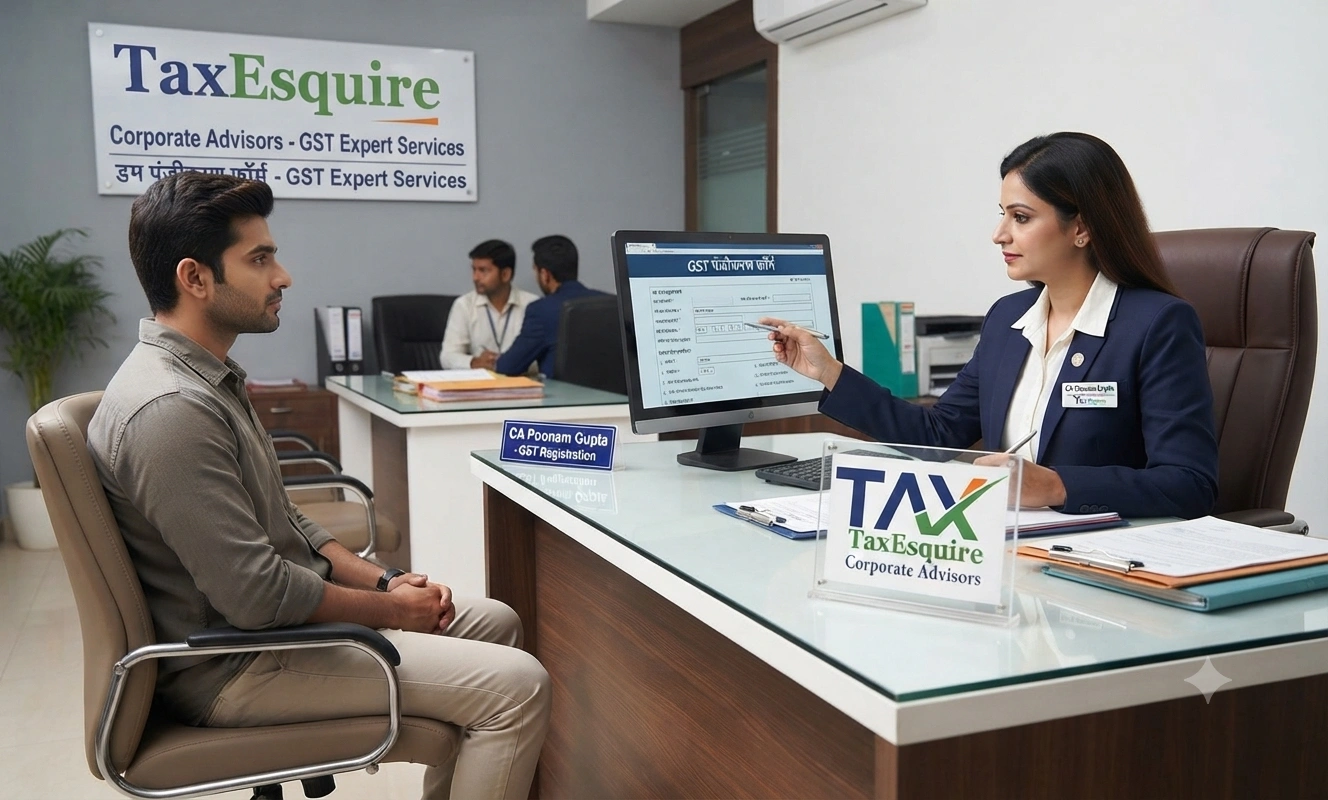
GST Registration for Startups
Master GST compliance from day one and avoid costly penalties
Introduction: Why GST Registration Matters for Startups
Goods and Services Tax (GST) is one of the most critical compliance requirements for startups in India. Since its implementation on July 1, 2017, GST has fundamentally transformed how businesses manage taxation and compliance. For startups, understanding GST registration is not just a legal obligation—it's a strategic business necessity that impacts cash flow, credibility, and growth potential.
The GST framework has evolved significantly, and 2024 brings new opportunities and challenges for emerging businesses. Whether you're launching an e-commerce platform, a service-based startup, or a manufacturing unit, this comprehensive guide will walk you through every aspect of GST registration with practical insights from experienced chartered accountants.
Early GST registration enhances business credibility, enables input tax credit, and positions your startup for faster scaling and institutional investment.
Understanding GST: The Basics for Startups
GST is a comprehensive indirect tax that replaced multiple cascading taxes including VAT, excise, and service tax. It operates on a destination-based consumption model where tax is collected at each stage of the supply chain. For startups, this means understanding how GST affects your pricing, profitability, and customer relationships.
The GST system comprises three main components: Central GST (CGST), State GST (SGST), and Integrated GST (IGST). The combined rate typically ranges from 5% to 28% depending on the nature of goods or services supplied. Understanding these components is crucial for accurate tax planning and compliance.
GST Eligibility Criteria for Startups in 2024
Not all startups are required to register for GST immediately. The eligibility criteria depend on several factors including turnover, nature of business, and location. Understanding these thresholds is essential to determine whether your startup needs mandatory or voluntary GST registration.
Mandatory GST Registration Thresholds
- General Suppliers: Aggregate turnover exceeds ₹40 lakhs in a financial year (₹20 lakhs for special category states like Himachal Pradesh, Uttarakhand, and North Eastern states)
- Service Providers: Aggregate turnover exceeds ₹20 lakhs in a financial year (₹10 lakhs for special category states)
- E-commerce Operators: Must register regardless of turnover if they facilitate supply through their platform
- Casual Taxable Persons: Must register even if turnover is below threshold if they supply goods/services in India without permanent establishment
- Non-Resident Taxable Persons: Must register if they supply goods or services in India
Voluntary GST Registration Benefits
Even if your startup doesn't meet the mandatory threshold, voluntary registration offers significant advantages. Many startups choose to register voluntarily to gain credibility, claim input tax credits, and position themselves for B2B transactions.
Voluntary GST registration allows startups below the threshold to claim input tax credit on purchases, reducing overall tax burden and improving cash flow management.
Documents Required for GST Registration
Preparing the correct documentation is crucial for smooth GST registration. The GST portal requires specific documents based on your business structure. Incomplete or incorrect documentation can delay registration and create compliance issues.
Common Documents Required for All Startups
- PAN (Permanent Account Number) of the applicant
- Aadhaar number of the applicant
- Bank account details (cancelled cheque or bank statement)
- Proof of business premises (rent agreement, property deed, or utility bill)
- Business registration documents (if applicable)
- Authorization letter (if applying through a representative)
Business Structure-Specific Documents
| Business Structure | Additional Documents Required |
|---|---|
| Sole Proprietorship | PAN, Aadhaar, business address proof, bank details |
| Partnership Firm | Partnership deed, PAN of all partners, Aadhaar of all partners, business address proof |
| Private Limited Company | Certificate of Incorporation, MOA, AOA, Board resolution, PAN, authorized signatory details |
| LLP | LLP registration certificate, LLP agreement, PAN of all partners, Aadhaar of all partners |
| HUF | HUF PAN, Karta's Aadhaar, business address proof, bank details |
Step-by-Step GST Registration Process
The GST registration process has been streamlined significantly. Most startups can complete registration within 3-7 business days. Here's the detailed procedure:
Step 1: Create a GST Portal Account
Visit the official GST portal (www.gst.gov.in) and click on "New Registration." You'll need to provide your PAN and mobile number. An OTP will be sent to verify your identity. This creates your temporary account from which you can proceed with the registration form.
Step 2: Fill GST Registration Form (Form GST REG-01)
This is the main registration form where you provide detailed business information. Key sections include: business details, principal place of business, additional places of business, business activities, bank details, and authorized signatory information. Ensure accuracy as errors can delay processing.
Step 3: Upload Supporting Documents
Upload all required documents in PDF format (maximum 5MB per file). The portal will guide you on which documents are mandatory based on your business structure. Ensure documents are clear, legible, and match the information provided in the form.
Step 4: Digital Signature or OTP Verification
You can verify your application using either a digital signature (Class 2 or Class 3) or OTP-based verification. OTP verification is simpler for startups without digital signatures. An OTP will be sent to your registered mobile number.
Step 5: Submit and Track Application
After verification, submit your application. You'll receive an Application Reference Number (ARN). Use this to track your application status on the GST portal. Most applications are processed within 3-7 days for straightforward cases.
Step 6: Receive GST Certificate
Once approved, you'll receive your GST certificate with a unique 15-digit GSTIN (GST Identification Number). Download and save this certificate. Your GSTIN is essential for all GST-related transactions and compliance.
Do not share your GSTIN or login credentials with unauthorized persons. Misuse of GSTIN can lead to fraudulent filings and serious legal consequences for your startup.
Common Mistakes to Avoid During GST Registration
Many startups face registration delays or rejections due to preventable errors. Being aware of these mistakes can save time and frustration:
- Incorrect PAN/Aadhaar Details: Ensure PAN and Aadhaar match exactly with government records. Mismatches cause automatic rejection.
- Vague Business Description: Provide specific, clear business activities. Vague descriptions like "trading" without specifying goods can lead to queries.
- Incomplete Address Details: Provide complete address with pincode. Incomplete addresses cause verification issues.
- Uploading Low-Quality Documents: Ensure all documents are clear, properly scanned, and legible. Blurry documents are rejected.
- Mismatched Information: Ensure consistency between form details and supporting documents. Discrepancies trigger manual verification.
- Wrong Business Location: Provide actual principal place of business, not just mailing address. GST authorities verify physical locations.
Post-Registration Compliance Obligations
GST registration is just the beginning. Your startup must comply with ongoing GST obligations to avoid penalties and legal issues. Understanding these requirements is crucial for sustainable business operations.
Monthly/Quarterly GST Returns
Registered startups must file GST returns regularly. The frequency depends on your turnover and business nature. Most startups file GSTR-1 (outward supplies) and GSTR-3B (summary return) monthly. Returns must be filed by the 11th of the following month.
Maintain Proper Records
GST law requires maintaining detailed records of all purchases and sales for 6 years. Implement accounting software that tracks GST separately. Poor record-keeping is one of the most common reasons for GST audit failures.
Invoice Requirements
All invoices must contain specific GST-compliant information including GSTIN, HSN/SAC codes, tax amounts, and invoice numbers in sequential order. Non-compliant invoices can lead to input tax credit denial and penalties.
Annual Reconciliation (GSTR-9)
File GSTR-9 (annual return) by December 31st of the following financial year. This reconciles all monthly returns and identifies discrepancies. Failure to file GSTR-9 can result in loss of input tax credit.
Late filing of GST returns attracts penalties of ₹100-500 per day. Repeated non-compliance can result in suspension of GSTIN and legal action against business owners.
Input Tax Credit: A Key Benefit for Startups
One of the most significant advantages of GST registration is the ability to claim Input Tax Credit (ITC). This allows you to offset GST paid on purchases against GST collected on sales, significantly reducing your tax liability.
How Input Tax Credit Works
If your startup purchases raw materials for ₹10,000 with 18% GST (₹1,800), and sells finished goods for ₹20,000 with 18% GST (₹3,600), you only pay GST on the value addition: ₹3,600 - ₹1,800 = ₹1,800. This mechanism prevents tax cascading and improves cash flow.
Conditions for Claiming ITC
- Supplier must be GST registered
- Invoice must contain all mandatory GST details
- Goods/services must be used for business purposes
- ITC must be claimed within the prescribed time limit
- Proper documentation and records must be maintained
Proper ITC management can reduce effective GST burden by 50-70% for startups with significant input costs, dramatically improving profitability.
GST Rates and HSN/SAC Codes for Different Startups
GST rates vary based on the nature of goods or services. Startups must correctly classify their products/services to apply the right tax rate and claim appropriate ITC.
| Business Type | Applicable GST Rate | Example |
|---|---|---|
| Essential Goods | 0% or 5% | Grains, medicines, books |
| Intermediate Goods | 12% | Electronics, furniture |
| Standard Goods | 18% | Apparel, cosmetics |
| Luxury/Sin Goods | 28% | Automobiles, tobacco |
| IT Services | 18% | Software development, consulting |
HSN (Harmonized System of Nomenclature) codes for goods and SAC (Service Accounting Code) for services must be mentioned on all invoices. These 6-8 digit codes help GST authorities track supply chains and prevent tax evasion.
Special GST Schemes for Startups
The government offers several GST schemes specifically designed to reduce compliance burden for startups and small businesses:
Composition Scheme
Startups with turnover up to ₹1.5 crore (₹75 lakh for service providers) can opt for the composition scheme. Under this scheme, you pay a fixed percentage of turnover (1-5%) instead of calculating GST on each transaction. This significantly simplifies compliance and reduces administrative burden.
E-commerce Operator Scheme
If your startup operates an e-commerce platform, you can register as an e-commerce operator. This allows you to collect GST on behalf of suppliers, simplifying their compliance while ensuring proper tax collection.
Exemption Threshold for Startups
Startups below the registration threshold (₹40 lakh for goods, ₹20 lakh for services) are not required to register. However, voluntary registration offers benefits like ITC eligibility and enhanced business credibility.
GST Compliance Tools and Software for Startups
Managing GST compliance manually is error-prone and time-consuming. Modern accounting software can automate GST calculations, invoice generation, and return filing, allowing startups to focus on core business activities.
- Tally ERP 9/Prime: Comprehensive accounting software with built-in GST compliance features
- Zoho Books: Cloud-based accounting with automated GST return filing
- GST Suvidha Providers (GSPs): Authorized intermediaries offering GST filing services
- ClearTax: Specialized GST compliance platform with real-time tracking
- Busy Accounting Software: User-friendly solution for small startups
GST Audit and Compliance Checks
GST authorities conduct periodic audits to ensure compliance. Startups should be prepared for GST audits by maintaining proper documentation and records. A GST audit typically examines invoice records, ITC claims, and return filings.
Mandatory GST audit applies to startups with turnover exceeding ₹2 crore. Even below this threshold, startups can be selected for scrutiny-based audits. Proper record-keeping and timely compliance significantly reduce audit risk.
Penalties and Legal Consequences of Non-Compliance
GST non-compliance carries severe penalties that can threaten startup viability. Understanding these consequences emphasizes the importance of timely registration and compliance:
| Non-Compliance Issue | Penalty Amount |
|---|---|
| Late GST Registration | Up to 10% of tax liability or ₹10,000 |
| Late Return Filing | ₹100-500 per day |
| Incorrect ITC Claim | 10% of wrongly claimed ITC + interest |
| Non-Compliant Invoices | Up to 10% of invoice value |
| Fraudulent Returns | Criminal prosecution + imprisonment up to 5 years |
Frequently Asked Questions About GST Registration for Startups
Q1: Can a startup register for GST before starting business operations?
Yes, startups can register for GST even before commencing business. This is beneficial for establishing credibility and preparing for GST compliance from day one. However, GST liability begins only when you start making taxable supplies.
Q2: How long does GST registration take?
Most GST registrations are processed within 3-7 business days for straightforward applications. Complex cases or those requiring additional verification may take up to 30 days. You can track your application status using the ARN on the GST portal.
Q3: What is the difference between GSTIN and PAN?
PAN (Permanent Account Number) is a unique identifier for income tax purposes, while GSTIN (GST Identification Number) is specific to GST registration. A single PAN can have multiple GSTINs if you have multiple places of business. Both are essential for business operations.
Q4: Can a startup cancel GST registration?
Yes, GST registration can be cancelled if you cease business operations or your turnover falls below the threshold. However, you must file final returns and settle all pending GST liabilities before cancellation. Cancellation requires filing Form GST REG-15.
Q5: Is GST registration mandatory for businesses?
Yes, e-commerce startups must register for GST if they facilitate supplies through their platform, regardless of turnover. Additionally, if their aggregate turnover exceeds the threshold, GST registration becomes mandatory. Many e-commerce startups opt for voluntary registration to enhance credibility.
Conclusion: Taking Action on GST Registration
GST registration is a critical milestone for startup growth and compliance. While the process may seem complex, understanding the requirements and following the step-by-step procedure ensures smooth registration and ongoing compliance. The benefits of GST registration—including input tax credit, business credibility, and access to B2B markets—far outweigh the compliance burden.
Startups should not delay GST registration, especially if they meet the eligibility criteria. Early registration demonstrates professionalism, enables proper tax planning, and positions your business for institutional investment and scaling. Consider engaging a chartered accountant or GST consultant to ensure accurate registration and compliance from the beginning.
Remember, GST compliance is not a one-time activity but an ongoing responsibility. Implement proper accounting systems, maintain meticulous records, file returns on time, and stay updated with GST law changes. This proactive approach will protect your startup from penalties, audits, and legal complications, allowing you to focus on business growth and innovation.
" } ```
© 2026 Tax Esquire | Expert CA Services in Greater Noida, Uttar Pradesh
8810380146 | info.taxesquire@gmail.com | taxesquire.in
This document is for informational purposes only. For personalised tax advice, consult our chartered accountants.