Startup Tax Planning 2024: Complete Guide to Tax Benefits, Deductions & Section 80-IAC

Startup Tax Planning 2024
Master tax efficiency and maximize deductions for your startup venture
Introduction: Why Startup Tax Planning Matters in 2024
Startup tax planning is not merely about compliance—it is a strategic imperative that directly impacts your bottom line and long-term sustainability. In 2024, the Indian government continues to offer unprecedented tax incentives for startups through Section 80-IAC of the Income Tax Act, 1961. This provision allows eligible startups to claim a 100% deduction on profits for up to seven consecutive years, potentially saving lakhs of rupees in tax liability.
However, the landscape of startup taxation is complex. Many founders miss critical deadlines, fail to maintain proper documentation, or overlook eligible deductions that could significantly reduce their tax burden. This comprehensive guide walks you through every aspect of startup tax planning, from understanding Section 80-IAC eligibility criteria to implementing practical tax-saving strategies.
Understanding Section 80-IAC: The Game-Changer for Startups
Section 80-IAC is the cornerstone of startup tax incentives in India. Introduced to promote entrepreneurship and innovation, this section allows qualifying startups to claim a deduction equal to 100% of their profits for seven consecutive assessment years. This is not a partial deduction—it is a complete exemption from income tax on profits derived from the eligible business.
Consider this practical example: A software startup earns a profit of Rs. 50 lakhs in its second financial year of operation. Under Section 80-IAC, the entire Rs. 50 lakhs is deductible, resulting in zero taxable income for that year. This translates to a direct tax saving of approximately Rs. 12.5 lakhs (at 25% effective tax rate including surcharge and cess).
Section 80-IAC allows 100% deduction on profits for seven consecutive years, potentially saving your startup millions in tax liability during critical growth phases.
Eligibility Criteria for Section 80-IAC: Who Qualifies?
Not every startup automatically qualifies for Section 80-IAC benefits. The Income Tax Department has established strict eligibility criteria that must be meticulously followed. Understanding these requirements is crucial before claiming any deductions.
- Startup Definition: The entity must be recognized as a startup by the Department for Promotion of Industry and Internal Trade (DPIIT). This requires registration on the Startup India portal and obtaining a certificate of recognition.
- Incorporation Date: The startup must have been incorporated on or after April 1, 2016 (for companies) or registered on or after April 1, 2016 (for LLPs).
- Turnover Limit: The aggregate turnover of the startup must not exceed Rs. 25 crores in any of the previous four financial years.
- Business Activity: The startup must be engaged in innovation, development, production, or improvement of products or processes in sectors notified by the government.
- Profit Requirement: The startup must have derived profits from the eligible business. Losses cannot be claimed under this section.
- Seven-Year Window: The deduction is available for seven consecutive assessment years beginning from the year in which the startup first derives profits.
Many startups assume they qualify for Section 80-IAC without proper DPIIT recognition. The absence of a valid startup certificate from DPIIT will result in rejection of your deduction claim during assessment, leading to substantial tax demands and penalties.
Critical Documentation Requirements for Section 80-IAC Claims
Documentation is the backbone of any successful Section 80-IAC claim. The Income Tax Department conducts rigorous scrutiny of startup deduction claims, and inadequate documentation often results in disallowance of the entire deduction.
| Document Category | Required Documents | Retention Period |
|---|---|---|
| DPIIT Recognition | Startup certificate from DPIIT, Certificate of Recognition | Permanent |
| Financial Records | Audited financial statements, profit & loss account, balance sheet, bank statements | 7 years |
| Business Evidence | Business plan, innovation documentation, patent filings, product development records | 7 years |
| Tax Compliance | ITR filed with Section 80-IAC claim, GST returns, TDS certificates | 7 years |
The Income Tax Department specifically requires that your ITR clearly mentions the Section 80-IAC deduction claimed, supported by a detailed computation schedule. Many startups file their returns without properly documenting the deduction, which invites immediate scrutiny and assessment notices.
Eligible Business Deductions for Startups Beyond Section 80-IAC
While Section 80-IAC is the primary tax benefit, startups can claim numerous other deductions that reduce taxable income even before applying Section 80-IAC. These deductions are often overlooked, resulting in unnecessary tax payments.
- Section 80-C Investments: Contributions to PPF, ELSS, life insurance premiums, and fixed deposits up to Rs. 1.5 lakhs annually provide tax deductions for founders and employees.
- Section 80-D Health Insurance: Health insurance premiums for self and family members up to Rs. 25,000 (Rs. 50,000 for senior citizens) are fully deductible.
- Section 80-E Education Loan Interest: Interest paid on education loans for higher education is fully deductible without any monetary limit.
- Section 80-G Charitable Donations: Donations to eligible charitable organizations provide 50% or 100% deductions depending on the organization.
- Business Expense Deductions: Rent, utilities, office supplies, professional fees, employee salaries, and depreciation on assets are standard business deductions.
- Research & Development (R&D) Deductions: Startups engaged in R&D can claim 200% deduction on R&D expenditure under Section 35(2AB).
The R&D deduction is particularly valuable for tech startups. If your startup spends Rs. 10 lakhs on R&D activities, you can claim a deduction of Rs. 20 lakhs, effectively doubling the tax benefit of that expense.
Section 35(2AB) provides 200% deduction on R&D expenditure for startups, meaning Rs. 10 lakhs spent on research generates Rs. 20 lakhs in deductions—a powerful tax optimization tool.
GST Compliance and Input Tax Credit for Startups
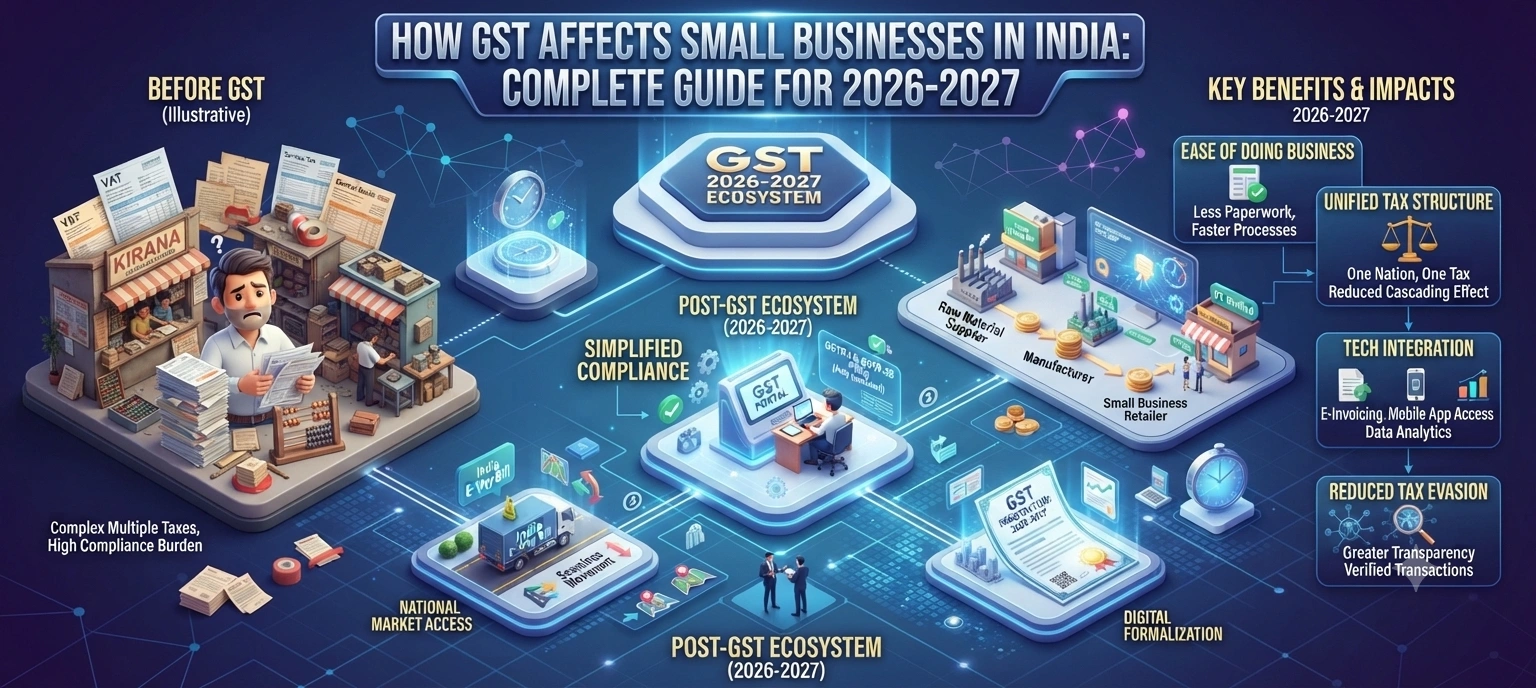
GST compliance is intertwined with income tax planning for startups. Proper GST management directly impacts your net tax liability and cash flow. Startups must understand the relationship between GST input credit and income tax deductions.
If your startup is registered under GST, you can claim input tax credit (ITC) on all business-related purchases. This reduces your GST liability significantly. However, expenses on which ITC is claimed cannot be separately deducted under income tax provisions. This is a critical compliance point that many startups misunderstand.
- Maintain separate records for expenses with ITC eligibility and those without.
- File GST returns on time to avoid penalties and loss of ITC eligibility.
- Ensure all invoices from suppliers contain valid GST registration numbers.
- Reconcile GST returns with income tax records to avoid double deductions.
Claiming both GST input credit and income tax deduction on the same expense constitutes double deduction and is a serious compliance violation. The Income Tax Department actively scrutinizes such cases, resulting in substantial penalties and interest charges.
Practical Tax Planning Strategies for Startups in 2024
Beyond claiming available deductions, strategic tax planning involves proactive measures to optimize your startup's tax position. These strategies should be implemented from inception, not retroactively.
1. Entity Structure Optimization
The choice between operating as a sole proprietorship, partnership, LLP, or private limited company has profound tax implications. For most startups seeking Section 80-IAC benefits, a private limited company or LLP structure is optimal. LLPs offer pass-through taxation benefits while maintaining limited liability, making them increasingly popular among tech startups.
2. Timing of Income and Expenses
Strategic timing of business transactions can significantly impact your tax liability. Accelerate deductible expenses into the current financial year while deferring income to the next year where possible. However, this must be done within the bounds of genuine business transactions and accounting standards.
3. Employee Stock Option Plan (ESOP) Planning
ESOPs are powerful tools for startups to attract and retain talent while providing tax benefits. Employees can claim deductions on ESOP contributions, and startups can claim deductions on ESOP expenses. However, ESOP structures must comply with Income Tax Department guidelines to ensure tax benefits are not disallowed during assessment.
4. Investment in Capital Assets
Depreciation on capital assets provides annual deductions that reduce taxable income. Startups should strategically invest in machinery, equipment, and technology infrastructure. The depreciation deduction is available even if the startup is claiming Section 80-IAC benefits on profits.
Common Mistakes Startups Make in Tax Planning
Learning from common pitfalls can save your startup from costly compliance errors and assessment notices. Here are the most frequent mistakes we observe:
- Incomplete DPIIT Registration: Many startups register on the Startup India portal but fail to obtain formal recognition certificates, making them ineligible for Section 80-IAC benefits.
- Inadequate Record Keeping: Startups often maintain poor documentation of business activities, innovation, and R&D expenditure, making it impossible to substantiate Section 80-IAC claims during assessment.
- Incorrect Profit Calculation: Errors in calculating eligible profits under Section 80-IAC result in either over-claiming deductions or missing out on available benefits.
- Missing Statutory Deadlines: ITR filing deadlines and GST return deadlines are critical. Missing these deadlines results in penalties and loss of deduction eligibility.
- Mixing Personal and Business Expenses: Startups often claim personal expenses as business deductions, inviting scrutiny and disallowance during assessment.
- Ignoring TDS Compliance: Startups must deduct TDS on payments to contractors and professionals. Non-compliance results in penalties and interest.
Frequently Asked Questions on Startup Tax Planning
Q1: Can a startup claim Section 80-IAC deduction if it has losses in the first year?
A: No. Section 80-IAC allows deduction only on profits. If your startup incurs losses in the first year, you cannot claim this deduction. However, losses can be carried forward to offset profits in subsequent years. The seven-year deduction period begins from the first year in which the startup derives profits.
Q2: What happens if my startup's turnover exceeds Rs. 25 crores?
A: Once your aggregate turnover exceeds Rs. 25 crores in any financial year, you lose eligibility for Section 80-IAC benefits. However, you can continue to claim other deductions like depreciation and R&D deductions. It is advisable to plan for this transition and optimize your tax structure accordingly.
Q3: Can I claim Section 80-IAC deduction if my startup is engaged in trading or financial services?
A: No. Section 80-IAC is available only for startups engaged in innovation, development, production, or improvement of products or processes in notified sectors. Trading, financial services, and real estate businesses are explicitly excluded. Your business activity must align with the government's definition of eligible startup business.
Q4: How do I claim Section 80-IAC deduction in my ITR?
A: Section 80-IAC deduction is claimed in Schedule 80-IAC of your ITR. You must attach a detailed computation schedule showing the eligible profits, the deduction claimed, and reference to your DPIIT startup certificate. The deduction is claimed from gross total income after claiming other deductions under Chapter VIA.
Q5: What is the difference between Section 80-IAC and Section 80-IB for startups?
A: Section 80-IAC is specifically for startups recognized by DPIIT and provides 100% deduction on profits for seven years. Section 80-IB is a general provision for new businesses and provides 100% deduction for five years followed by 50% deduction for two years. Section 80-IAC is more beneficial for eligible startups due to the longer deduction period and higher percentage.
Conclusion: Your Roadmap to Startup Tax Efficiency
Startup tax planning in 2024 is not a one-time exercise but an ongoing strategic process. Section 80-IAC represents a transformational opportunity for eligible startups to significantly reduce tax liability during critical growth phases. However, realizing these benefits requires meticulous attention to eligibility criteria, documentation requirements, and compliance deadlines.
The most successful startups approach tax planning holistically, combining Section 80-IAC benefits with other available deductions, optimizing entity structure, and maintaining impeccable documentation. By implementing the strategies outlined in this guide, your startup can minimize tax liability, preserve capital for growth, and build a sustainable business foundation.
Remember that tax laws are dynamic, and provisions change regularly. Engaging with a qualified CA who specializes in startup taxation ensures that your startup remains compliant while maximizing available benefits. The investment in professional tax planning typically yields returns many times over through reduced tax liability and avoided penalties.
© 2026 Tax Esquire | Expert CA Services in Greater Noida, Uttar Pradesh
8810380146 | info.taxesquire@gmail.com | taxesquire.in
This document is for informational purposes only. For personalised tax advice, consult our chartered accountants.