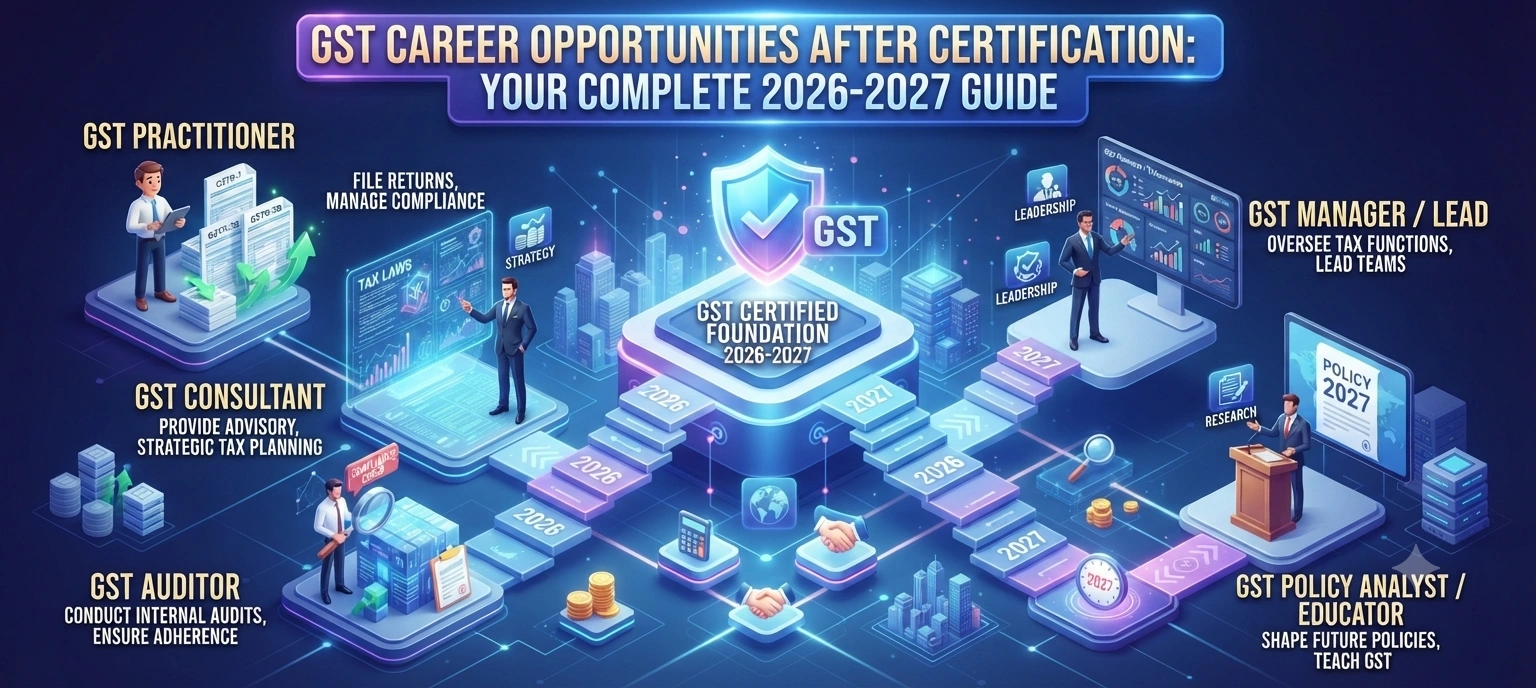
How to Build a Successful Career as a Chartered Accountant in 2026-2027

How to Build a Successful Career as a Chartered Accountant in 2026-2027
Your complete roadmap to launching and growing a profitable accounting practice
Why 2026-2027 is the Right Time to Start Your CA Career
The accounting landscape is changing fast. Businesses need CAs more than ever. And honestly, if you've got your qualification, there's no better time than now to launch your practice.
The Indian economy is booming. GST compliance is becoming tighter. Startups are multiplying. Companies need real tax planning, not just paperwork filing. That's where you come in.
But here's the thing—success as a CA isn't just about knowing tax law. It's about building relationships, understanding your clients' pain points, and delivering real value. So what does this mean for you? It means you need a strategy, not just a degree.
CAs who start practices in 2026-2027 can capture market share before competition intensifies. Early movers get established client bases and brand recognition faster.
Step 1: Get Your Fundamentals Right Before Launch
Before you hang out your shingle, you need to know what you're doing. And I don't just mean accounting theory.
First, complete your CA qualification fully. Don't rush. Get your articleship done properly. Work under a senior CA for at least two years if possible. This isn't wasted time—it's your real education.
During your articleship, focus on these areas:
- Audit procedures and internal controls
- GST compliance and return filing
- Income tax planning and assessment
- Financial statement preparation
- Statutory compliance for companies
- Client communication and relationship management
The better you understand these areas, the more confident you'll be when clients come to you with problems.
Don't start your practice until you've got solid technical knowledge. Rushing to set up a firm without proper expertise will damage your reputation and lose you clients fast.
Step 2: Set Up Your CA Practice Legally and Properly
You can't just start taking clients without proper registration. The Institute of Chartered Accountants of India (ICAI) has specific rules, and you need to follow them.
Here's what you need to do:
| Requirement | Details |
|---|---|
| ICAI Membership | Get your CA membership certificate from ICAI. This is non-negotiable. |
| Firm Registration | Register your firm name with ICAI. You can practice as a sole practitioner or partnership. |
| Office Setup | Get a proper office address. Home-based practices work initially but look less professional. |
| Professional Indemnity Insurance | Get insurance coverage. This protects you if a client sues for professional negligence. |
| GST Registration | If your annual turnover exceeds ₹20 lakhs, you need GST registration. |
But here's what most new CAs miss—you also need to think about your business structure. Should you be a sole practitioner or start a partnership? The answer depends on your capital, your network, and your long-term vision.
Sole practitioner: Lower costs, complete control, but limited capacity.
Partnership: Shared costs, shared workload, but you need to trust your partners.
Step 3: Build Your Service Menu and Pricing Strategy
You can't be everything to everyone. And that's okay.
Think about what you're genuinely good at. Do you love audit? Go deep into audit. Do you understand startups? Focus on startup taxation. Are you a GST expert? Build your practice around GST compliance. The more specialized you are, the more you can charge.
Here are common service areas for CAs:
- Statutory audit and internal audit
- Income tax planning and filing
- GST compliance and advisory
- Startup advisory and incorporation
- Financial statement preparation
- Payroll and HR compliance
- Business valuation and M&A advisory
Now, about pricing. Don't undercut the market just to get clients. That's a race to the bottom. Instead, price based on value delivered, not hours worked. If you save a client ₹5 lakhs in taxes, charging ₹50,000 is a bargain for them.
Specialization and value-based pricing help you attract better clients, build stronger relationships, and earn more without working more hours.
Step 4: Get Your First Clients—The Reality
This is where most new CAs struggle. You've got credentials, but no clients. So how do you get them?
Honestly, your first clients will come from your network. Not LinkedIn connections—real relationships. Call everyone you know. Tell them you've started your practice. Ask if they need help. Most won't. But some will.
Here are proven ways to get clients:
- Referrals from your articleship mentor and colleagues
- Networking at industry events and business associations
- Cold outreach to small businesses and startups
- Building a strong website with SEO optimization
- Creating content on LinkedIn about tax tips and compliance
- Partnering with business consultants and lawyers who refer clients
But here's what I mean—don't just ask for business. Add value first. Write a blog post about GST compliance for their industry. Send them a tax planning checklist. Help them understand what they're doing wrong. Then they'll come to you.
Your first year, aim for 10-15 clients. Quality over quantity. Once they trust you, they'll refer others.
Step 5: Master Client Management and Delivery
Getting clients is one thing. Keeping them is another. And that's where most CAs fail.
Your clients don't care how smart you are. They care about three things: Do you deliver on time? Do you communicate clearly? Do you solve their problems?
Build systems for this. Use accounting software like Tally, QuickBooks, or specialized CA tools. Keep client files organized. Meet deadlines religiously. Send regular updates. Don't disappear after filing returns.
And here's the thing—your clients want a relationship, not just a transaction. Check in with them quarterly. Ask about their business. Suggest tax planning ideas before the year ends. Be proactive, not reactive.
Poor client communication and missed deadlines are the fastest ways to lose clients and damage your reputation. In 2026-2027, word spreads fast on social media. One unhappy client can cost you five potential clients.
Step 6: Stay Updated with Compliance Changes
The tax and compliance landscape changes every year. And 2026-2027 won't be different. New rules, new forms, new penalties.
If you don't stay updated, you'll give clients wrong advice. That's not just embarrassing—it's dangerous.
Here's what you need to do:
- Subscribe to ICAI updates and circulars
- Follow tax department press releases
- Join CA WhatsApp groups and forums for real-time updates
- Attend ICAI-approved continuing professional education programs
- Read tax and accounting publications regularly
- Network with other CAs to discuss changes and best practices
Put simply, learning doesn't stop after you get your CA degree. It's continuous. And the CAs who embrace this stay ahead.
Step 7: Scale Your Practice Strategically
After your first year, you'll have some clients and some revenue. Now comes the question: How do you grow?
You've got options. You can hire staff. You can take on a partner. You can specialize further. You can expand geographically. But each choice has trade-offs.
Hiring staff: This scales your capacity. But you need to manage people, train them, and ensure quality. Your first hire should be a junior CA or a trained accounting professional.
Taking a partner: This brings in capital and expertise. But you lose autonomy and need to share profits. Choose partners carefully.
Specialization: Instead of being a generalist, become the best in your niche. This commands higher fees and attracts better clients.
| Growth Strategy | Pros | Cons |
|---|---|---|
| Hiring Staff | Increases capacity, frees your time | Higher costs, management overhead |
| Partnership | Shared workload and capital | Loss of autonomy, profit sharing |
| Specialization | Higher fees, better clients | Narrower market, less flexibility |
My recommendation? Start with specialization. Get really good at one thing. Build a reputation. Then expand from there.
Strategic scaling helps you grow revenue without burning out. By focusing on the right growth strategy for your situation, you can double your income while working less.
Step 8: Build Your Personal Brand and Online Presence
In 2026-2027, if you're not online, you don't exist. Clients Google you before calling. So what do they find?
You need a professional website. Not a fancy one—a useful one. Your website should answer common questions: What services do you offer? Who are your clients? How can people contact you? What's your experience?
You also need a LinkedIn profile. Post about tax changes, compliance tips, and business insights. Engage with other professionals. Build authority in your niche.
And consider starting a blog or YouTube channel. Share knowledge. Help people understand tax and compliance. When you're generous with information, people trust you.
- Website with SEO optimization
- Active LinkedIn profile with regular posts
- Blog or YouTube channel with useful content
- Google My Business listing for local visibility
- Email newsletter for existing clients
But here's the catch—don't just create content and disappear. Consistency matters. Post regularly. Respond to comments. Build community.
Common Mistakes New CAs Make (And How to Avoid Them)
I've seen many talented CAs fail because they made preventable mistakes. Here's what to avoid:
- Starting too fast without proper setup: You'll face legal issues and lose credibility. Take time to set up properly.
- Underpricing your services: You'll attract bargain hunters, not loyal clients. Price based on value, not desperation.
- Not specializing: Generalists compete on price. Specialists command premium fees. Pick your niche.
- Poor communication with clients: Clients leave because of bad communication, not bad work. Keep them updated.
- Ignoring compliance updates: Laws change. If you don't update your knowledge, you'll give wrong advice and face complaints.
Financial Planning for Your First Year
Let's talk money. How much do you need to start a CA practice?
This depends on whether you're starting from home or getting an office. Here's a rough breakdown for 2026-2027:
| Expense | Home-Based | Office-Based |
|---|---|---|
| Office setup | ₹50,000 | ₹3-5 lakhs |
| Software and tools | ₹30,000 | ₹50,000 |
| Insurance | ₹15,000 | ₹20,000 |
| Marketing and branding | ₹25,000 | ₹50,000 |
| Working capital (6 months) | ₹2-3 lakhs | ₹5-7 lakhs |
| Total | ₹2.2-3.2 lakhs | ₹8.2-12.2 lakhs |
Start lean. You don't need fancy furniture or a big office. What you need is credibility and capability. Invest in good software, proper insurance, and marketing. The rest can wait.
Frequently Asked Questions
1. Can I start a CA practice while working for another firm?
No. ICAI rules don't allow you to practice independently while employed. You need to resign first. But you can consult on a limited basis if your employment contract allows it. Check with your current employer before making any moves.
2. How many clients do I need to make a decent income?
This depends on your fees and client mix. If you charge ₹50,000 per client annually and have 20 clients, that's ₹10 lakhs in revenue. But you'll have costs. Realistically, you need 15-25 clients to make ₹8-10 lakhs net income in your first year. As you grow and specialize, you'll earn more with fewer clients.
3. What software should I use for my CA practice?
Good options include Tally Prime for accounting, QuickBooks for small businesses, and specialized CA software like Vyapar or ClearTax. Also get a CRM like HubSpot or Zoho to manage clients. And use Google Workspace or Microsoft 365 for emails and documents. Don't buy everything at once—start with accounting software and add others as you grow.
4. How do I handle clients who don't pay on time?
Set clear payment terms upfront. Ask for 50% advance before starting work and 50% on delivery. For monthly retainers, collect payment on the first of each month. Send invoices immediately after completing work. Follow up on overdue payments within a week. If a client consistently doesn't pay, stop working for them. It's not worth the stress.
5. Should I take on every client that comes my way?
No. Be selective. Take clients whose needs align with your expertise and values. A difficult client who doesn't pay well will drain your energy and time. It's better to have five good clients than twenty bad ones. As you grow, you can afford to be even more selective and work with clients you genuinely enjoy.
Key Takeaways for Success
Building a successful CA career in 2026-2027 isn't complicated. But it does require focus, discipline, and real effort. Here's what you need to remember:
- Get solid technical knowledge before you start. Your reputation depends on it.
- Set up your practice legally and properly. Compliance isn't optional.
- Specialize in what you're good at. Generalists don't win.
- Your first clients come from your network. Build relationships before you need them.
- Deliver excellent service and communicate regularly. That's how you keep clients.
- Stay updated with tax and compliance changes. Learning never stops.
- Build your personal brand online. Be visible and helpful.
- Start lean and scale strategically. You don't need everything on day one.
Final Thoughts
The CA profession is rewarding. You help businesses comply with laws, save taxes, and make better decisions. That's meaningful work. And 2026-2027 is a great time to start your practice.
But success won't come overnight. You'll face challenges. Some clients will disappoint you. Some months will be slow. That's normal. What matters is that you stay committed, keep learning, and deliver real value.
If you follow the steps in this guide, stay disciplined, and put in genuine effort, you'll build a thriving practice. And five years from now, you'll wonder why you ever doubted yourself.
Now stop reading and start doing. Your first client is waiting.
" } ```
© 2026 Tax Esquire | Expert CA Services in Greater Noida, Uttar Pradesh
8810380146 | info.taxesquire@gmail.com | taxesquire.in
This document is for informational purposes only. For personalised tax advice, consult our chartered accountants.