Types of Accounting Careers: A Complete Guide for 2026-2027
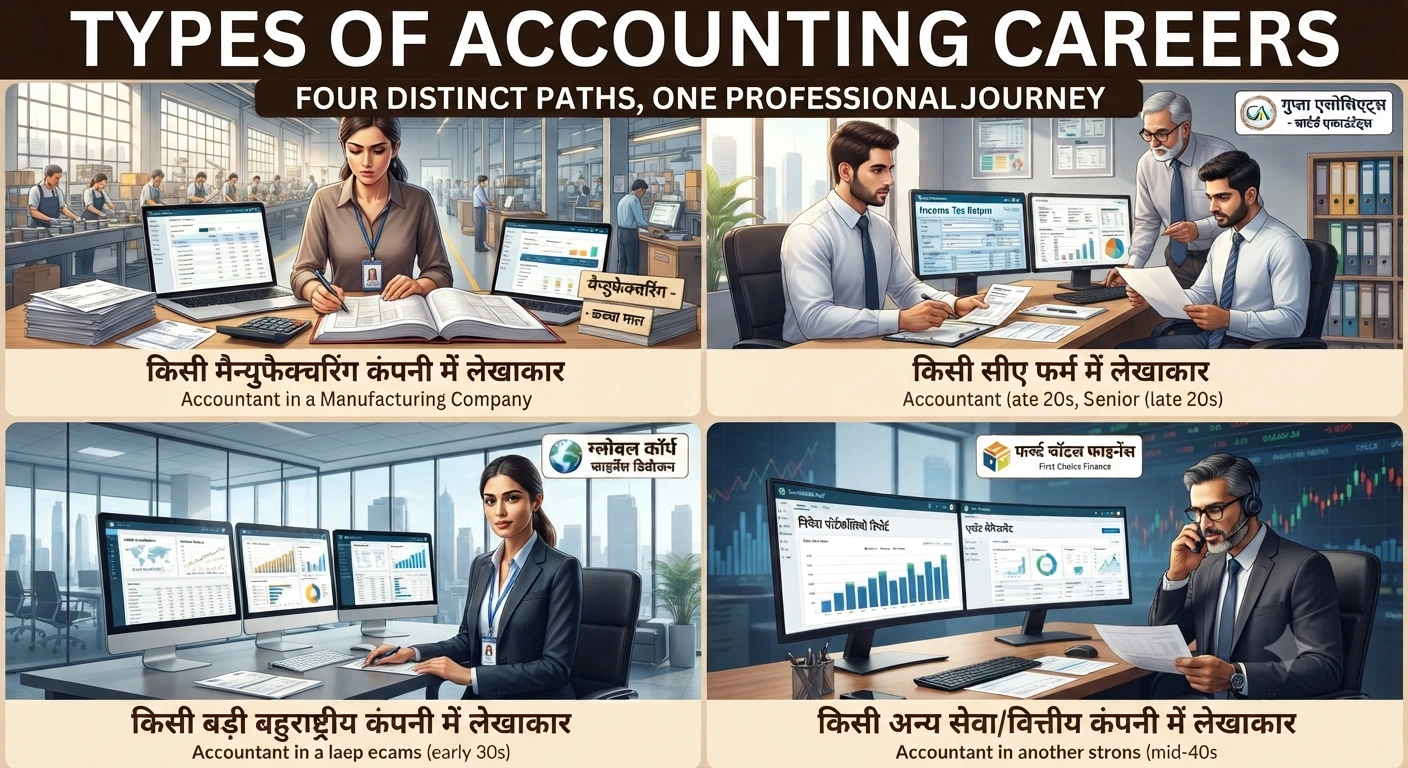
Types of Accounting Careers
Your roadmap to choosing the right accounting career path in 2026
So you're thinking about an accounting career? Smart move. The accounting field offers more variety than most people realize. Whether you want to work in a big firm, a small business, or even start your own practice, there's something here for you. The thing is, not all accounting jobs are the same, and picking the right path early can make a real difference in your career satisfaction and earning potential.
I've spent years in the accounting profession, and I can tell you that the best career decisions come from understanding what each role actually involves. Let me walk you through the main types of accounting careers you can pursue in 2026-2027.
Public Accounting Careers
Public accounting is where many people start their careers. These are accountants who work for accounting firms and serve multiple clients. Think of them as external consultants for businesses.
In a public accounting firm, you might work on audits, tax preparation, or consulting projects. The work varies day to day, which keeps things interesting. But here's what you need to know: public accounting can be demanding, especially during tax season or when audit deadlines hit. You're juggling multiple clients, and the pressure can be intense.
The upside? You get exposure to different industries and business models. You learn fast. And if you're ambitious, you can move up to senior accountant, manager, or even partner roles. Many successful CAs started in public accounting firms.
- Audit services - reviewing financial records for accuracy and compliance
- Tax services - preparing tax returns and planning strategies for clients
- Advisory services - helping businesses improve operations and financial performance
- Assurance services - checking whether financial statements are reliable
- Forensic accounting - investigating financial crimes and fraud
- Payroll outsourcing - managing employee compensation for multiple businesses
Public accounting offers rapid skill development, exposure to diverse industries, and clear pathways to professional certifications like CA, CS, and CMA qualifications.
Private Accounting (Corporate Accounting)
Private accounting is different. You work directly for one company, handling their internal finances. This could be a startup, a mid-sized business, or a large corporation.
And here's what I mean by the difference: instead of serving many clients, you're focused on one organization's financial health. You're part of the internal team. You know the business inside out. You're not preparing external audits or client tax returns. Instead, you're managing the company's books, preparing internal reports, and helping management make better financial decisions.
Private accounting roles include accounts payable specialists, accounts receivable staff, cost accountants, and financial analysts. The work is more stable, and you get better work-life balance compared to public accounting. You're not dealing with busy seasons in the same way.
- General accounting - maintaining financial records and processing transactions
- Cost accounting - analyzing production costs and pricing strategies
- Accounts payable - managing payments to vendors and suppliers
- Accounts receivable - collecting payments from customers
- Financial analysis - reviewing company performance and creating forecasts
- Budget management - planning and monitoring spending across departments
In private accounting, you're limited to one organization's accounting practices. This can slow your professional growth if you don't actively seek learning opportunities. Also, if the company faces financial trouble, your job stability can be affected.
Government Accounting
Government accountants work for federal, state, or local government agencies. They manage public funds and make sure government spending follows the law.
Basically, they're responsible for accounting in the public sector. They handle budgets, track spending, conduct audits, and ensure compliance with government regulations. The work matters because it directly affects public services like schools, hospitals, and infrastructure.
Government accounting offers job security, good benefits, and a sense of serving the public. The salary might not match the highest-paying private sector roles, but the pension benefits and job stability are strong. Also, the work is rarely as hectic as public accounting during tax season.
- Auditing government agencies to ensure proper fund usage
- Managing public sector budgets and financial planning
- Ensuring compliance with government accounting standards
- Investigating financial irregularities in public institutions
- Preparing financial statements for government entities
Forensic Accounting and Fraud Investigation
This is the exciting stuff. Forensic accountants investigate financial crimes, fraud, embezzlement, and money laundering. They're like detectives, but with spreadsheets and financial records.
The work involves analyzing financial data to uncover hidden transactions, tracing money trails, and preparing evidence for legal proceedings. You might work with law enforcement, insurance companies, or private clients investigating fraud. Some forensic accountants even testify in court as expert witnesses.
But honestly, this career requires more than just accounting skills. You need investigative thinking, attention to detail, and sometimes a stomach for dealing with serious crimes. The work can be intense, but it's never boring. And the pay is usually good because the skills are in demand.
Forensic accounting offers higher salaries, interesting casework, and the opportunity to make a real impact by uncovering fraud and protecting organizations from financial crimes.
Tax Accounting
Tax accountants specialize in tax planning and preparation. They help individuals and businesses understand their tax obligations and minimize what they owe legally.
The work involves staying updated on tax laws, which change frequently. You're preparing tax returns, planning tax strategies, and representing clients before tax authorities. Tax accountants work in public firms, private companies, or run their own practices.
So what does this mean for you? If you choose tax accounting, you need to be detail-oriented and willing to keep learning. Tax laws change every year, sometimes multiple times per year. But the demand is steady, and good tax accountants are always needed. In 2026-2027, tax complexity is only increasing, especially for businesses dealing with GST, income tax, and international taxation.
- Individual income tax preparation and planning
- Corporate tax strategy and compliance
- GST and indirect tax management
- International tax planning for multinational businesses
- Tax audit representation and defense
- Estate and trust tax planning
Management Accounting (Cost Accounting)
Management accountants work inside companies, providing financial information to help managers make better decisions. They're not focused on external reporting like auditors. Instead, they're all about helping the business run smarter.
The work includes budgeting, cost analysis, performance measurement, and financial forecasting. You're analyzing why costs are high, where the business can save money, and what the financial impact of different decisions will be. This role requires strong analytical skills and business understanding.
And that's really it: management accountants are internal consultants. They're closer to the business strategy than traditional accountants. If you enjoy problem-solving and want to influence business decisions, this could be your path. The CMA (Certified Management Accountant) qualification is highly valued for this career.
Audit Careers
Auditors examine financial records to verify accuracy and compliance with accounting standards. They work in public accounting firms or as internal auditors within companies.
External auditors work for accounting firms and audit client companies. They're independent and provide assurance to stakeholders that financial statements are reliable. Internal auditors work directly for a company and focus on evaluating internal controls and processes.
Audit work is systematic and methodical. You're checking numbers, verifying transactions, testing controls, and writing reports. It's not as glamorous as some other accounting roles, but it's essential work. Companies can't go public or get loans without audited financial statements. And auditors are in steady demand.
- Financial statement audits - verifying accuracy of published financial reports
- Internal audits - evaluating company controls and risk management
- Compliance audits - checking adherence to laws and regulations
- Operational audits - reviewing efficiency of business processes
Accounting for Nonprofits and NGOs
Nonprofit accounting is specialized work. You're managing finances for organizations that aren't focused on profit, like charities, educational institutions, or NGOs.
The accounting is different because nonprofits have different goals and funding sources. You're tracking grants, donations, and program spending. You're ensuring the organization stays true to its mission while managing finances responsibly. The work is meaningful, and you're directly supporting causes you believe in.
But here's something important: nonprofit accounting requires understanding specialized rules. You need to know about fund accounting, grant compliance, and nonprofit tax exemptions. If you're passionate about social impact, this could be a rewarding career path.
Accounting for Startups and Small Businesses
Startups and small businesses need accountants too. The work here is different from large corporations because you're wearing multiple hats.
You might be handling everything from bookkeeping to tax planning to financial analysis. The pace is fast, the work is varied, and you get to see the direct impact of your work on the business. If you're entrepreneurial and like variety, this could be perfect for you.
The downside? Startups can be unstable. You might not have the resources of bigger companies. But the learning opportunity is huge, and if the startup succeeds, you're part of that success story.
Working for startups carries risk. Startups fail at higher rates than established businesses. Make sure you understand the financial health of any startup before joining. Also, expect to work longer hours with potentially less structured processes.
Accounting Specializations in 2026-2027
| Specialization | Focus Area | Typical Employers |
|---|---|---|
| GST Accounting | Goods and Services Tax compliance and planning | Accounting firms, corporate tax departments |
| Transfer Pricing | International transaction pricing compliance | Multinational companies, tax advisory firms |
| Environmental Accounting | Tracking environmental costs and sustainability | Large corporations, sustainability-focused companies |
| Digital Accounting | Blockchain, cryptocurrency, and digital assets | Tech companies, fintech startups, crypto exchanges |
| Healthcare Accounting | Financial management in healthcare organizations | Hospitals, clinics, pharmaceutical companies |
| Forensic Data Analysis | Using data analytics to detect fraud patterns | Law enforcement, insurance companies, investigations |
Certifications That Matter for Your Accounting Career
Getting certified makes a real difference in accounting careers. Here are the main ones you should know about.
- CA (Chartered Accountant) - The gold standard in India, recognized globally. Opens doors to audit, tax, and consulting work.
- CMA (Certified Management Accountant) - Focuses on management accounting and financial decision-making. Great for corporate roles.
- CS (Company Secretary) - Complements accounting knowledge with company law and governance expertise. Valuable for corporate roles.
- CPA (Certified Public Accountant) - Recognized internationally, especially in English-speaking countries. Useful if you plan to work abroad.
- ACCA (Association of Chartered Certified Accountants) - International qualification recognized in many countries. Growing in popularity in India.
- ICWA (Institute of Cost Accountants of India) - Focuses on cost and management accounting. Good for manufacturing and operations roles.
Salary Expectations by Career Type
Let me be honest about money. Accounting salaries vary widely based on location, experience, qualifications, and the specific role.
| Accounting Career Type | Entry Level (2026) | Mid-Career | Senior Level |
|---|---|---|---|
| Public Accounting | ₹3-5 lakhs annually | ₹8-15 lakhs | ₹20+ lakhs |
| Private Accounting | ₹3-4.5 lakhs annually | ₹7-12 lakhs | ₹15-25 lakhs |
| Government Accounting | ₹2.5-3.5 lakhs annually | ₹5-8 lakhs | ₹10-18 lakhs |
| Forensic Accounting | ₹4-6 lakhs annually | ₹10-18 lakhs | ₹25+ lakhs |
| Tax Accounting | ₹3-5 lakhs annually | ₹8-14 lakhs | ₹18-30 lakhs |
How to Choose the Right Accounting Career for You
Picking the right accounting career is personal. Here's what I'd think about.
First, consider your personality. Are you detail-oriented and methodical? Audit or bookkeeping might suit you. Do you like solving puzzles? Try forensic accounting or tax planning. Are you a people person? Client-facing roles in consulting or advisory work could be better.
Second, think about work environment. Do you want variety and exposure to different clients? Public accounting is your answer. Want stability and deeper focus on one organization? Private accounting works. Passionate about public service? Government accounting could be fulfilling.
Third, consider your learning style. Are you willing to study for certifications? Public accounting and specialized roles like forensic accounting require continuous learning. That's not for everyone.
Fourth, look at salary and growth potential. If you want higher income faster, public accounting and forensic accounting offer better paths. If you want stability and benefits, government accounting is solid. If you want flexibility, freelance accounting or running your own practice gives you control.
Frequently Asked Questions
1. What's the difference between a bookkeeper and an accountant?
Bookkeepers record daily financial transactions like invoices and payments. They keep the basic records. Accountants take that data and prepare financial statements, analyze results, and provide insights. Accountants need more training and usually hold certifications. Put simply, bookkeepers handle the data entry, accountants interpret what it means.
2. Do I need a CA qualification to work in accounting?
Not necessarily. You can work in accounting without being a CA. Many accounting roles don't require it. But having a CA, CMA, or other relevant certification opens more doors, especially for audit work, tax consulting, and senior positions. If you want to practice as an independent accountant or auditor, you'll need proper certification.
3. Is accounting a good career in 2026-2027?
Absolutely. Accounting is stable, in-demand, and offers good earning potential. Every business needs accountants. As tax laws become more complex and regulations increase, the need for skilled accountants grows. Plus, accounting skills are recession-resistant. Even in tough economic times, businesses still need their books managed.
4. Can I switch between different types of accounting careers?
Yes, you can. Many accountants move from public accounting to private accounting, or from tax accounting to audit. The core skills transfer well. But some transitions are easier than others. Moving from public to private is common. Moving to forensic accounting requires additional training. The good news is that accounting knowledge is portable, and employers value accounting experience regardless of where you got it.
5. What skills do I need to succeed in accounting?
Strong attention to detail is essential. You need to be comfortable with numbers and spreadsheets. Communication skills matter more than people think, especially when explaining financial information to non-accountants. Honesty and integrity are non-negotiable because you're handling sensitive financial information. Time management is crucial, especially during busy seasons. And in 2026-2027, basic technology skills and understanding of accounting software are must-haves.
6. What's the job outlook for accounting careers?
The outlook is solid. Accounting jobs are projected to grow steadily through 2026-2027. Businesses will always need accountants. As regulations become more complex and tax laws change, demand for specialized accountants increases. The shift toward digital accounting and automation might change the nature of some jobs, but it's creating demand for accountants who understand technology and data analysis.
" } ```
© 2026 Tax Esquire | Expert CA Services in Greater Noida, Uttar Pradesh
8810380146 | info.taxesquire@gmail.com | taxesquire.in
This document is for informational purposes only. For personalised tax advice, consult our chartered accountants.