
GST Compliance for Small Businesses in 2027: A Complete Guide for Indian Entrepreneurs
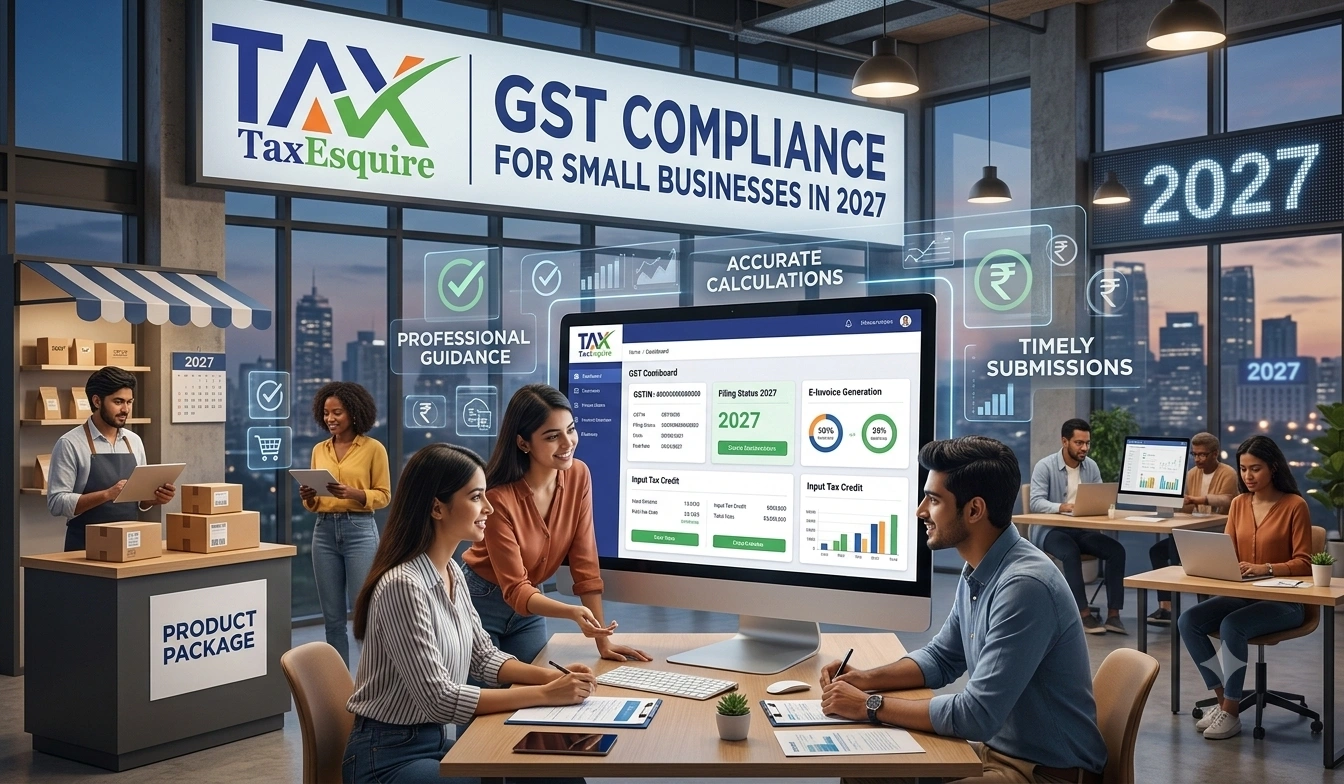
GST Compliance for Small Businesses in 2027
Master GST registration, filing, and compliance without the headaches
Why GST Compliance Matters for Your Small Business
Look, I've worked with hundreds of small business owners across India, and here's what I've seen: the ones who ignore GST compliance end up paying way more in penalties than they would've spent on getting it right from day one. And that's really it—GST isn't complicated once you understand the basics.
GST is a consumption tax. You collect it from your customers and send it to the government. But here's the thing: you also get credit for the GST you pay on your business expenses. So if you mess up your compliance, you're not just risking penalties—you're losing money that should be yours.
In 2027, the GST rules are stricter than ever. The government has better tech to catch mistakes. Your bank statements are linked to your GST returns. So what does this mean for you? It means getting your compliance right isn't optional anymore—it's essential for business survival.
Proper GST compliance helps you claim input tax credits, reduces audit risk, improves your business credibility, and keeps your finances transparent.
Who Needs to Register for GST?
Not every small business needs GST registration. But most do. Let me break down the rules for 2027.
If your annual turnover crosses Rs 40 lakhs (or Rs 20 lakhs if you're in the northeastern states or hill stations), you must register for GST. That's compulsory. No exceptions.
But here's the catch: even if you're below that threshold, you might still want to register. Why? Because once you're registered, you can claim GST paid on your purchases as a credit. If you're buying expensive inventory or equipment, this can save you serious money.
- You sell goods or services for a living
- Your annual turnover is above the threshold
- You want to claim input tax credits
- Your customers are businesses (not individuals)
- You import goods into India
- You're in e-commerce or digital services
If you're supposed to register but don't, you'll face penalties starting at Rs 10,000 per day. Plus, the government can cancel your registration retroactively and demand all unpaid GST. Don't take this risk.
The GST Registration Process: Step by Step
Registering for GST is actually pretty straightforward in 2027. The whole process happens online through the GST portal.
But before you start, get these documents ready: PAN, Aadhaar, business address proof, bank details, and your business registration documents (if you have them). If you're a sole proprietor, you'll also need your personal identification.
And that's really it for the basics. Here's what happens next:
- Fill out Form GST REG-01 on the GST portal
- Upload all your documents and verify your email and phone
- Wait for the system to auto-verify (usually instant for most applicants)
- Get your GST certificate and GSTIN (a 15-digit number)
- Start using your GSTIN on invoices immediately
The whole thing takes about 10 minutes. But honestly, I'd recommend having a CA check your application before you submit. Small errors can delay approval.
GST Filing: What You Need to File and When
So you've got your GSTIN. Now what? You need to file returns. This is where most small business owners get confused.
In 2027, the main returns you'll file are GSTR-1 (outward supplies), GSTR-3B (monthly summary), and GSTR-9 (annual return). Put simply, you're telling the government what you sold, what you bought, and what GST you owe.
| Return Type | Filing Frequency | Deadline |
|---|---|---|
| GSTR-1 | Monthly | 11th of next month |
| GSTR-3B | Monthly | 20th of next month |
| GSTR-9 | Annual | 31st December (or later) |
Let me explain what each one does. GSTR-1 is where you list all your sales. GSTR-3B is your monthly tax payment form—this is where you calculate how much GST you actually owe. And GSTR-9 is your yearly reconciliation.
Here's a practical example. Say you're a small clothing retailer. In January 2027, you sell goods worth Rs 5 lakhs with 5% GST (Rs 25,000). You also buy inventory worth Rs 3 lakhs with 5% GST (Rs 15,000). In your GSTR-3B, you'd owe Rs 25,000 minus Rs 15,000 = Rs 10,000 in GST. That's input tax credit in action.
Missing a filing deadline costs you Rs 100 per day (up to Rs 5,000). But more importantly, late filing can trigger audits. The government's system flags returns filed after 30 days as suspicious.
Common GST Mistakes Small Businesses Make
In my years as a CA, I've seen the same errors over and over. Let me save you the trouble.
The biggest mistake? Not keeping proper invoices. GST is an invoice-based tax. If you don't have a proper invoice, you can't claim the credit. And honestly, that's where people lose the most money.
- Not mentioning GSTIN on invoices (both yours and your supplier's)
- Mixing personal and business expenses
- Not reconciling your books with your GST returns
- Claiming credit on items that aren't allowed (like personal car fuel)
- Forgetting to file even when you have zero sales
- Not updating your GST details when your business changes
The thing is, most of these mistakes are easy to avoid. You just need systems. Use accounting software, keep a monthly filing checklist, and reconcile your books every month. That's it.
GST Penalties and How to Avoid Them in 2027
Penalties are the thing that keeps small business owners up at night. But here's the good news: most penalties are avoidable.
In 2027, the penalty structure is clear. Late filing? Rs 100 per day. Wrong information on your return? Rs 10,000 to Rs 1 lakh depending on the error. Not registering when you should have? That's worse—you can face prosecution.
But here's what I tell my clients: penalties are designed to encourage compliance, not to destroy businesses. The government has amnesty schemes. If you've made mistakes in the past, you can often fix them with minimal penalty.
| Violation | Penalty | How to Avoid |
|---|---|---|
| Late filing | Rs 100/day (max Rs 5,000) | File before deadline |
| Wrong HSN code | Rs 10,000 per invoice | Double-check before invoicing |
| Not registering | Rs 10,000/day + prosecution | Register immediately if eligible |
| Fake invoices | 25% of tax involved + prosecution | Never issue false invoices |
So what does this mean for you? Set phone reminders for filing dates. Use software that auto-calculates taxes. And if you make a mistake, fix it immediately. The government is more forgiving if you self-correct than if they catch you.
Input Tax Credit: The Money You're Probably Leaving on the Table
Let me tell you about input tax credit because this is where most small businesses lose money without realizing it.
When you buy something for your business, you pay GST. That GST is called input tax. You can claim it as a credit against the GST you collect from your customers. This is huge. It directly reduces what you owe to the government.
But here's the catch: you can only claim credit if you have a proper GST invoice. And the supplier's GSTIN must match their invoice. If something's off, you lose the credit.
Let me give you a real example. A small manufacturing business buys raw materials for Rs 1 lakh with 12% GST (Rs 12,000). They sell finished goods for Rs 2 lakhs with 18% GST (Rs 36,000). Their GST liability is Rs 36,000 minus Rs 12,000 = Rs 24,000. Without the credit, they'd owe Rs 36,000. That's Rs 12,000 saved just by claiming credit properly.
- Always ask suppliers for GST invoices
- Verify the GSTIN on the invoice matches their registration
- Keep invoices organized and easily retrievable
- Match supplier invoices with your books within the same month
- Don't claim credit on personal expenses
- Know which items don't qualify for credit (like personal vehicle fuel)
Proper input tax credit management can reduce your effective GST liability by 30-50%, depending on your business model. That's real cash in your pocket.
GST Compliance Tools and Software for 2027
You don't need to do GST compliance manually anymore. And honestly, you shouldn't. The margin for error is too high.
In 2027, there are tons of affordable accounting software options. Most have GST modules built in. They auto-calculate taxes, generate invoices, and even prepare your returns.
But here's my advice: don't just pick the cheapest option. Pick one that integrates with your bank, has good customer support, and is actually used by other businesses in your industry. Why? Because you'll need help when something goes wrong.
- Tally ERP is great for manufacturing and trading businesses
- Zoho Books works well for service businesses and startups
- Busy is popular among small retailers
- GST Suvidha Providers (GSPs) offer free filing services for small businesses
- Your bank's accounting tools often have GST modules
And honestly? If you're not tech-savvy, hiring a CA or a GST practitioner is worth the cost. They'll handle your compliance and keep you out of trouble. That peace of mind is worth the money.
Special Schemes: Composition Scheme and Others
Not every business needs to follow the standard GST rules. There are special schemes designed for small businesses.
The Composition Scheme is the biggest one. If your turnover is below Rs 2 crores, you can opt for this. Instead of filing monthly returns, you file quarterly. Instead of calculating GST on each transaction, you pay a fixed percentage of your turnover. It's simple.
But here's the thing: it's not always better. Under the Composition Scheme, you can't claim input tax credit. So if you buy a lot of things with GST, you might end up paying more overall.
| Scheme | Tax Rate | Best For |
|---|---|---|
| Composition (Traders) | 1% of turnover | Small retailers and wholesalers |
| Composition (Manufacturers) | 2% of turnover | Small manufacturers |
| Composition (Services) | 6% of turnover | Consultants, coaches, service providers |
| Regular GST | 0-28% (varies) | Businesses with high input costs |
So what should you do? Calculate both scenarios. If you're a retailer with low input costs, Composition might save you money. If you're a manufacturer buying expensive raw materials, regular GST with input credit is probably better.
GST Audit and What to Expect
Here's something that scares most small business owners: GST audits. But honestly, they're not as bad as people think.
In 2027, the government uses data analytics to pick businesses for audit. They're looking for patterns—like businesses with zero input credit, or huge spikes in sales, or mismatched invoices. If your books are clean, you'll likely never be audited.
But if you are audited, what happens? The officer will ask to see your invoices, your books, your bank statements, and your GST returns. They'll check if everything matches. If they find errors, you'll have to pay the tax plus interest (at 18% per annum). If the error is intentional, you might face penalties.
The key to surviving an audit? Keep everything. Every invoice, every receipt, every bank statement. For at least 6 years. And make sure your books are reconciled monthly.
- Maintain a proper audit trail in your accounting software
- Reconcile your books with your bank statements every month
- Keep digital copies of all invoices (both issued and received)
- Have a system for matching supplier invoices with your purchase records
- Document any corrections or adjustments with proper approval
GST Compliance Checklist for Small Businesses
Here's a practical checklist you can use right now to make sure you're on track.
- Determine if you need to register (check your turnover)
- Apply for GST registration if eligible
- Set up proper accounting software with GST modules
- Create invoice templates with all GST-required fields
- Train your team on GST invoice requirements
- Set calendar reminders for GSTR-1 (11th) and GSTR-3B (20th) deadlines
- Reconcile your books monthly before filing returns
- Maintain a register of all input invoices
- File GSTR-9 annual return by December 31st
- Keep all documents for 6 years
Frequently Asked Questions About GST Compliance
1. What happens if I miss a GST filing deadline?
You'll face a penalty of Rs 100 per day of delay, capped at Rs 5,000 per return. But more importantly, late filing triggers automated flags in the system. The government might send you a notice. If you've missed multiple deadlines, they might even suspend your registration temporarily. The best approach is to file on time, even if you don't have complete information. You can always file an amended return later.
2. Can I claim input tax credit on all my purchases?
No, there are restrictions. You can't claim credit on personal expenses, entertainment, or certain items like personal vehicle fuel. You also can't claim credit if the supplier's invoice doesn't have their GSTIN, or if they're not registered. The rule is simple: only claim credit on business-related purchases from registered suppliers with proper invoices.
3. Is the Composition Scheme right for my business?
It depends on your input costs. If you're a retailer buying finished goods and selling them, Composition saves you money. But if you're a manufacturer or service provider buying expensive inputs, regular GST with input credit is usually better. Calculate both scenarios and see which works for you. And remember, you can switch schemes once a year, so you're not locked in.
4. What documents do I need to keep for GST compliance?
Keep everything: invoices issued, invoices received, purchase orders, delivery notes, credit notes, debit notes, and bank statements. Keep them for at least 6 years. Digital copies are fine, but make sure they're backed up. If you're audited, the first thing the officer asks for is documentation. If you don't have it, you lose the benefit of the doubt.
5. What's the difference between GSTR-1 and GSTR-3B?
GSTR-1 is where you report all your sales. GSTR-3B is where you calculate your actual tax liability. GSTR-1 is due on the 11th of the next month. GSTR-3B is due on the 20th. You need to file both every month. GSTR-1 shows the government what you sold. GSTR-3B shows them how much tax you actually owe after claiming input credit. Both are important.
Final Thoughts: Making GST Compliance Easy
Look, GST compliance doesn't have to be complicated. The rules are clear. The process is straightforward. What matters is that you start now and build systems.
Get proper accounting software. File on time. Keep good records. And if you're not sure about something, ask a CA. That's what we're here for.
The businesses that thrive in 2027 are the ones that embrace compliance, not the ones that fight it. Because when your books are clean, you can focus on growing your business instead of worrying about audits and penalties.
And that's really it. Start today. Your future self will thank you.
" } ```
© 2026 Tax Esquire | Expert CA Services in Greater Noida, Uttar Pradesh
8810380146 | info.taxesquire@gmail.com | taxesquire.in
This document is for informational purposes only. For personalised tax advice, consult our chartered accountants.