GST Tax Filing Compliance Guide for Indian Businesses in 2026-2027
GST Tax Filing Compliance Guide for Indian Businesses in 2026-2027
Everything you need to know about GST compliance, filing deadlines, and avoiding penalties
What is GST and Why Does It Matter?
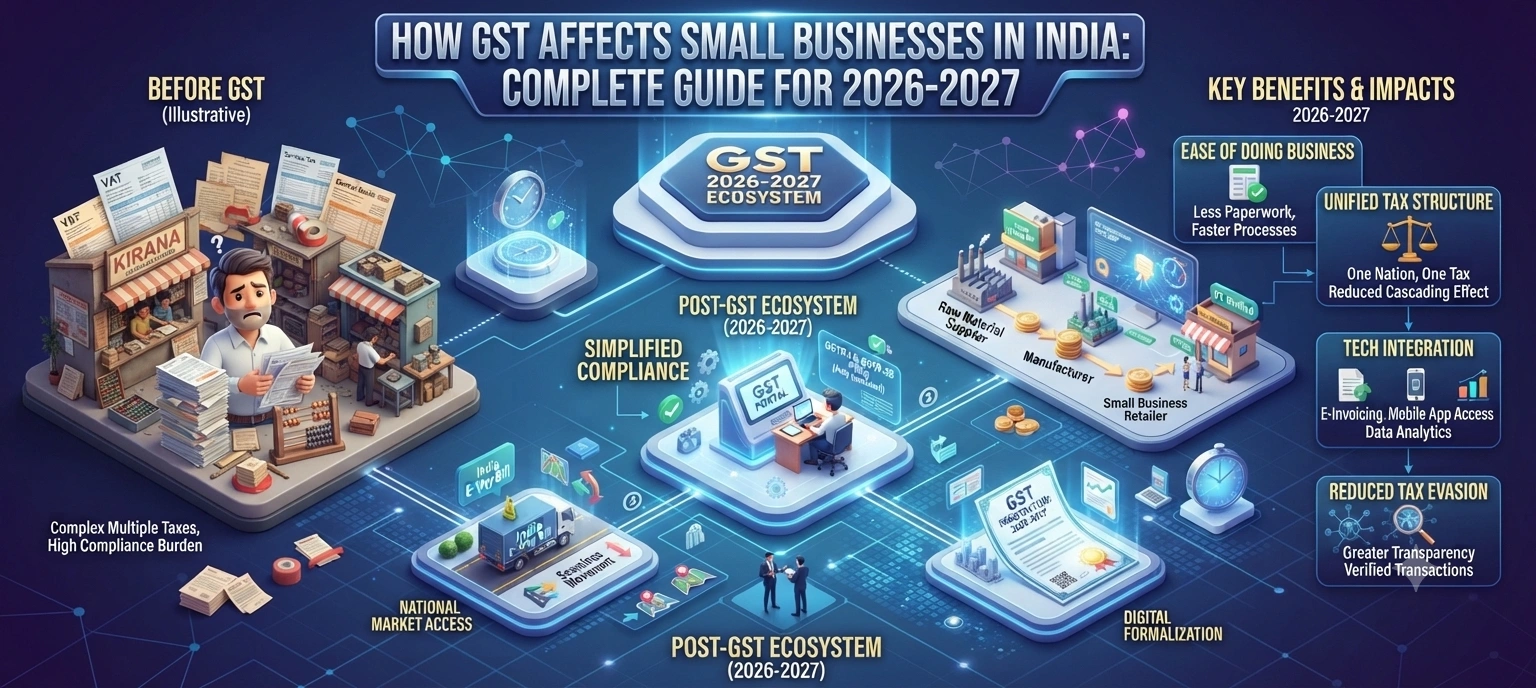
Goods and Services Tax, or GST, is India's biggest tax reform since independence. It's a single indirect tax that replaces multiple taxes like VAT, excise, and service tax. So if you're running a business in 2026-2027, you're likely dealing with GST whether you like it or not.
The thing is, GST isn't just about paying tax. It's about filing returns on time, keeping proper records, and making sure your numbers match what the government expects. Get this wrong, and you're looking at penalties that can hurt your cash flow badly.
And that's really it—GST compliance boils down to three things: register properly, file on time, and keep your paperwork clean.
Who Needs to Register for GST?
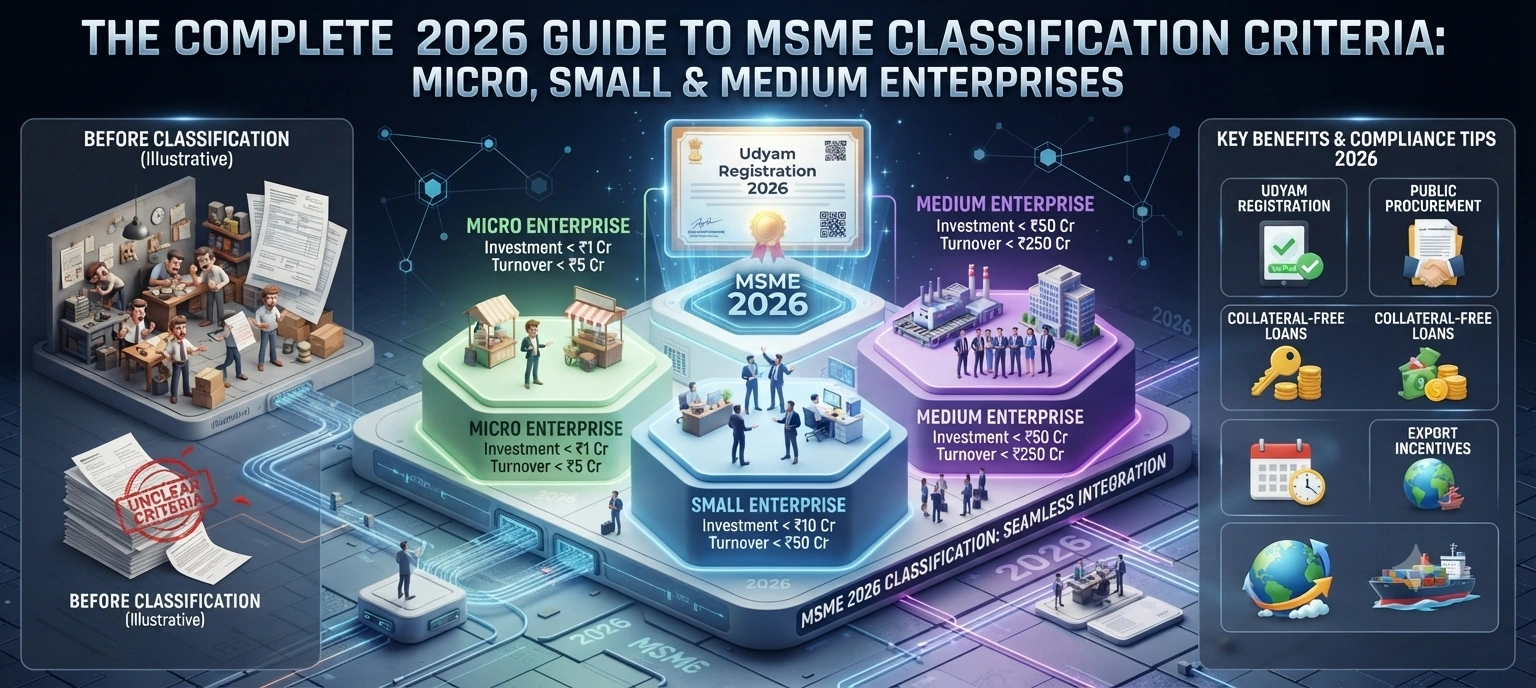
Not every business needs GST registration. The government set thresholds to keep small traders out of the system. But here's the catch—the rules change, and you need to stay on top of them.
- Businesses with turnover above Rs 40 lakh (Rs 20 lakh for services) must register
- E-commerce operators must register regardless of turnover
- Casual taxable persons (those making occasional supplies) need registration
- Non-resident taxable persons making supplies in India must register
- Businesses doing inter-state supplies must register
- Special economic zone units need separate registration
But here's what most people miss: even if you're below the threshold, you can voluntarily register. Why would you do that? Because registered businesses can claim input tax credit. That means you can recover GST paid on your purchases, which saves real money.
Voluntary GST registration lets you claim input tax credit even if your turnover is below the threshold. This can significantly reduce your tax burden if you're buying goods or services regularly.
GST Filing Deadlines for 2026-2027
Let me be straight with you—missing GST filing deadlines is one of the quickest ways to get into trouble with the tax authorities. The deadlines are strict, and extensions are rare.
| Return Type | Filing Deadline | Applicable To |
|---|---|---|
| GSTR-1 (Outward supplies) | 11th of next month | All registered businesses |
| GSTR-3B (Self-assessed tax) | 20th of next month | All registered businesses |
| GSTR-2B (Inward supplies) | Auto-generated by system | All registered businesses |
| GSTR-4 (Annual return) | 31st December | Composition dealers |
| GSTR-9 (Annual return) | 31st December | Regular businesses |
So what does this mean for you? If you're filing for January 2027, your GSTR-1 is due by February 11, 2027. Your GSTR-3B is due by February 20, 2027. Mark these dates in your calendar right now.
And here's something important: late filing comes with penalties. We'll talk about those in a moment, but just know that every day you delay costs you money.
Missing GST filing deadlines in 2026-2027 can result in penalties starting at Rs 100 per day. If you're late by 30 days, that's Rs 3,000 before any other consequences kick in. Your registration can also be cancelled if you miss deadlines consistently.
Understanding GST Return Forms
GST has multiple return forms, and honestly, it can be confusing which one you need to file. Let me break it down in simple terms.
GSTR-1 is where you report all your sales. Every invoice you issue goes here. If you sold goods worth Rs 50 lakh in a month, you report it in GSTR-1. This helps the government track money moving through the economy.
GSTR-3B is your monthly tax payment form. You calculate how much GST you collected from customers, subtract the GST you paid on purchases (input tax credit), and pay the difference. This is the actual tax payment.
GSTR-2B shows all purchases made by you. But here's the thing—you don't fill this yourself. The government generates it automatically based on GSTR-1 filings from your suppliers. You just review it and accept it.
At year-end, you file GSTR-9 (or GSTR-4 if you're on composition scheme). This is your annual reconciliation where everything gets tied together. Any discrepancies found here can trigger audits.
- GSTR-1: Monthly sales reporting
- GSTR-2B: Auto-generated purchase summary
- GSTR-3B: Monthly tax payment and reconciliation
- GSTR-4: Annual return for composition dealers
- GSTR-9: Annual return for regular businesses
- GSTR-5: Return for non-resident taxable persons
Input Tax Credit: What You Need to Know
Input tax credit is probably the most valuable part of GST compliance. Put simply, it means you don't pay tax on tax. When you buy something for your business, you pay GST. When you sell something, you collect GST from your customer. You only pay the difference to the government.
But—and this is crucial—you can only claim input tax credit if you have proper documentation. A bill without a GST number? You can't claim it. An invoice from an unregistered supplier? No credit. A personal purchase mixed with business? Nope.
Let me give you a real example. You're running a manufacturing business. In January 2027, you buy raw materials for Rs 1 lakh plus 5% GST (Rs 5,000). You manufacture products and sell them for Rs 1.5 lakh plus 5% GST (Rs 7,500). You collected Rs 7,500 in GST from your customer. You paid Rs 5,000 in GST to your supplier. You pay the government Rs 2,500 (the difference). That's input tax credit in action.
Proper input tax credit management can reduce your actual tax liability by 30-50% depending on your business model. Maintaining clean records ensures you capture every rupee of credit you're entitled to.
Common GST Compliance Mistakes to Avoid
I've seen businesses lose thousands because of preventable mistakes. Let me share the biggest ones so you don't repeat them.
First mistake: not reconciling GSTR-1 and GSTR-2B. Your sales should match your buyer's purchases. If you report Rs 100 lakh in sales but your buyers only report Rs 80 lakh in purchases, the system flags this. It's like a red light to auditors.
Second mistake: claiming input tax credit for items you shouldn't. Personal vehicle expenses, club memberships, entertainment—these aren't allowed. Many businesses try anyway and get caught during audits.
Third mistake: not keeping invoices properly. GST rules say you need to keep invoices for six years. Digital or physical, doesn't matter. But you need them organized and accessible. I've seen businesses get penalized because they couldn't produce a bill when asked.
Fourth mistake: filing late regularly. One late filing? Okay, it happens. But if you're consistently late, the tax department will cancel your registration. Then you're out of the system and have to reapply, which is a nightmare.
Fifth mistake: not updating your registration when details change. Changed your address? Updated your business structure? You need to inform the GST authorities. Not doing this can invalidate your registration.
- Not matching GSTR-1 with buyer's GSTR-2B
- Claiming ineligible input tax credit
- Poor invoice and documentation management
- Consistently missing filing deadlines
- Not updating registration details timely
GST Penalties and Late Fees in 2026-2027
Let's talk about what happens when you mess up. GST penalties aren't gentle, and they add up fast.
Late filing penalty starts at Rs 100 per day, capped at Rs 5,000 for most cases. So if you file 20 days late, that's Rs 2,000 in penalties alone. Doesn't sound like much? It adds up when you're filing multiple returns.
Non-filing of returns can lead to cancellation of registration. Once that happens, you're out of the GST system. Reapplying is time-consuming and embarrassing. Your customers might also question why you lost your GST number.
Incorrect input tax credit claims—meaning you claimed credit you shouldn't have—can result in penalties up to 10% of the tax amount. If you claimed Rs 50,000 in wrong credit, you're paying Rs 5,000 in penalties plus the tax itself.
Failure to maintain records can lead to penalties up to Rs 25,000. And here's the thing—the burden is on you to prove you had proper records. If you can't show them, you lose.
| Violation | Penalty Amount | Impact |
|---|---|---|
| Late return filing | Rs 100/day (max Rs 5,000) | Cash outflow, compliance record |
| Non-filing of return | Registration cancellation | Loss of GST registration status |
| Incorrect ITC claims | 10% of tax amount + interest | Higher tax liability |
| Record maintenance failure | Up to Rs 25,000 | Audit risk, compliance issues |
Interest is charged on late GST payments at 18% per annum. If you owe Rs 10,000 and pay it 60 days late, you're paying about Rs 300 in interest alone. This compounds quickly, so don't ignore payment deadlines.
Documentation Requirements for GST Compliance
You can't file GST returns without proper documentation. It's not optional—it's mandatory. And the tax department can ask for these papers anytime.
Every invoice you issue needs to have specific details: your GST number, buyer's GST number (if applicable), invoice date, invoice number, description of goods or services, quantity, rate, and GST amount. Missing any of these, and the invoice isn't valid for GST purposes.
You also need to keep purchase invoices from your suppliers. These show what you bought and how much GST you paid. Without them, you can't claim input tax credit. Store them digitally and physically. Make backups.
Delivery challan, purchase orders, payment receipts, bank statements—all of these support your GST returns. If the tax department questions your returns, you'll need to produce these documents to justify your claims.
- Original tax invoices with GST details
- Debit notes and credit notes
- Purchase invoices from suppliers
- Delivery challans and shipping documents
- Bank statements and payment records
- Stock registers and inventory records
The rule is simple: keep everything for six years. That's the statutory requirement. After six years, you can destroy it. Before that, you can't.
Best Practices for Smooth GST Filing
Honestly, GST compliance doesn't have to be stressful if you do things right from the start. Here's what works.
First, invest in good accounting software. Tools like Tally, QuickBooks, or specialized GST software automate most of the work. They generate invoices with GST details, track input tax credit, and prepare returns automatically. The cost is minimal compared to the headaches you'll avoid.
Second, reconcile your books monthly. Don't wait until filing day. Spend 30 minutes every month matching your sales with customer purchases and your purchases with supplier sales. Catch discrepancies early.
Third, file returns early. If the deadline is the 20th, file by the 15th. This gives you a buffer if you find errors. You can file revised returns, but it's better to get it right the first time.
Fourth, keep a compliance calendar. Mark all deadlines—filing dates, payment dates, annual reconciliation dates. Set reminders a week before each deadline. Most penalties happen because people forget dates.
Fifth, work with a GST consultant or CA. Yes, it costs money. But a good professional catches mistakes before they become problems. They also stay updated on rule changes, which you might miss.
- Use automated accounting software for invoicing and return preparation
- Reconcile books monthly instead of waiting for filing deadlines
- File returns 5-7 days before the deadline
- Maintain a compliance calendar with all important dates
- Hire a GST consultant for professional guidance
- Train your team on GST compliance procedures
GST Audit and Assessment Process
So what happens if the tax department decides to audit you? It's not as scary as it sounds if you're compliant.
The GST department can conduct audits based on risk profiles. If your returns show unusual patterns—like very high input tax credit claims or sudden spikes in turnover—you might get selected. They can also do random audits.
When you're audited, they'll ask for your books, invoices, and supporting documents. They'll verify that your sales match your customers' purchases and your purchases match your suppliers' sales. They'll check if input tax credit claims are legitimate.
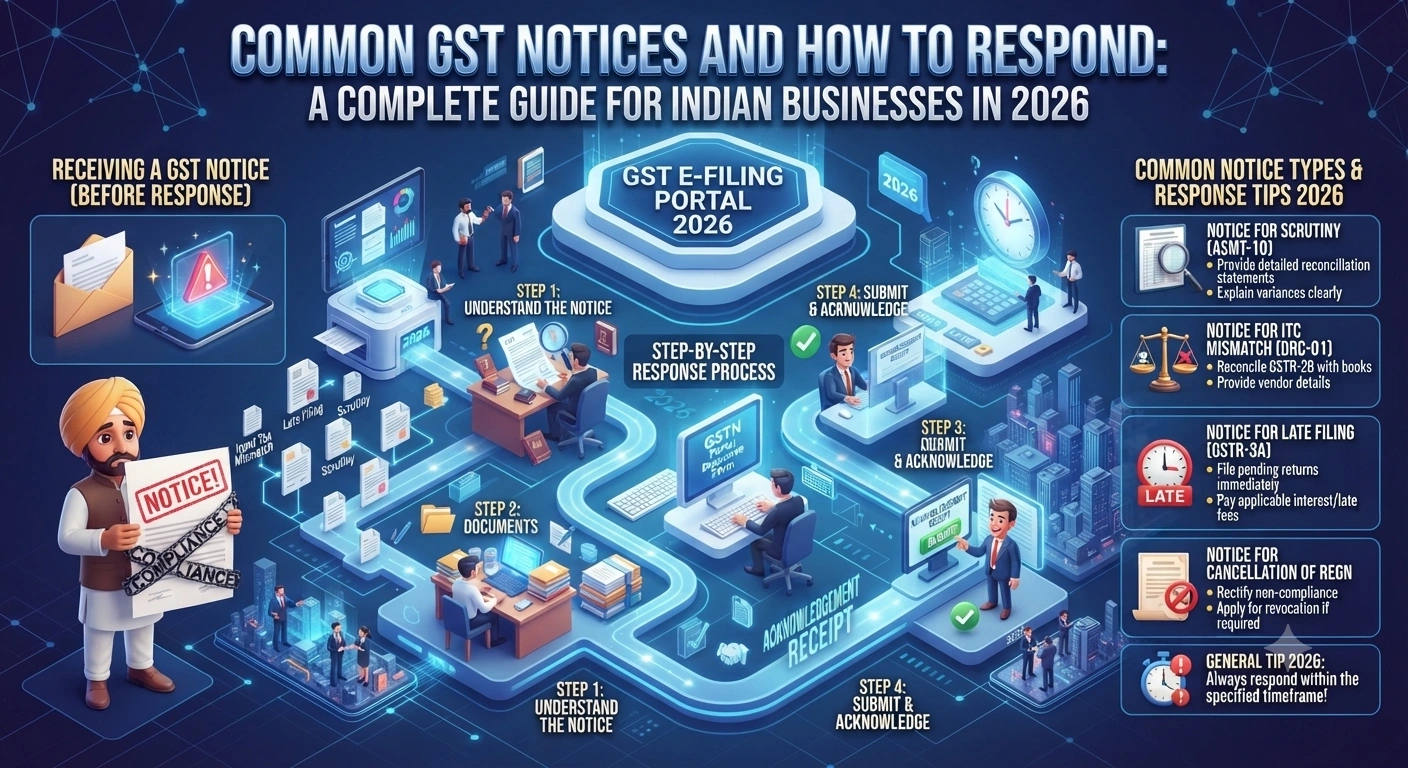
If they find discrepancies, they'll issue a show cause notice. You get a chance to explain or provide missing documentation. If your explanation is valid, you're off the hook. If not, they'll assess additional tax and penalties.
The key is being prepared. If your records are clean and your returns are accurate, you've got nothing to worry about. If you're caught with false claims or undisclosed income, that's when problems start.
Maintaining proper records and filing accurate returns protects you during audits. You can confidently respond to any queries because your documentation supports your claims. This actually builds trust with tax authorities.
Frequently Asked Questions
Q1: Can I file GST returns after the deadline?
Yes, you can file late, but you'll pay penalties. For GSTR-1 and GSTR-3B, the penalty is Rs 100 per day, capped at Rs 5,000. So if you're 30 days late, you're paying Rs 3,000 in penalties. Plus, if you're paying tax late, you'll also owe 18% annual interest on the amount due. The best approach? Don't file late. Set reminders and mark your calendar.
Q2: What's the difference between GSTR-1 and GSTR-3B?
GSTR-1 is where you report all your sales and the GST you collected. GSTR-3B is where you report the GST you collected, subtract the GST you paid on purchases, and pay the net amount to the government. Think of GSTR-1 as your sales report and GSTR-3B as your tax payment form. You file GSTR-1 first (by the 11th), then GSTR-3B (by the 20th).
Q3: Can I claim input tax credit for all my business expenses?
No, only eligible expenses. You can claim credit for goods and services used in your business. But personal expenses, entertainment, vehicle fuel for personal use, and items like club memberships don't qualify. The rule is: if it's directly related to your business operations and you have a valid tax invoice, you can claim it. If there's any doubt, ask your CA before claiming.
Q4: What happens if I don't file GST returns?
If you don't file returns consistently, your GST registration gets cancelled. Once that happens, you're out of the system and can't collect GST from your customers. Reapplying is complicated and time-consuming. Plus, you'll face penalties and interest on unpaid taxes. It's not worth the risk. File on time, always.
Q5: How long do I need to keep GST records?
You need to keep all GST-related records for six years from the date of transaction. This includes invoices, purchase bills, delivery challan, payment receipts, and bank statements. The tax department can ask for these papers anytime within six years. After six years, you can destroy them. But until then, keep them safe—digital or physical, doesn't matter as long as you can produce them when asked.
Key Takeaways for GST Compliance in 2026-2027
GST compliance isn't complicated if you stay organized and file on time. The system is designed to be straightforward, but it requires discipline.
Register properly, file returns by deadlines, keep clean records, and claim only eligible input tax credit. Do these four things consistently, and you won't have problems. Miss any of them, and penalties will follow.
Invest in good software, work with a professional, and reconcile your books regularly. These aren't luxuries—they're necessities. The small cost upfront saves you from huge headaches later.
And remember: the tax department has access to all GST data filed by your customers and suppliers. Discrepancies are caught automatically. Honesty and accuracy aren't just the right thing to do—they're the smart thing to do.
" } ```
© 2026 Tax Esquire | Expert CA Services in Greater Noida, Uttar Pradesh
8810380146 | info.taxesquire@gmail.com | taxesquire.in
This document is for informational purposes only. For personalised tax advice, consult our chartered accountants.