GST Audit Guide by Chartered Accountant in India

For most businesses, GST compliance feels like a routine activity: file returns, pay taxes, and move on. But anyone who has faced a GST notice knows that compliance is not just about filing returns; it’s about getting the details right...
A GST audit is where your filing’s are actually put under scrutiny. The department doesn’t just look at what you filed, it compare’s your return’s with your book’s, bank record’s, and supporting document’s. Even small gaps can raise questions.
The reality is simple: many GST issues do not arise due to fraud, but due to lack of reconciliation and oversight.
This guide is written to give you a practical understanding of the GST audit, what it is, where businesses go wrong, and how you can stay prepared.
What is a GST Audit?
In simple term’s, a GST audit is a detailed verification of your financial record’s and GST returns.
The objective is to check whether:
Your turnover is correctly reported
Taxes are properly calculated and paid
Input Tax Credit (ITC) is valid and eligible
Your returns match your books of accounts
Unlike day-to-day compliance, an audit look’s at the bigger picture over a period of time, usually a financial year.
It’s important to understand that GST audits are not limited to large businesses. Even small and medium businesses can be selected, especially if there are inconsistencies in filings.
Types of GST Audit
While the law provides for different types of audits, from a practical perspective, you only need to understand them at a basic level.
1. Self-Certified Audit
Earlier, businesses crossing a certain turnover limit had to get their account’s audited by a CA or Cost Accountant. This requirement has now been removed.
However, businesses are still required to:
File GSTR-9
Submit GSTR-9C (Reconciliation Statement)
Now, the responsibility lies on the taxpayer to ensure that the data reported is accurate and reconciled.
2. Departmental Audit (Section 65)
This is the most relevant type of audit for businesses.
The GST department may select your case for audit and issue a notice. The audit can be conducted at your business premises or at the department office.
Key points:
Advance notice is given
Audit is time-bound (generally 3 months)
Multiple queries may be raised during the process
This type of audit focuses on verifying your overall compliance.
3. Special Audit (Section 66)
A special audit is ordered in cases where the department finds complexity or serious discrepancies.
For example:
Complicated transactions
Doubtful valuation
Excess ITC claims
In such cases, a CA or CMA is appointed by the department to conduct a deeper review.
GST Audit Checklist
In practice, the success of a GST audit depends largely on how well your record’s are maintained.
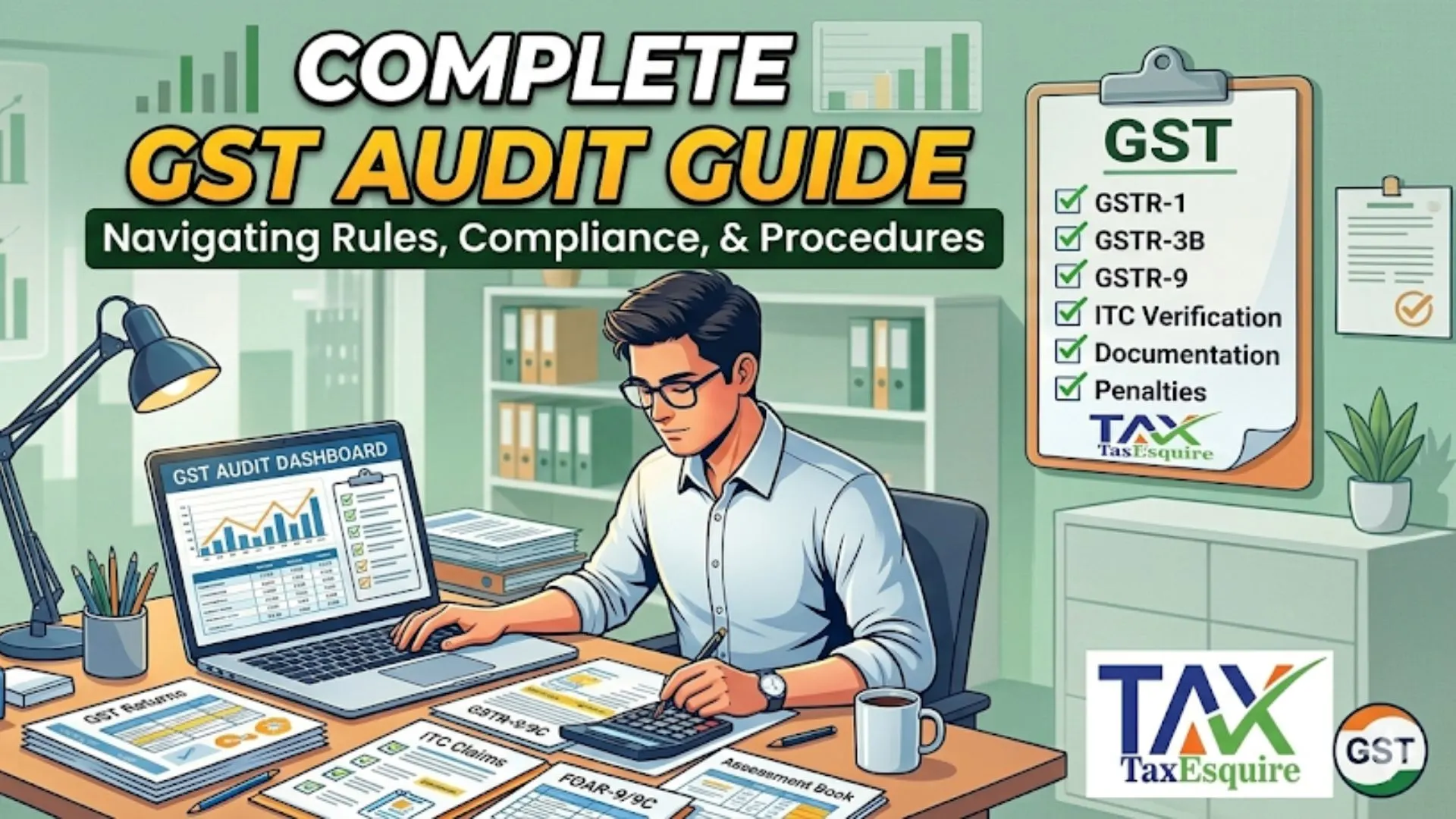
Here’s a checklist you should always keep ready:
GST Returns: GSTR-1, GSTR-3B, GSTR-9
GSTR-9C reconciliation statement (if applicable)
Sales invoices and purchase bills
Input Tax Credit (ITC) workings with supporting documents
Stock records and inventory details
Financial statements
Bank reconciliation statement’s
It’s not just about having these documents they should also match with each other.
For example, your turnover in financial statements should align with your GST returns. Any mismatch, even if genuine, should be explainable.
Common Mistakes That Lead to GST Audit Issues
From practical experience, certain mistakes appear repeatedly across businesses.
1. Mismatch Between GSTR-1 and GSTR-3B
This is one of the most common triggers for notices. If your outward supplies reported in GSTR-1 do not match the tax paid in GSTR-3B, it raises a red flag.
2. Incorrect Input Tax Credit (ITC)
Many businesses face issues here due to:
Claiming ITC without proper invoices
Taking ITC from non-compliant vendors
Claiming ineligible ITC
Since ITC directly reduces tax liability, it is closely monitored.
3. Unreported or Underreported Turnover
Sometimes income is recorded in books but not fully reported in GST returns. This mismatch is easily detected during the audit.
4. Incorrect Classification (HSN/SAC)
Using the wrong classification can lead to applying the wrong tax rate, which results in short payment of tax.
5. Poor Documentation
Even if a transaction is correct, lack of proper documentation can create problems during audit.
What Happens During a GST Audit?
If your case is selected for audit, the process generally follows these steps:
Notice is issued by the department
Documents are requested from your side
Verification is carried out by the officer
Queries are raised based on findings
You submit replies with explanations
Final report is issued
The most important stage is responding to queries. A clear and well-supported reply can resolve most issues.
How to Handle GST Audit Effectively
Handling an audit is not just about providing document’s, it is about presenting your case properly.
Some practical tips:
Reconcile your returns with books regularly, not just at year-end
Keep all supporting documents organized and accessible
Do not ignore notices or delay responses
Review queries carefully before replying
Take professional help in complex cases
A proactive approach can significantly reduce stress and financial impact.
Consequences of Non-Compliance
If discrepancie’s are found during audit, the department may take action such as:
Issuing tax demand notice’s
Charging interest on unpaid tax
Imposing penaltie’s
Initiating further legal proceedings in serious cases
However, timely response and correction can help in minimizing these consequences.
Why Choose TaxEsquire?
Handling a GST audit is not just about submitting documents — it’s about understanding your data, identifying risks, and responding correctly. That’s where TaxEsquire adds real value.
We follow a practical, experience-driven approach rather than just theoretical compliance. Our team focuses on key risk areas like ITC validation, return mismatches, and documentation gaps before they turn into notices.
TaxEsquire provides complete audit support — from pre-audit review and reconciliation to handling departmental queries and drafting professional replies. This ensures you are covered at every stage.
We also emphasize timely and structured responses, which play a crucial role in reducing penalties and resolving issues efficiently.
TaxEsquire provide many other Service like:
Conclusion
GST audits are an integral part of the compliance system and should not be viewed as something to fear. Instead, they should be seen as a process that ensures your business records are accurate and reliable. In most cases, audit issues arise due to lack of reconciliation, poor documentation, or oversight, rather than intentional errors. If you maintain proper record’s, regularly review your data, and respond promptly to notice’s, GST audits become manageable. At the end of the day, good compliance is not just about avoiding penalties, it also build’s confidence in your financial system’s and supports long term business growth.