GST Notice for GSTR-3B vs GSTR-2B Mismatch: Action Guide
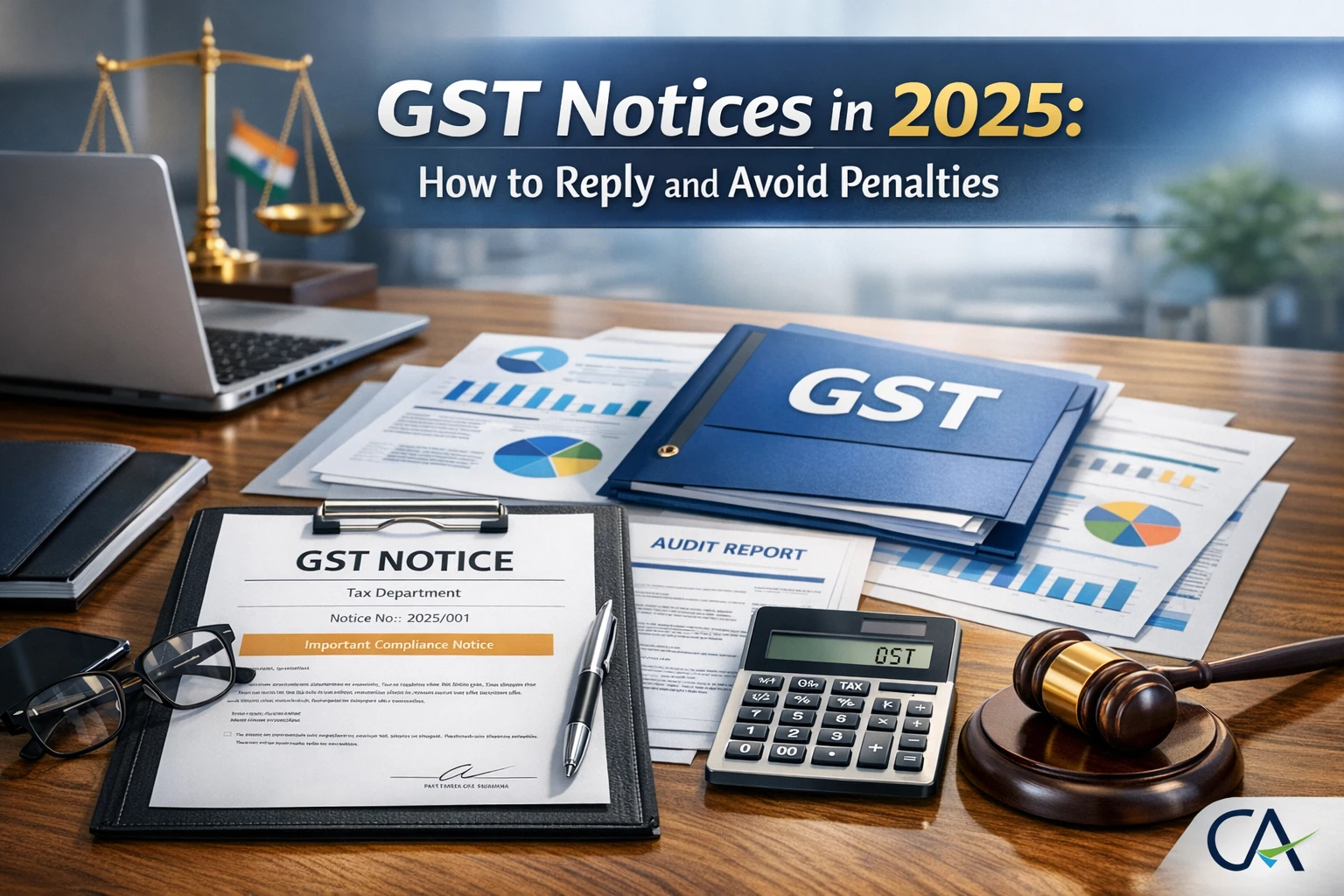
GST Notices in 2025: How to Reply and Avoid Penalties
A practical, step-by-step guide for businesses facing ASMT-10, DRC-01, and Section 73/74 scrutiny under the new GST enforcement regime.
The Goods and Services Tax (GST) regime has entered a new era of data-driven enforcement in 2025. With the integration of AI-based analytics, e-invoicing data, GSTR-2B auto-population, and e-way bill cross-verification, the GST Department is issuing notices at an unprecedented scale. Lakhs of taxpayers — from small traders to large corporates — have received notices in formats such as ASMT-10, DRC-01, DRC-01A, and Section 73/74 SCNs, often for amounts that compound quickly with interest and penalty.
Ignoring or mishandling a GST notice can lead to ex-parte demand orders, bank account attachments, ITC blockage, and even prosecution in cases of alleged fraud. This guide provides a complete roadmap on how to identify, analyse, and respond to GST notices in 2025 — and how professional CA representation can save your business from substantial financial damage.
Why GST Notices Have Surged in 2025
The GSTN system has matured into a fully data-integrated compliance engine. The department now uses automated risk parameters to flag taxpayers, leaving very little room for manual error. The most common triggers include:
- ITC mismatch between GSTR-3B and auto-populated GSTR-2B.
- Turnover mismatch between GSTR-1, GSTR-3B, GSTR-9, and income tax returns.
- E-way bill vs GSTR-1 differences indicating unreported supplies.
- RCM non-payment on import of services, GTA, legal services, etc.
- Non-reversal of ITC under Rule 42/43 or for exempt supplies.
- Supplier defaults — your supplier did not file GSTR-1 or 3B.
- Mismatch between e-invoice IRN data and GSTR-1.
Types of GST Notices You May Receive in 2025
| Notice / Form | Purpose | Reply Deadline |
|---|---|---|
| ASMT-10 | Scrutiny of returns — discrepancies in GSTR-1, 3B, 2B, 9 | 30 days (extendable) |
| DRC-01A | Pre-SCN intimation of tax liability | Usually 15 days |
| DRC-01 (Section 73) | SCN — non-fraud cases (short payment / wrong ITC) | 30 days |
| DRC-01 (Section 74) | SCN — fraud / suppression / wilful misstatement | 30 days |
| REG-17 / REG-31 | Cancellation / suspension of registration | 7 days |
| CMP-05 | Composition scheme eligibility scrutiny | 15 days |
| RFD-08 | Refund rejection notice | 15 days |
Difference Between Section 73 and Section 74 Notices
Understanding the section under which the notice is issued is the most important first step, because the penalty exposure differs drastically.
| Parameter | Section 73 (Non-Fraud) | Section 74 (Fraud) |
|---|---|---|
| Trigger | Bonafide error, short payment | Fraud, wilful misstatement, suppression |
| Time Limit for SCN | 2 years 9 months from due date of annual return | 4 years 6 months |
| Penalty if paid before SCN | NIL | 15% of tax |
| Penalty if paid within 30 days of SCN | NIL |