TDS & TCS Return Filing Date
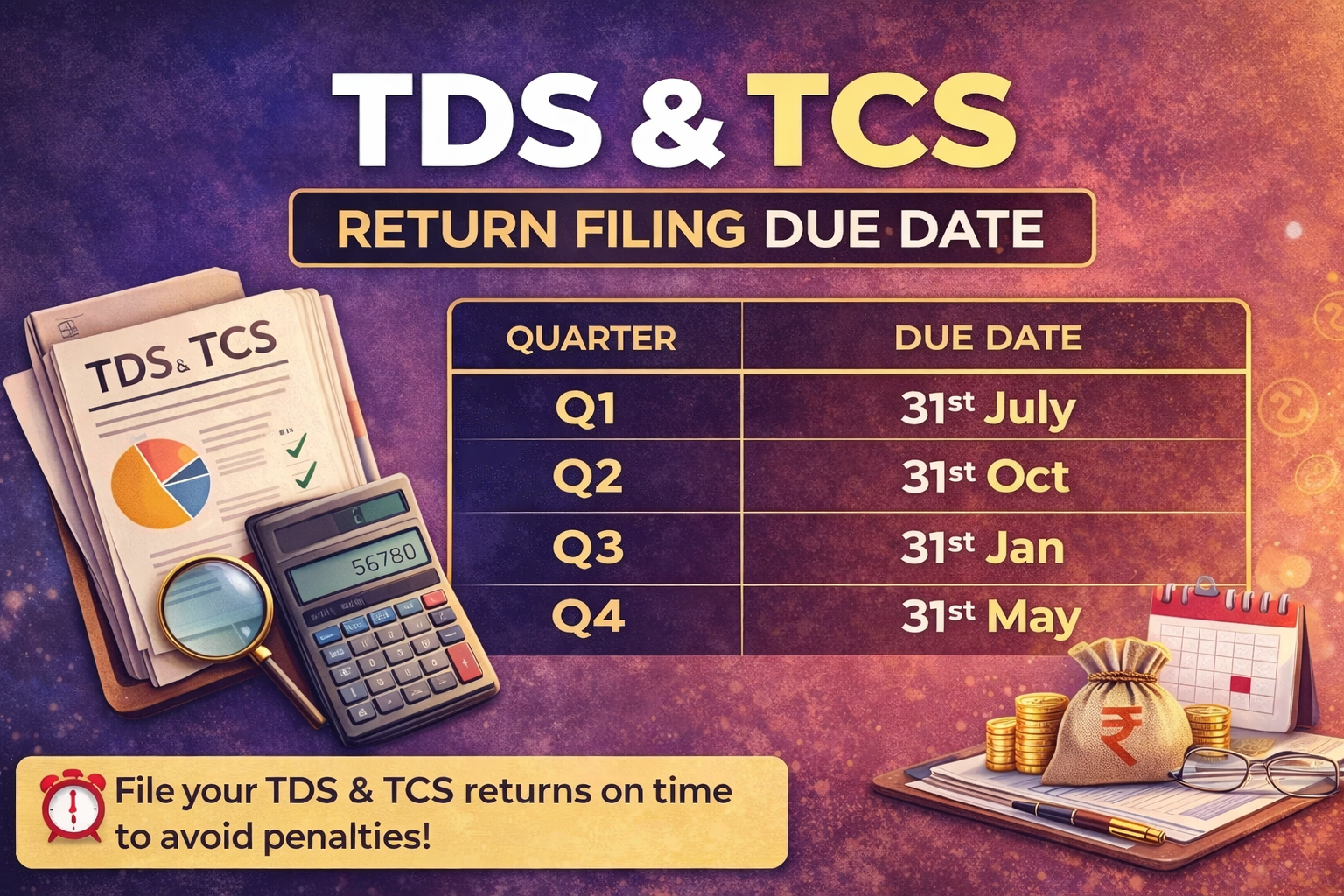
When it comes to compliance obligations like TDS (Tax Deducted at Source) and TCS (Tax Collected at Source), managing tax'es might feel burdensome. However, you can avoid fine's and needless worry by knowing how these system's operate and how to properly file return’s. Let's dissect it in a straightforward, approachable manner. We provide a straightforward step-by-step explanation of the entire TDS and TCS process in India in this TaxEsquire tutorial
What is TDS?
Tax Deducted at Source is referred to as TDS. It is a method by which taxes are collected by the government at the point of income generation. Before paying you, the payer withhold's a predetermined percentage as tax from some payment's, such as salaries, rent, commission's, or interest. The money that was withheld is then deposited on your behalf with the government.
What is TCS?
Tax Collected at Source is referred to as TCS. It is the tax that is collected from the buyer by the seller at the moment of sale. This is applicable to some product's and service's, such as minerals, scrap, and international travel package's. The tax is collected by this merchant and deposited with the government.
Differences Between TDS and TCS
Clear comparisons help in daily finance operations. Below are core distinctions that determine roles, timing, and reporting.
Who Deducts or Collects the Tax:
The payer is given the duty of deduction by TDS. The payer is still in charge of depositing and withholding taxe’s. TCS gives the seller responsibility for collecting. After receiving the additional tax component from the buyer, the seller deposit’s it. To put it briefly, TDS is handled by the party making the payment, while TCS is handled by the person receiving it.
Applicability and Timing:
TDS is applied to payees in contractual, interest, and salary categories at the time of payment or credit, whichever come’s first. Under certain business or commodity sale categorie’s, TCS takes place at the moment of receipt. Cash flow is impacted by timing: TCS raise’s the buyer's cost at the moment of purchase, but TDS immediately lowers the payee's receipt’s.
Nature of Transactions
Wages, professional fee’s, rent, interest, and commission’s are just a few of the many form’s of income that are covered by TDS. TCS focuse’s on sales and receipt’s that are specified by law, such as particular product’s, remittances, or e-commerce receipt’s. Therefore, the technique used depend’s on the nature of the transaction.
Compliance and Filing Requirements
Both demand that money be deposited into government account’s that have distinct tax head codes and challan’s. Payees get Form 16 or Form 16A from TDS filers, who also file TDS returns on a regular basis. TCS filers file TCS returns and issue TCS certificate’s. They both reconcile with annual information report’s and disclose specific’s in electronic filing portal’s.
Practical Implications for Taxpayers
When drafting ITRs and managing cash flow’s, it is important to comprehend mechanic’s. Rule’s are translated into practical acts in this area.
Impact on Income Reporting and ITR Filing
Form 26AS and the taxpayer's combined tax statement both show TDS deducted or TCS collected. When submitting income tax return’s, taxpayer’s utilize those credit’s. Declared income and credits in official record’s are guaranteed by accurate bank and ledger reconciliation.
How Can I Get Refunds for TDS and TCS?
When you file your ITR (Income Tax Return), you can request a refund if excess TDS or TCS has been collected or deducted. Make sure your Form 26AS reflect’s the amount’s that were collected or deducted. Following filing, your return will be processed and, if necessary, issued by the Income Tax Department.
Common Mistakes & Penalties for Non Compliance
Penalties may result from failing to deduct or collect TDS/TCS or from failing to deposit them on time; late payment’s may result in interest; and noncompliance can prevent these repercussion’s.
Under GST, TDS and TCS
1. TDS under GST (Section 51): Applie’s to government agencie’s and notified entitie’s that pay supplier’s more than ₹2.5 lakh.
2. TCS under GST (Section 52): On the net value of taxable supplies purchased through their platform, e-commerce companies must collect 1% TCS.
Deadlines and Penalties for TDS and TCS Compliance
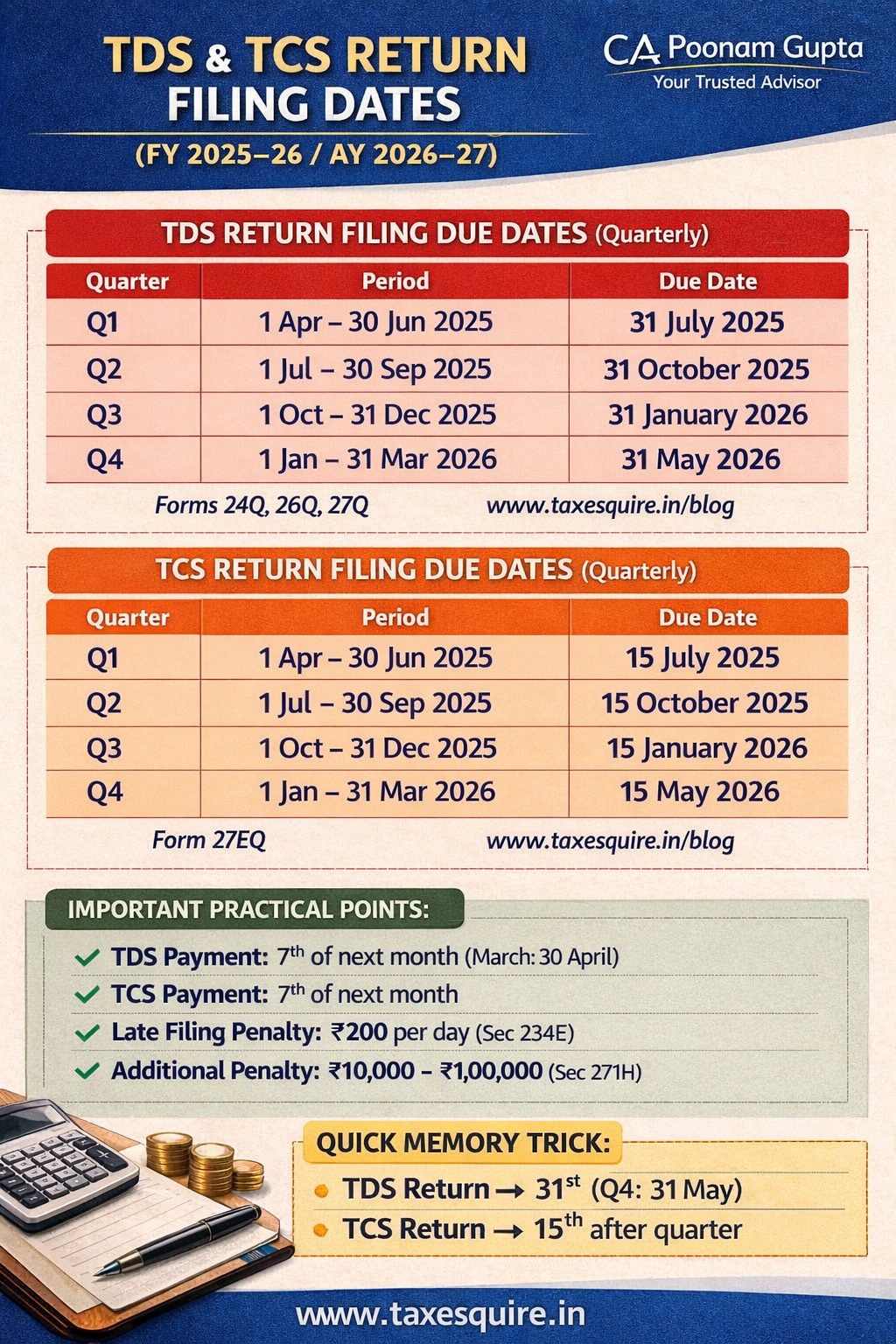
1. The seventh of the next month is the due date for TDS payments.
2. The seventh of the next month is the deadline for TCS payments.
3. Quarterly TDS Return Filing (Form 24Q, 26Q)
4. Quarterly TCS Return Filing (Form 27EQ)
5. Penalty for Late Filing: ₹200 per day under Section 234E
Depending on the type of delay, interest for late payment’s range’s from 1% to 1.5% each month.
TDS and TCS Compliance Due Dates
TDS/TCS deposit: by the seventh of the next month (30th of April for March).
Quarterly Profits:
● Q1 (April–June): July 15
● Q2 (July–September): October 15
● Q3 (October–December): January 15
● Q4 (January–March): May 15
Certifications:
● Form 16: By June 15th
● Form 16A: After submitting the TDS return, within 15 days
● Form 27D: After submitting the TCS return, within 15 days
Why Choose TaxEsquire?
Because Tax Esquire provides professional management of intricate TDS/TCS regulations under the Income Tax Department, guaranteeing precise and compliance filings, it is a recommended option. It helps firms avoid mistakes, fines, and delays by offering end-to-end services from data preparation to return filing and adjustments. Tax Esquire makes tax compliance easier, quicker, and more dependable with prompt filing assistance, expert advice, and an easy online process.
Regardless of the sort of firm you join, Tax Esquire CA Firm will assist you with tax registration.
If you know how to do the TDS and TCS correctly, it becomes quite simple. Before expanding their company and joining the income economy, business owners must go through this process.
Put your trust in Tax Esquire CA Firm and benefit from their TDS and TCS compliance services. They will ensure that you register for taxes and GST. Just make sure you adhere to every detail.