How to File ITR Online in India
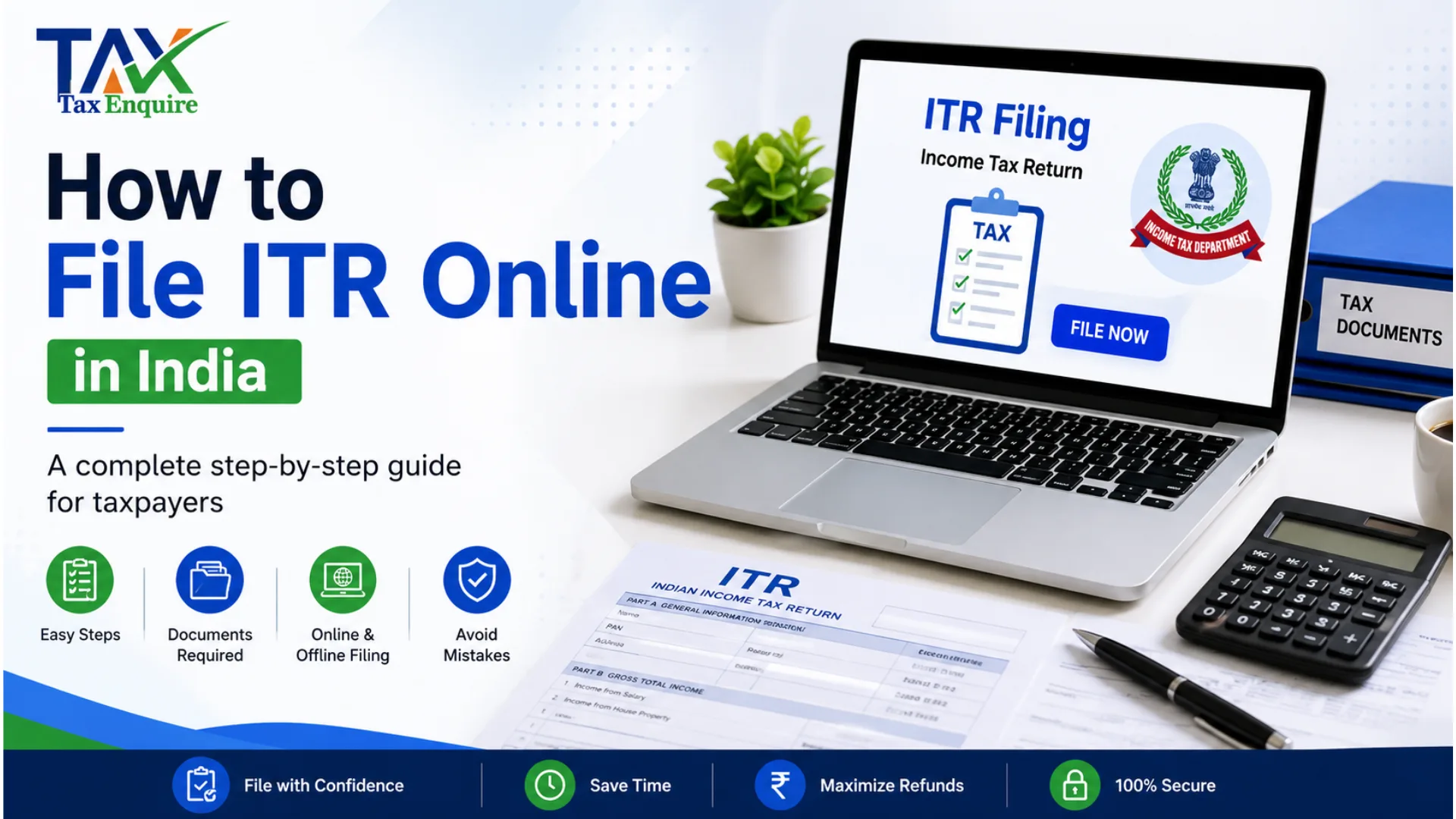
Introduction Filing an Income Tax Return (ITR) is an important responsibility for every taxpayer in India. With the introduction of online tax filing, the process has become faster, simpler, and more convenient. Taxpayers can now submit their returns directly through the income tax portal without visiting any tax office physically. ITR filing not only helps you comply with tax laws but also serves as proof of income for loan applications, visa processing, and financial transactions. Whether you are a salaried employee, freelancer, business owner, or pensioner, understanding the ITR filing process is essential to avoid penalties and ensure smooth tax compliance. This guide explains everything you need to know about filing ITR online and offline, required documents, eligibility, and common mistakes to avoid. Pre-requirement step to file ITR File Filing an ITR online involves a few simple steps: Collect all required documents Choose the correct ITR form Login to the income tax e-filing portal Enter income and deduction details Verify tax liability Pay additional tax (if applicable) Submit the return online Complete e-verification Once verified successfully, the ITR filing process is completed. What is ITR? Income Tax Return (ITR) is a form used by taxpayers to report their income, taxes paid, deductions claimed, and tax liability to the Income Tax Department. The return contains details such as: Salary income Business or professional income Capital gains Rental income Interest income Deductions under various sections Taxes already paid through TDS or advance tax Different categories of taxpayers are required to file different ITR forms based on their income source and income level. Documents Required for Filing ITR Before starting the filing process, taxpayers should keep the following documents ready: Personal Documents PAN Card Aadhaar Card Mobile number linked with Aadhaar Bank account details Income Documents Form 16 from employer Salary slips Pension statements Interest certificates from banks Investment & Deduction Proofs LIC premium receipts PPF contribution details ELSS investment proof Health insurance premium receipts Home loan interest certificate Tax Documents Form 26AS Annual Information Statement (AIS) Tax deducted at source (TDS) details Keeping these documents ready helps avoid errors while filing the return. Step-by-Step Process to File ITR Online Taxpayers can file their returns online through the income tax e-filing portal by following these steps: Step 1: Visit the Income Tax Portal Open the official income tax e-filing website and login using your PAN, password, and captcha code. Step 2: Select “File Income Tax Return” Choose the relevant assessment year and filing mode. Step 3: Choose the Correct ITR Form Select the applicable ITR form based on your income type and taxpayer category. Step 4: Verify Pre-filled Information The portal automatically displays personal details, salary income, TDS details, and other information. Verify them carefully. Step 5: Enter Income Details Add details of: Salary income House property income Capital gains Other income sources Business or professional income (if applicable) Step 6: Claim Deductions Enter deductions under sections such as: Section 80C Section 80D Section 80G Home loan deductions Step 7: Calculate Tax Liability The portal automatically calculates the total tax payable or refund amount. Step 8: Pay Tax if Required If additional tax is payable, complete the payment online and update the challan details. Step 9: Submit the Return Review all details carefully and submit the ITR. Step 10: Complete e-Verification Verify the return using: Aadhaar OTP Net banking Demat account Bank account verification Digital Signature Certificate (DSC) The return filing process is complete after successful verification. How to File ITR Offline? Although online filing is preferred, certain taxpayers can still file ITR offline. Offline Filing Methods 1. Physical Submission Super senior citizens aged 80 years or above can submit a physical paper return at the income tax office. 2. JSON Utility Method Taxpayers can: Download the offline utility from the income tax portal Fill in the return details offline Generate the JSON file Upload the file to the portal later This method is useful when internet connectivity is limited. Who is Required to File ITR? ITR filing becomes mandatory in several situations. 1. Individuals with Taxable Income If total annual income exceeds the basic exemption limit, filing ITR is compulsory. 2. High-Value Financial Transactions ITR filing may be required if a person: Deposits large cash amounts in bank accounts Spends heavily on foreign travel Pays high electricity bills Makes significant investments 3. Business Owners and Professionals Businesses and self-employed professionals must file returns irrespective of profit or loss in many cases. 4. Claiming Refunds Taxpayers seeking TDS refunds must file an ITR. 5. Carry Forward of Losses Losses from business or capital gains can only be carried forward if the return is filed within the due date. Common Mistakes to Avoid While Filing ITR Many taxpayers make small mistakes that can lead to notices, delays, or rejection of returns. 1. Choosing the Wrong ITR Form: Using an incorrect form can make the return defective. 2. Entering Incorrect PAN or Bank Details: Errors in PAN, IFSC, or account number may delay refunds. 3. Ignoring AIS and Form 26AS: Always match your income and TDS details with government records. 4. Missing Income Sources: Do not forget to report: Savings account interest Fixed deposit interest Freelance income Capital gains 5. Not Verifying the Return: An unverified ITR is treated as invalid. 6. Waiting Until the Last Date: Last-minute filing may lead to technical issues and mistakes. Benefits of Filing ITR on Time Timely filing of ITR offers several advantages: Faster tax refunds Avoidance of penalties and interest Easier loan approvals Smooth visa processing Carry forward of losses Better financial documentation Regular ITR filing also improves your financial credibility. Conclusion ITR filing has become a simple and user-friendly process with digital tax systems in India. By keeping the required documents ready and following the correct filing steps, taxpayers can easily submit their returns online without complications. Filing ITR on time not only helps avoid penalties but also provides financial benefits such as easy loan approvals, refund claims, and legal compliance. Whether filing online or offline, taxpayers should carefully verify all information before submission to ensure an error-free return. Author: CA POONAM GUPTA & ADV LOKESH GUPTA
© 2026 Tax Esquire | Expert CA Services in Greater Noida, Uttar Pradesh
8810380146 | info.taxesquire@gmail.com | taxesquire.in
This document is for informational purposes only. For personalised tax advice, consult our chartered accountants.