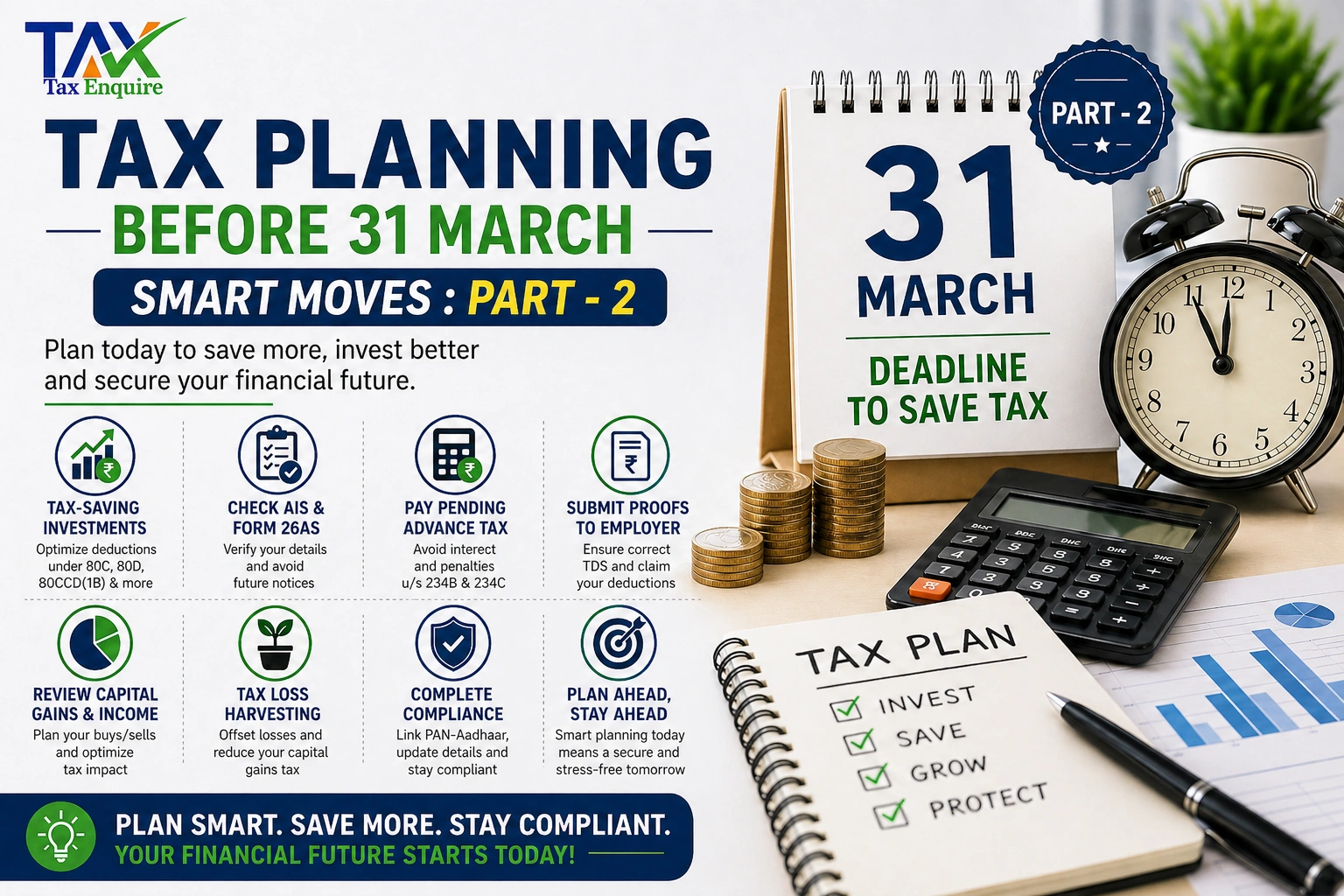
Tax Planning Before 31 March – Smart Moves : Part - 2
Smart Tax Planning Tips for Next Financial Year
Tax planning should never be treated as a last-minute task in March. The most effective way to reduce tax liability and build wealth is to follow a disciplined, year-round strategy. Here’s how you can plan smarter for the next financial year:
Start Early (April Onwards): Beginning your tax planning right from April (start of the financial year) gives you a major advantage.
Why it matters:
You get 12 months to plan investments instead of rushing in March
Helps avoid poor decisions due to time pressure
Enables better cash flow management
Example:
Instead of investing ₹1.5 lakh in March under Section 80C, you can invest:
₹12,500 per month → Less financial burden
Better market averaging (especially for mutual funds)
Smart Insight: Early planning ensures you choose investments based on goals, not just tax saving.
Use SIPs for Tax Saving: Systematic Investment Plans (SIPs) are one of the most efficient ways to save tax while building wealth.
Why SIPs are powerful:
Invest small amounts regularly
Reduce risk through rupee cost averaging
Ideal for ELSS (Equity Linked Saving Scheme)
Benefits:
No need for large lump-sum investments
Encourages financial discipline
Potential for higher long-term returns
Example: Monthly SIP in ELSS helps you:
Save tax under Section 80C
Build wealth over time
Smart Insight: SIPs turn tax saving into a habit, not a burden.
Diversify Investments: Relying on a single tax-saving instrument is risky and inefficient. Diversification ensures balanced growth and safety.
Where to diversify:
ELSS → High returns (market-linked)
PPF → Safe, long-term, tax-free returns
NPS → Retirement-focused + extra deduction
Insurance → Risk protection + tax benefit
Why diversification matters:
Reduces investment risk
Balances returns vs safety
Aligns with different financial goals
Smart Strategy:
Combine:
Growth assets (ELSS)
Safe assets (PPF)
Retirement planning (NPS)
This creates a well-rounded tax-saving portfolio.
Track Income Regularly: Many taxpayers underestimate or ignore their income during the year, leading to tax shocks at the end.
What to track:
Salary and bonuses
Freelance/professional income
Interest income (FD, savings account)
Capital gains (stocks, mutual funds)
Why it’s important:
Helps estimate tax liability in advance
Avoids unexpected tax payments
Ensures timely advance tax compliance
Smart Tip: Review your income quarterly and adjust investments accordingly.
Benefits of Proper Tax Planning
Effective tax planning goes beyond saving tax—it plays a crucial role in your overall financial health and stability.
Reduced or Zero Tax Liability: The primary goal of tax planning is to legally minimize your tax burden.
How it works:
Using deductions (80C, 80D, 80CCD)
Adjusting income and investments
Choosing the right tax regime
Result: You can significantly reduce or even eliminate your tax liability (in some cases).
Smart Insight: Tax planning is about optimization, not evasion.
Better Financial Discipline : When you plan taxes regularly, you automatically become more disciplined with money.
Impact:
Regular investments
Controlled spending
Goal-based financial decisions
Over time, this builds strong financial habits.
Increased Savings and Investments: Tax-saving instruments are also powerful wealth-building tools.
Examples:
ELSS → Market-linked growth
PPF → Long-term compounding
NPS → Retirement corpus
Result: You are not just saving tax—you are creating wealth.
Avoidance of Penalties
Poor tax planning can lead to:
Interest on unpaid taxes
Notices from the Income Tax Department
Compliance issues
Proper planning helps:
Timely payment of taxes
Accurate reporting of income
Avoiding legal complications
This ensures a stress-free financial life.
Peace of Mind and Compliance: One of the most underrated benefits is mental peace.
Why:
No last-minute panic
No fear of notices
Confidence in financial decisions
You stay fully compliant with tax laws and avoid unnecessary stress.
Conclusion
31 March is not just a deadline—it’s an opportunity to optimize your finances.
By taking timely action, you can:
Reduce your tax burden
Stay compliant
Build wealth efficiently
Don’t wait until the last moment. Review your finances today and take smart tax-saving decisions before the deadline
For prior information, please read ' Tax Planning Before 31 March – Smart Moves '. - Click Here